
 KSGE


Search
- Page Path
- HOME > Search
Original Article
- Safety and efficacy of primary endoscopic ultrasound-guided hepaticogastrostomy in older patients: a retrospective study in Japan
-
Keigo Oshiro
 , Kazuo Hara, Nozomi Okuno, Shin Haba, Takamichi Kuwahara, Shimpei Matsumoto, Hiroki Koda, Tomoki Ogata, Saki Yamazoe, Tomoyuki Tanaka, Yuki Uba, Yuma Yamazaki
- Received January 8, 2026 Accepted March 15, 2026 Published online October 14, 2026
- DOI: https://doi.org/10.5946/ce.2026.019 [Epub ahead of print]

-
 Graphical Abstract
 Abstract
 PDF
- Background
/Aims: Although endoscopic ultrasound-guided hepaticogastrostomy (EUS-HGS) has been reported to have favorable outcomes, it is associated with a risk of severe adverse events. Despite the increasing frequency of EUS-HGS use in older patients, its safety and efficacy in this population have not been sufficiently evaluated.
Methods
We retrospectively analyzed 209 patients who underwent EUS-HGS for malignant distal biliary obstruction or Bismuth type I hilar biliary obstruction at our institution between April 2017 and October 2025. Patients were classified into an older group (group O, aged ≥75 years; n=54) or a non-older group (group non-O, aged <75 years; n=155). Patient characteristics and clinical outcomes were compared.
Results
The median age was 79 years (range, 75–91 years) in group O and 64 years (range, 33–74 years) in the non-O group. Serum creatinine levels (p=0.004) and the rate of antithrombotic agent use (p<0.001) were significantly higher in group O. No significant differences were observed regarding technical success rates (96.3% vs. 93.5%), clinical success rates (94.2% vs. 94.5%), or the incidence of early adverse events (≤14 days; 5.56% vs. 9.68%, p=0.57).
Conclusions
Our findings suggest that EUS-HGS is a feasible treatment option for older patients, achieving outcomes comparable to those of non-older patients.
- 791 View
- 11 Download

Reviews
- Endoscopic retrograde cholangiopancreatography versus endoscopic ultrasound-guided primary biliary drainage for malignant distal biliary obstruction: a review
-
Shawn Chun Sum Teoh
 , Anthony Yuen Bun Teoh
- Clin Endosc 2026;59(5):726-731. Published online September 14, 2026
- DOI: https://doi.org/10.5946/ce.2026.122

-
Abstract
PDF
- Approximately 70% of pancreatic cancers arising in the head of the pancreas cause malignant distal biliary obstruction. Therefore, biliary drainage is an important aspect of the management of these patients. Conventionally, the technique for relieving biliary obstruction has been endoscopic retrograde cholangiopancreatography (ERCP). When ERCP cannot provide biliary drainage, such as in cases of failed cannulation, duodenal obstruction, or altered anatomy (e.g., after gastric bypass), endoscopic ultrasound-guided biliary drainage (EUS-BD) has been recommended by the American Society for Gastrointestinal Endoscopy as the preferred technique over percutaneous transhepatic biliary drainage for relieving biliary obstruction. Recently, EUS-BD has been explored as the primary technique for relieving biliary obstruction. The proposed benefits include higher technical success, shorter procedural time, a lower risk of pancreatitis, and longer stent patency. However, the results of randomized controlled studies have been conflicting. Hence, the aim of this article is to review the evidence from randomized controlled trials comparing EUS-BD with ERCP as the primary method of biliary drainage for malignant distal biliary obstruction.
- 1,401 View
- 97 Download
- Palliative endoscopic biliary drainage for malignant hilar biliary obstruction
-
Shuji Mitsuhashi
 , Manik Aggarwal, Vinay Chandrasekhara
- Clin Endosc 2026;59(5):703-715. Published online March 31, 2026
- DOI: https://doi.org/10.5946/ce.2025.395

-
Abstract
PDF
- Malignant hilar biliary obstruction (MHBO) is most commonly caused by cholangiocarcinoma or gallbladder cancer and frequently presents with obstructive jaundice, pruritus, and/or cholangitis. These symptoms impair performance status and delay the initiation of chemotherapy, making biliary drainage essential for both palliation and oncologic treatment. Endoscopic transpapillary biliary stenting via endoscopic retrograde cholangiopancreatography is the standard approach for biliary decompression. In patients with unresectable disease, either plastic or self-expandable metal stents may be used. Optimal outcomes are achieved when drainage encompasses more than 50% of functional liver volume, while atrophic segments should be avoided. When transpapillary access is not feasible or unsuccessful, alternative approaches such as percutaneous transhepatic biliary drainage or endoscopic ultrasound-guided biliary drainage may be considered. Adjunctive therapies, including photodynamic therapy and radiofrequency ablation, are being investigated to enhance local tumor control and prolong stent patency. With continued advances in stent technology, imaging modalities, and endoscopic techniques, the management of MHBO is expected to become increasingly individualized and effective.
- 5,420 View
- 400 Download
- Precise and optimal delivery techniques of hemostatic powders in gastrointestinal bleeding
-
Hsueh-Chien Chiang
 , Xi-Zhang Lin
- Clin Endosc 2026;59(3):361-370. Published online March 3, 2026
- DOI: https://doi.org/10.5946/ce.2025.209

-
Abstract
PDF
- Gastrointestinal (GI) bleeding is associated with a high risk of mortality. While conventional endoscopic hemostasis methods, including epinephrine injection, heater probe coagulation, hemostatic clips, and band ligation, achieve an overall hemostasis rate of 85%–90%, 10%–20% of patients do not respond to these treatments. Several novel powders have shown promise as effective hemostatic agents. In this review, we discuss the evolution of endoscopic hemostasis and explore the potential of innovative hemostatic powder treatments in managing GI bleeding. Relevant articles were identified by searching PubMed from 2010 to 2025 using the keywords “hemostatic powder”, “GI bleeding”, and “endoscopic hemostasis”. A review of recent PubMed articles on topical hemostatic powders used in endoscopy, including Hemospray, EndoClot, Ankaferd Blood Stopper, Nexpowder, and various drug-based powders, demonstrated that these agents offered high immediate hemostasis rates exceeding 90%. Topical hemostatic powders are valuable for managing active GI bleeding, especially when conventional endoscopic techniques are unsuccessful or technically challenging, such as refractory and tumor bleeding.
- 5,122 View
- 189 Download
Original Articles
- Efficacy of multi-hole self‑expandable metallic stents versus partially covered self‑expandable metallic stents in patients with malignant distal biliary obstruction caused by unresectable pancreatic cancer: a retrospective comparative cohort study in Japan
-
Shohei Asada, Koh Kitagawa, Fumimasa Tomooka, Jun-ichi Hanatani, Yuki Motokawa, Yui Osaki, Tomihiro Iwata, Kosuke Kaji, Akira Mitoro, Hitoshi Yoshiji
- Clin Endosc 2025;58(5):744-756. Published online August 26, 2025
- DOI: https://doi.org/10.5946/ce.2024.340

-
Graphical Abstract
Abstract
PDF
- Background
/Aims: This study aimed to compare the stent patency between the novel multi-hole self-expandable metallic stent (MH-SEMS) and conventional partially covered SEMS (PC-SEMS) for malignant distal biliary obstruction (MDBO) in patients with pancreatic carcinoma.
Methods
This retrospective study compared stent patency between patients with MH-SEMS (n=43) and those with PC-SEMS (n=94). Secondary outcomes were overall survival (OS), incidence of recurrent biliary obstruction (RBO), causes of RBO, and adverse events (AEs).
Results
The median time to RBO did not differ significantly between the MH-SEMS and PC-SEMS groups (318 vs. 460 days, p=0.17). Furthermore, the two groups did not differ significantly in terms of OS and incidence rate of AEs, including RBO and cholecystitis. RBO caused by tumor ingrowth was slightly more common in the MH-SEMS group (p=0.089). The MH-SEMS group had a slightly lower 12-month non-obstruction rate than the PC-SEMS group (33.9% vs. 60.9%). In the MH-SEMS group, stent removal was successful in all seven patients in whom it was attempted.
Conclusions
The clinical outcomes of MH-SEMS and PC-SEMS were similar in patients with MDBO caused by pancreatic carcinoma were similar. -
Citations
Citations to this article as recorded by
- Clinical Outcomes of Multi‐Hole Covered Self‐Expandable Metal Stents for Malignant Distal Biliary Obstruction: A Retrospective Comparative Study With an Exploratory Evaluation of 6‐mm Devices
Akinobu Koiwai, Yuki Miyashita, Nana Inomata, Takehito Ito, Morihisa Hirota, Kennichi Satoh
DEN Open.2027;[Epub] CrossRef - Multi-Hole Self-Expandable Metallic Stent for Malignant Distal Biliary Obstruction: A Literature Review
Koh Kitagawa, Shohei Asada, Jun-ichi Hanatani, Yuki Motokawa, Yui Osaki, Tomihiro Iwata, Akira Mitoro, Hitoshi Yoshiji
Journal of Clinical Medicine.2026; 15(4): 1410. CrossRef - Efficacy of fully covered self-expanding metal stents removal versus stent-in-stent techniques in recurrent malignant distal biliary obstruction
See Young Lee, Sung Ill Jang, Eui Joo Kim, Dong Ki Lee, Seoyeon Cho, Yeseul Seong, Jung Hyun Jo, Chan Min Jung, In Rae Cho, Woo Hyun Paik, Ji Kon Ryu, Hyun Seok Lee, Sang Hyub Lee, Jae Hee Cho
Scientific Reports.2026;[Epub] CrossRef - A New Strategy to Prolong Covered Self-Expanding Metal Stent Patency in Distal Malignant Biliary Obstruction
Eui Joo Kim, Yun Nah Lee
The Korean Journal of Pancreas and Biliary Tract.2026; 31(2): 76. CrossRef - Incidence of Cholecystitis after Multihole Fully Covered Metal Stent Placement for Unresectable Malignant Distal Biliary Obstruction: A Prospective Exploratory Study
Junro Ishizaki, Kosuke Okuwaki, Masafumi Watanabe, Hiroki Haradome, Kai Adachi, Akihiro Tamaki, Taro Hanaoka, Daisuke Ogawa, Hiroshi Imaizumi, Mitsuhiro Kida, Chika Kusano
Journal of Digestive Endoscopy.2026;[Epub] CrossRef - Advancements in stent strategies for malignant distal biliary obstruction: defining the clinical role of multi-hole self-expandable metal stents
Sung Yong Han
Clinical Endoscopy.2025; 58(5): 698. CrossRef - Endoscopic biliary drainage with multi-hole self-expandable metallic stent during neoadjuvant chemoradiotherapy in pancreatic cancer
Shohei Asada, Koh Kitagawa, Junichi Hanatani, Yuki Motokawa, Yui Osaki, Tomihiro Iwata, Kosuke Kaji, Akira Mitoro, Minako Nagai, Hitoshi Yoshiji, Masayuki Sho
World Journal of Gastrointestinal Endoscopy.2025;[Epub] CrossRef
- Clinical Outcomes of Multi‐Hole Covered Self‐Expandable Metal Stents for Malignant Distal Biliary Obstruction: A Retrospective Comparative Study With an Exploratory Evaluation of 6‐mm Devices
- 5,404 View
- 167 Download
- 5 Web of Science
- 7 Crossref
- A retrospective study on the comparative use of fine-needle biopsy and aspiration for the diagnosis and classification of malignant lymphoma in Japan
-
Fumitaka Niiya, Akihiro Nakamura, Yasuo Ueda, Takafumi Ogawa, Naoki Tamai, Masataka Yamawaki, Jun Noda, Tetsushi Azami, Yuichi Takano, Masatsugu Nagahama
- Clin Endosc 2025;58(5):757-765. Published online May 27, 2025
- DOI: https://doi.org/10.5946/ce.2024.320

-
Graphical Abstract
Abstract
PDF
- Background
/Aims: Endoscopic ultrasound-guided tissue acquisition (EUS-TA) is essential for diagnosing malignant lymphoma (ML). However, the optimal needle type for maximizing the diagnostic yield and tissue quality remains unclear. We compared the diagnostic performance and histological tissue quality between fine-needle biopsy (FNB) and fine-needle aspiration (FNA) needles in EUS-TA for ML.
Methods
This retrospective study included patients who underwent EUS-TA for suspected ML. The diagnostic accuracy, histological sample quality assessed by scoring, and adverse events were compared between the FNB and FNA groups. A subgroup analysis was performed for 22-gauge needles.
Results
FNB demonstrated higher diagnostic accuracy (75%) than FNA (50%) for cytology, with 100% sensitivity for histological diagnosis compared with 78.9% for FNA. The FNB group had significantly higher diagnostic rates for the World Health Organization subclassification of ML (71.4% vs. 31.6%, p=0.037). Additionally, FNB obtained superior histological quality, with 71.4% of samples scoring 5 compared with 41.2% in the FNA group. Adverse events were minimal in both groups.
Conclusions
EUS-FNB showed better diagnostic performance and histological tissue quality than EUS-FNA for ML, particularly in obtaining adequate samples for histological evaluation and subclassification. Therefore, EUS-FNB can be safely performed. Future research with larger sample sizes and genetic testing is warranted. -
Citations
Citations to this article as recorded by- Endoscopic Ultrasound as a Diagnostic Tool for the Mediastinum and Thorax
Sara Nikolic, Lucía Guilabert, Giuseppe Vanella, Catalina Vladut, Giuseppe La Mattina, Giuseppe Infantino, Elio D’Amore, Cecilie Siggaard Knoph, Giacomo Emanuele Maria Rizzo
Journal of Clinical Medicine.2025; 14(14): 4836. CrossRef - Refining the diagnostic strategy for malignant lymphoma: advantages of endoscopic ultrasound-guided fine-needle biopsy over aspiration
Kyong Joo Lee, Se Woo Park
Clinical Endoscopy.2025; 58(5): 701. CrossRef
- Endoscopic Ultrasound as a Diagnostic Tool for the Mediastinum and Thorax
- 4,725 View
- 181 Download
- 2 Web of Science
- 2 Crossref
Systematic Review and Meta-Analysis
- Endoscopic ultrasound-guided biliary drainage versus endoscopic retrograde cholangiopancreatography biliary drainage in the palliative management of malignant distal biliary obstruction: an updated systematic review and meta-analysis of randomized controlled trials
-
Spyros Peppas, Advait Suvarnakar, Bara A. Abujaber, Nadera Altork, Amer Arman, Sayel Alzraikat, Akram I. Ahmad, Camille Boustani, Won Kyoo Cho
- Clin Endosc 2025;58(3):386-397. Published online May 9, 2025
- DOI: https://doi.org/10.5946/ce.2024.155

-
Graphical Abstract
Abstract
PDF
 Supplementary Material
- Background
/Aims: Evidence suggests comparable outcomes between endoscopic ultrasound (EUS) and endoscopic retrograde cholangiopancreatography (ERCP) in the biliary drainage of malignant distal biliary obstruction (MDBO). We conducted an updated systematic review and meta-analysis comparing the EUS with ERCP in the management of MDBO.
Methods
We performed a literature search using the Medline, Embase and Cochrane databases, including randomized controlled trials comparing EUS and ERCP in patients with MDBO. Meta-analysis was performed using the random-effects model using the STATA ver. 17.0 software.
Results
Both procedures were comparable in technical (risk ratio [RR], 1.01; 95% confidence interval [CI], 0.78–1.30) and clinical (RR, 1.10; 95% CI, 0.85–1.41) success. No difference was identified in total adverse events (RR, 0.75; 95% CI, 0.42–1.35), acute cholangitis (RR, 0.84; 95% CI, 0.43–1.62), stent patency (RR, 1.13; 95% CI, 0.87–1.46) and mean stent patency time (mean difference, –0.01; 95% CI: –0.21 to 0.19). ERCP was associated with a higher risk of procedure-related pancreatitis (RR, 0.17; 95% CI, 0.04–0.68) and statistically non-significant higher risk for reintervention (RR, 0.61; 95% CI, 0.37–1.01).
Conclusions
Although EUS and ERCP were comparable in terms of efficacy and safety, ERCP was associated with a higher risk of procedure-related pancreatitis and reintervention, with the latter finding not reaching statistical significance. -
Citations
Citations to this article as recorded by- Clinical Outcomes and Complications of Endoscopic Biliary Stenting for Malignant Distal Biliary Obstruction in Pancreatic Cancer: A Systematic Review
Nurken Abdiyev, Nurlan Jaxymbayev, Melis Maira, Medet Rakhmetov, Almas Ismailov, Abdykadyrov Mazhit, Yerlan Abdirashev, Berik Dzhumabekov
Journal of Clinical Medicine.2026; 15(8): 3126. CrossRef - Clinical vulnerability to chemotherapy in cholangiocarcinoma: impact of nutritional status, frailty, and systemic inflammation
Ho Seung Lee, Woo Joo Lee, Jae Min Lee, Han Jo Jeon, Hyuk Soon Choi, Eun Sun Kim, Bora Keum, Yoon Tae Jeen
Supportive Care in Cancer.2026;[Epub] CrossRef
- Clinical Outcomes and Complications of Endoscopic Biliary Stenting for Malignant Distal Biliary Obstruction in Pancreatic Cancer: A Systematic Review
- 6,634 View
- 198 Download
- 2 Web of Science
- 2 Crossref
Systematic Review and Meta-analysis
- Efficacy of endoscopic ultrasound-guided biliary drainage of malignant biliary obstruction: a systematic review and meta-analysis of randomized controlled trials
-
Yousaf Zafar, Hafsa Azam
 , Muhammad Abdullah Bin Azhar, Fabeeha Shaheen, Syed Sarmad Javaid, Laila Manzoor, Muaaz Masood, Rajesh Krishnamoorthi
- Clin Endosc 2025;58(4):533-543. Published online February 24, 2025
- DOI: https://doi.org/10.5946/ce.2024.183

-
Graphical Abstract
Abstract
PDFSupplementary Material
- Background
/Aims: Malignant biliary obstruction is a major clinical challenge. We assessed the efficacy of endoscopic ultrasound-guided biliary drainage (EUS-BD) compared with that of endoscopic retrograde cholangiopancreatography biliary drainage (ERCP-BD) or percutaneous transhepatic biliary drainage (PTBD).
Methods
We searched for randomized controlled trials comparing EUS-BD with ERCP or PTBD in treating malignant biliary obstruction. Using random-effects models, we synthesized risk ratios (RRs) and weighted mean differences (WMDs) with 95% confidence intervals (CIs). A subgroup analysis was performed using a comparator (ERCP or PTBD).
Results
EUS-BD significantly reduced the risk of stent dysfunction (RR, 0.46; 95% CI, 0.33–0.64), with consistent results in subgroup analysis for ERCP (RR, 0.54; 95% CI, 0.35–0.84) and PTBD (RR, 0.37; 95% CI, 0.22–0.61). It also lowered the risk of post-procedure pancreatitis (RR, 0.24; 95% CI, 0.07–0.83) and reduced tumor ingrowth or overgrowth risk (RR, 0.27; 95% CI, 0.11–0.65), even when compared to ERCP alone (RR, 0.28; 95% CI, 0.11–0.70). EUS-BD demonstrated a lower risk of adverse events compared to PTBD (RR, 0.37; 95% CI, 0.14–0.97) and reduced length of hospital stay (WMD, –1.03; 95% CI, –1.53 to –0.53) when compared to ERCP.
Conclusions
EUS-BD outperformed ERCP-BD and PTBD in reducing stent dysfunction, postprocedural pancreatitis, and tumor ingrowth or overgrowth. -
Citations
Citations to this article as recorded by- Reply
Joan B. Gornals, Albert Sumalla-Garcia, Carme Loras
Clinical Gastroenterology and Hepatology.2026; 24(4): 1203. CrossRef - Biliary Drainage in Altered Anatomy: A Comprehensive Literature Review
Rishi Chowdhary, Jorge D. Machicado, Veeral M. Oza
Journal of Digestive Endoscopy.2026;[Epub] CrossRef - A Time-Based and Clinical Status Stratified Protocol for Major Bile Duct Injury After Cholecystectomy: Retrospective, Single-Center Outcomes From a Resource-Limited Setting
Ahmed Ateik, Saif A Ghabisha, Lamia Abdulmughni, Fares Awn
Cureus.2026;[Epub] CrossRef - Biliary Drainage During Neoadjuvant Chemotherapy in Pancreatic Cancer: Evidence and Practical Recommendations
Tadahisa Inoue, Masanao Nakamura, Kiyoaki Ito
Cancers.2026; 18(3): 467. CrossRef - Endoscopic Ultrasound-Guided Versus Percutaneous Transhepatic Biliary Drainage After Failed Endoscopic Retrograde Cholangiopancreatography in Malignant Biliary Obstruction: A Single-Center Retrospective Cohort
Wojciech Ciesielski, Łukasz Durko, Ludomir Stefańczyk, Adam Dobek, Anna Bulicz, Amelia Wojnicka, Zuzanna Sosnowska, Agata Grochowska, Janusz Strzelczyk, Piotr Hogendorf, Adam Durczyński, Tomasz Klimczak
Cancers.2026; 18(5): 783. CrossRef - Role of Endoscopy in Malignant Biliary Obstruction
Ishaan Vohra, Burraq Imran, Zubair Khan, Muhammad Hasan
Diagnostics.2026; 16(5): 721. CrossRef - Case Report: Unexpected LAMS obstruction following successful EUS-BD in a patient with pancreatic carcinoma
Xuxia He, Kun He, Qiang Wang
Frontiers in Surgery.2026;[Epub] CrossRef - EUS-guided biliary drainage versus percutaneous transhepatic biliary drainage after failed ERCP in oncological patients: a 10-year retrospective comparison
P Alves, L Lenz, C Clemente, I Kristal, M Beltrami, AD P Gustavo, B Costa Martins, A Safatle-Ribeiro, F Maluf-Filho
Endoscopy.2026; 58(S 03): S634. CrossRef - Endoscopic Ultrasound-Guided Choledochoduodenostomy With Lumen-Apposing Metal Stents: Here to Stay, But All That Glitters Is Not Gold
Joan B. Gornals, Manuel Perez-Miranda, Carme Loras
Gastroenterology.2026; 171(3): 568. CrossRef
- Reply
- 11,420 View
- 472 Download
- 8 Web of Science
- 9 Crossref
Original Articles
- Endoscopic ultrasound-guided hepaticogastrostomy and endoscopic retrograde cholangiopancreatography-guided biliary drainage for distal malignant biliary obstruction due to pancreatic cancer with asymptomatic duodenal invasion: a retrospective, single-center study in Japan
-
Naminatsu Takahara, Yousuke Nakai, Kensaku Noguchi, Tatsunori Suzuki, Tatsuya Sato, Ryunosuke Hakuta, Kazunaga Ishigaki, Tomotaka Saito, Tsuyoshi Hamada, Mitsuhiro Fujishiro
- Clin Endosc 2025;58(1):134-143. Published online August 23, 2024
- DOI: https://doi.org/10.5946/ce.2024.031

-
Graphical Abstract
Abstract
PDF
- Background
/Aims: Duodenal invasion (DI) is a risk factor for early recurrent biliary obstruction (RBO) in endoscopic retrograde cholangiopancreatography-guided biliary drainage (ERCP-BD). Endoscopic ultrasound-guided hepaticogastrostomy (EUS-HGS) may reduce early RBO in cases of asymptomatic DI, even when ERCP is possible.
Methods
We enrolled 56 patients with pancreatic cancer and asymptomatic DI who underwent EUS-HGS (n=25) or ERCP-BD (n=31). Technical and clinical success, early (<3 months) and overall RBO rates, time to RBO (TRBO), and adverse events were compared between the EUS-HGS and ERCP-BD groups. Risk factors for early RBO were also evaluated.
Results
Baseline characteristics were similar between the groups. Both procedures demonstrated 100% technical and clinical success rates, with a similar incidence of adverse events (48% vs. 39%, p=0.59). While the median TRBO was comparable (5.7 vs. 8.8 months, p=0.60), EUS-HGS was associated with a lower incidence of early RBO compared to ERCP-BD (8% vs. 29%, p=0.09). The major causes of early RBO in ERCP-BD were sludge and food impaction, rarely occurring in EUS-HGS. EUS-HGS was potentially reduced early RBO (odds ratio, 0.32; p=0.07).
Conclusions
EUS-HGS can be a viable option for treating pancreatic cancer with asymptomatic DI. -
Citations
Citations to this article as recorded by- Long‐anchoring Stent Method as a Rescue Technique for Early Dysfunction of Covered Self‐Expandable Metal Stents in Distal Malignant Biliary Obstruction: A Retrospective Case Series
Takumi Kinomoto, Yugo Kai, Minoru Shigekawa, Kenji Ikezawa, Takuo Yamai, Hiroki Takiyama, Taku Miyanaga, Takanori Masumoto, Keita Sekiya, Jun Murata, Makiko Urabe, Ryoji Takada, Kaori Mukai, Tasuku Nakabori, Kazuyoshi Ohkawa
DEN Open.2027;[Epub] CrossRef - Endoscopic Retrograde Cholangiopancreatography‐guided Biliary Drainage with Duckbill‐type Anti‐reflux Metal Stent versus Endoscopic Ultrasound‐guided Hepaticogastrostomy for Malignant Distal Biliary Obstruction in Pancreatic Cancer with Duodenal Invasion
Tsuyoshi Takeda, Takashi Sasaki, Tatsuki Hirai, Yoichiro Sato, Yuri Maegawa, Takafumi Mie, Takaaki Furukawa, Yukari Suzuki, Takeshi Okamoto, Masato Ozaka, Naoki Sasahira
DEN Open.2026;[Epub] CrossRef - Impact of Peri‐Procedural Antibiotics on Post‐ERCP Infectious Adverse Events With Distal Malignant Biliary Obstruction
Tatsunori Satoh, Haruna Takahashi, Eiji Nakatani, Yosuke Kobayashi, Fumitaka Niiya, Junichi Kaneko, Kazuma Ishikawa, Kenta Ito, Tetsushi Azami, Jun Noda, Shinya Kawaguchi
Journal of Gastroenterology and Hepatology.2026; 41(2): 696. CrossRef - Endoscopic Ultrasound‐Guided Hepaticogastrostomy With Plastic Stents in Comparison to Transpapillary Drainage With Metallic Stents for Unresectable Malignant Distal Biliary Obstructions
Hidehito Sumiya, Yoshihide Kanno, Shinsuke Koshita, Takahisa Ogawa, Hiroaki Kusunose, Toshitaka Sakai, Keisuke Yonamine, Kazuaki Miyamoto, Fumisato Kozakai, Haruka Okano, Kento Hosokawa, Shun Nozaki, Kei Ito
DEN Open.2026;[Epub] CrossRef - Update on biliary endoscopy: a comprehensive review
Yukiko Takayama, Yousuke Nakai, Ryunosuke Hakuta, Ryota Nakabayashi, Nao Otsuka, Noriko Ishigaki, Masataka Kikuyama
Expert Review of Gastroenterology & Hepatology.2026; 20(5): 485. CrossRef - Role of Endoscopic Ultrasonography in Management of Pancreaticobiliary Cancers: Recent Trends and Advances
Shivangini Duggal, Mutaz Kalas, Mohamed H. Eldesouki, M. Ammar Kalas, Sherif E. Elhanafi
Cancers.2026; 18(12): 1864. CrossRef - Latest advancements in endoscopic palliative care for patients with pancreatic cancer
Raquel Gonçalves, Joel Silva, Eduardo Rodrigues-Pinto
Clinical Endoscopy.2026; 59(4): 497. CrossRef - Biliary drainage in pancreatic cancer with duodenal invasion: which route is the best?
Tanyaporn Chantarojanasiri, Thawee Ratanachu-Ek
Clinical Endoscopy.2025; 58(1): 82. CrossRef - EUS-Guided Gallbladder Drainage of Inoperable Malignant Distal Biliary Obstruction by Lumen-Apposing Metal Stent: Systematic Review and Meta-Analysis
Tawfik Khoury, Moaad Farraj, Wisam Sbeit, Pietro Fusaroli, Giovanni Barbara, Cecilia Binda, Carlo Fabbri, Maamoun Basheer, Sarah Leblanc, Fabien Fumex, Rodica Gincul, Anthony Yuen Bun Teoh, Jérémie Jacques, Bertrand Napoléon, Andrea Lisotti
Cancers.2025; 17(12): 1983. CrossRef - Primary Endoscopic Ultrasound-Guided Biliary Drainage for Malignant Biliary Obstruction
Yousuke Nakai, Ryunosuke Hakuta, Ryota Nakabayashi, Yutaka Shimamatsu, Nao Otsuka, Yukiko Takayama
The Korean Journal of Pancreas and Biliary Tract.2025; 30(4): 159. CrossRef
- Long‐anchoring Stent Method as a Rescue Technique for Early Dysfunction of Covered Self‐Expandable Metal Stents in Distal Malignant Biliary Obstruction: A Retrospective Case Series
- 7,535 View
- 389 Download
- 11 Web of Science
- 10 Crossref
-
Hepatobiliary scintigraphy of bile excretion after endoscopic ultrasound-guided hepaticogastrostomy for malignant biliary obstruction: a retrospective study in Japan

-
Masanori Yamada, Kazuo Hara, Shin Haba, Takamichi Kuwahara, Nozomi Okuno, Yasuhiro Kuraishi, Takafumi Yanaidani, Sho Ishikawa, Tsukasa Yasuda, Toshitaka Fukui
- Clin Endosc 2024;57(6):798-806. Published online August 20, 2024
- DOI: https://doi.org/10.5946/ce.2023.291

-
Graphical Abstract
Abstract
PDFSupplementary Material
- Background
/Aims: Hepatobiliary scintigraphy (HBS) is used to evaluate bile excretion. This study aimed to evaluate biliary excretion during endoscopic ultrasound-guided hepaticogastrostomy (EUS-HGS) using HBS.
Methods
We retrospectively evaluated 78 consecutive patients with malignant extrahepatic biliary obstruction, who underwent HBS after EUS-HGS between April 2015 and July 2022. The peak time and decay rate were scored with 0, 1, or 2 points based on thresholds of 20 and 35 minutes, and 10% and 50%, respectively. A total score of 4 or 3 was considered indicative of good bile excretion, whereas scores of 2, 1, or 0 indicated poor bile excretion.
Results
The good and poor bile excretion groups included 40 and 38 cases, respectively. The group with good bile excretion had a significantly longer time to recurrent biliary obstruction compared to the poor bile excretion group (not reached vs. 124 days, p=0.026). Multivariate analysis identified the site of obstruction as a significant factor influencing good bile excretion (odds ratio, 3.39; 95% confidence interval, 1.01–11.4, p=0.049), with superior bile excretion observed in cases involving upper biliary obstruction compared to middle or lower biliary obstruction.
Conclusions
In patients with malignant biliary obstruction who underwent HGS, the site of obstruction is significantly associated with stent patency. -
Citations
Citations to this article as recorded by- Endoscopic ultrasound-guided transpapillary versus transluminal biliary stenting: randomized comparison of long-term stent patency
Vinay Dhir, Vivek Kumar Singh, Sundeep Lakhtakia, Rajesh Puri, Praveer Rai, Nonthalee Pausawasdi, Ryosuke Tonozuka, Jahangeer Basha, Varayu Prachayakul, Abhishek Kathuria, Pankaj Kumar, Takao Itoi, D. Nageshwar Reddy
Endoscopy.2026; 58(05): 493. CrossRef - Distinguishing the mechanisms of recurrent biliary obstruction among antegrade transpapillary stenting versus hepaticogastrostomy versus choledochoduodenostomy
Rungsun Rerknimitr
Endoscopy.2026; 58(09): 1061. CrossRef - Reply to Prof. Rerknimitr
Vinay Dhir, Vivek Kumar Singh
Endoscopy.2026; 58(09): 1062. CrossRef
- Endoscopic ultrasound-guided transpapillary versus transluminal biliary stenting: randomized comparison of long-term stent patency
- 6,107 View
- 215 Download
- 3 Web of Science
- 3 Crossref
- Potential of 6-mm-diameter fully covered self-expandable metal stents for unresectable malignant distal biliary obstruction: a propensity score-matched study
-
Daiki Yamashige, Susumu Hijioka, Yoshikuni Nagashio, Yuta Maruki, Soma Fukuda, Shin Yagi, Kohei Okamoto, Hidenobu Hara, Yuya Hagiwara, Daiki Agarie, Tetsuro Takasaki, Akihiro Ohba, Shunsuke Kondo, Chigusa Morizane, Hideki Ueno, Miyuki Sone, Yutaka Saito, Takuji Okusaka
- Clin Endosc 2025;58(1):121-133. Published online July 29, 2024
- DOI: https://doi.org/10.5946/ce.2024.044

-
Graphical Abstract
Abstract
PDFSupplementary Material
- Background
/Aims: To date, only thinner-diameter metal stents have been evaluated for unresectable malignant distal biliary obstruction (UR-MDBO). This study investigated the outcomes and optimal cohorts for a 6-mm-diameter fully covered self-expandable metal stent (FCSEMS) compared with those for a 10-mm-diameter FCSEMS.
Methods
This single-center retrospective cohort study included patients who underwent initial transpapillary metal stenting for UR-MDBO. Propensity score matching (1:1) analysis was performed.
Results
Of 133/68 patients who underwent 6-mm/10-mm-diameter FCSEMS deployment, 59 in each group were selected. The median time to recurrent biliary obstruction was not significantly different between the groups (p=0.46). In contrast, use of the 6-mm-diameter FCSEMS resulted in a significantly reduced incidence of stent-related adverse events (AEs) (p=0.016), especially cholecystitis (p=0.032), and patients aged <70 years were particularly affected by this significant reduction. Among the patients in the end-stage cohort who were unable to continue chemotherapy after FCSEMS deployment, the free rate of stent-related events, including recurrent biliary obstruction and stent-related AEs, was significantly higher in the 6-mm group (p=0.027).
Conclusions
For UR-MDBO, a 6-mm-diameter FCSEMS can be an optimal and safe option in the younger cohort with a relatively high risk of AEs and in the end-stage cohort requiring safer drainage without interference from stent-related events during times of poor prognosis. -
Citations
Citations to this article as recorded by- Biliary Drainage During Neoadjuvant Chemotherapy in Pancreatic Cancer: Evidence and Practical Recommendations
Tadahisa Inoue, Masanao Nakamura, Kiyoaki Ito
Cancers.2026; 18(3): 467. CrossRef - Comparative study on the application of fully covered self-expanding metal stents in benign and malignant strictures of the distal bile duct
Ziyan Wang, Fei Xu, Weigang Shu, Xinyan Zhu, Feng Zhu
Therapeutic Advances in Gastroenterology.2026;[Epub] CrossRef - Clinical Outcomes and Complications of Endoscopic Biliary Stenting for Malignant Distal Biliary Obstruction in Pancreatic Cancer: A Systematic Review
Nurken Abdiyev, Nurlan Jaxymbayev, Melis Maira, Medet Rakhmetov, Almas Ismailov, Abdykadyrov Mazhit, Yerlan Abdirashev, Berik Dzhumabekov
Journal of Clinical Medicine.2026; 15(8): 3126. CrossRef - Update on biliary endoscopy: a comprehensive review
Yukiko Takayama, Yousuke Nakai, Ryunosuke Hakuta, Ryota Nakabayashi, Nao Otsuka, Noriko Ishigaki, Masataka Kikuyama
Expert Review of Gastroenterology & Hepatology.2026; 20(5): 485. CrossRef - 6-mm versus 10-mm covered self-expandable metal stents and plastic stents for malignant distal biliary obstruction in resectable or borderline resectable pancreatic cancer in Japan (STARDOM, JON-2402P): study protocol for a multicenter randomized controll
Daiki Yamashige, Susumu Hijioka, Ichiro Yasuda, Nobuhiko Hayashi, Masataka Taguri, Makoto Ueno, Junji Furuse
Trials.2026;[Epub] CrossRef - From dogma to individualized care: the potential of 6-mm fully covered self-expandable metal stent in unresectable malignant distal biliary obstruction
Hyung Ku Chon
Clinical Endoscopy.2025; 58(4): 630. CrossRef - Advancements in stent strategies for malignant distal biliary obstruction: defining the clinical role of multi-hole self-expandable metal stents
Sung Yong Han
Clinical Endoscopy.2025; 58(5): 698. CrossRef
- Biliary Drainage During Neoadjuvant Chemotherapy in Pancreatic Cancer: Evidence and Practical Recommendations
- 8,719 View
- 333 Download
- 7 Web of Science
- 7 Crossref
- Prophylactic endoscopic transpapillary gallbladder stenting to prevent acute cholecystitis induced after metallic stent placement for malignant biliary strictures: a retrospective study in Japan
-
Fumisato Kozakai, Yoshihide Kanno, Shinsuke Koshita, Takahisa Ogawa, Hiroaki Kusunose, Toshitaka Sakai, Keisuke Yonamine, Kazuaki Miyamoto, Haruka Okano, Yuto Matsuoka, Kento Hosokawa, Hidehito Sumiya, Kei Ito
- Clin Endosc 2024;57(5):647-655. Published online May 17, 2024
- DOI: https://doi.org/10.5946/ce.2023.284

-
Graphical Abstract
Abstract
PDF
- Background
/Aims: Endoscopic biliary drainage using self-expandable metallic stents (SEMSs) for malignant biliary strictures occasionally induces acute cholecystitis (AC). This study evaluated the efficacy of prophylactic gallbladder stents (GBS) during SEMS placement.
Methods
Among 158 patients who underwent SEMS placement for malignant biliary strictures between January 2018 and March 2023, 30 patients who attempted to undergo prophylactic GBS placement before SEMS placement were included.
Results
Technical success was achieved in 21 cases (70.0%). The mean diameter of the cystic duct was more significant in the successful cases (6.5 mm vs. 3.7 mm, p<0.05). Adverse events occurred for 7 patients (23.3%: acute pancreatitis in 7; non-obstructive cholangitis in 1; perforation of the cystic duct in 1 with an overlap), all of which improved with conservative treatment. No patients developed AC when the GBS placement was successful, whereas 25 of the 128 patients (19.5%) without a prophylactic GBS developed AC during the median follow-up period of 357 days (p=0.043). In the multivariable analysis, GBS placement was a significant factor in preventing AC (hazard ratio, 0.61; 95% confidence interval, 0.37–0.99; p=0.045).
Conclusions
GBS may contribute to the prevention of AC after SEMS placement for malignant biliary strictures. -
Citations
Citations to this article as recorded by- Role of Prophylactic Endoscopic Gallbladder Stent Placement for Prevention of Acute Cholecystitis in Patients Receiving Stenting for Malignant Biliary Obstruction: A Meta-Analysis
Zahid Ijaz Tarar, Mustafa Gandhi, Umer Farooq, AhtshamUllah Chaudhry, Gopala K. Konduri, Ahmad Zain, Zohaib Ahmed, Baltej Singh, Nirav Thosani
Digestive Diseases and Sciences.2026; 71(4): 1547. CrossRef - Large-diameter Plastic Stents as An Option for Preoperative Biliary Drainage for Patients with Pancreatic Cancer Undergoing Neoadjuvant Chemotherapy
Hidehito Sumiya, Yoshihide Kanno, Shinsuke Koshita, Takahisa Ogawa, Hiroaki Kusunose, Toshitaka Sakai, Keisuke Yonamine, Kazuaki Miyamoto, Fumisato Kozakai, Haruka Okano, Kento Hosokawa, Shun Nozaki, Kei Ito
The Korean Journal of Gastroenterology.2026; 86(3): 227. CrossRef - Prophylactic endoscopic transpapillary gallbladder stenting at fully covered self-expandable metal stent placement to prevent cholecystitis in malignant distal biliary obstruction: A multicenter prospective single-arm study protocol (PROTECT study)
Takayuki Oda, Yusuke Kurita, Masato Suzuki, Satoru Shinoda, Takamitsu Sato, Shinichi Nihei, Yu Honda, Takeshi Iizuka, Shin Yagi, Sho Hasegawa, Kensuke Kubota, Masato Yoneda, Athanasios G. Pantelis
PLOS One.2026; 21(10): e0361468. CrossRef - Risk Factors for Cholecystitis After Self-expandable Metallic Stent Placement for Malignant Distal Biliary Obstruction
Hashem Albunni, Azizullah Beran, Nwal Hadaki, Mark A. Gromski, Mohammad Al-Haddad
Journal of Clinical Gastroenterology.2025;[Epub] CrossRef - Risk factors for infection following particle stent placement in obstructive jaundice patients: A retrospective analysis
Gang Wang, Rui Qi
Current Problems in Surgery.2025; 67: 101775. CrossRef - Post-endoscopic retrograde cholangiopancreatography cholecystitis: A review of incidence, risk factors, prevention, and management
Suprabhat Giri, Shivaraj Afzalpurkar, Prasanna Gore, Gaurav Khatana, Saroj Kanta Sahu, Dibya Lochan Praharaj, Bipadabhanjan Mallick, Preetam Nath, Sridhar Sundaram, Manoj Kumar Sahu
World Journal of Gastrointestinal Endoscopy.2025;[Epub] CrossRef - Technical challenges and safety of prophylactic gallbladder stenting with metallic biliary stenting
Masood Muhammad Karim, Om Parkash
Clinical Endoscopy.2024; 57(6): 841. CrossRef
- Role of Prophylactic Endoscopic Gallbladder Stent Placement for Prevention of Acute Cholecystitis in Patients Receiving Stenting for Malignant Biliary Obstruction: A Meta-Analysis
- 7,414 View
- 328 Download
- 5 Web of Science
- 7 Crossref
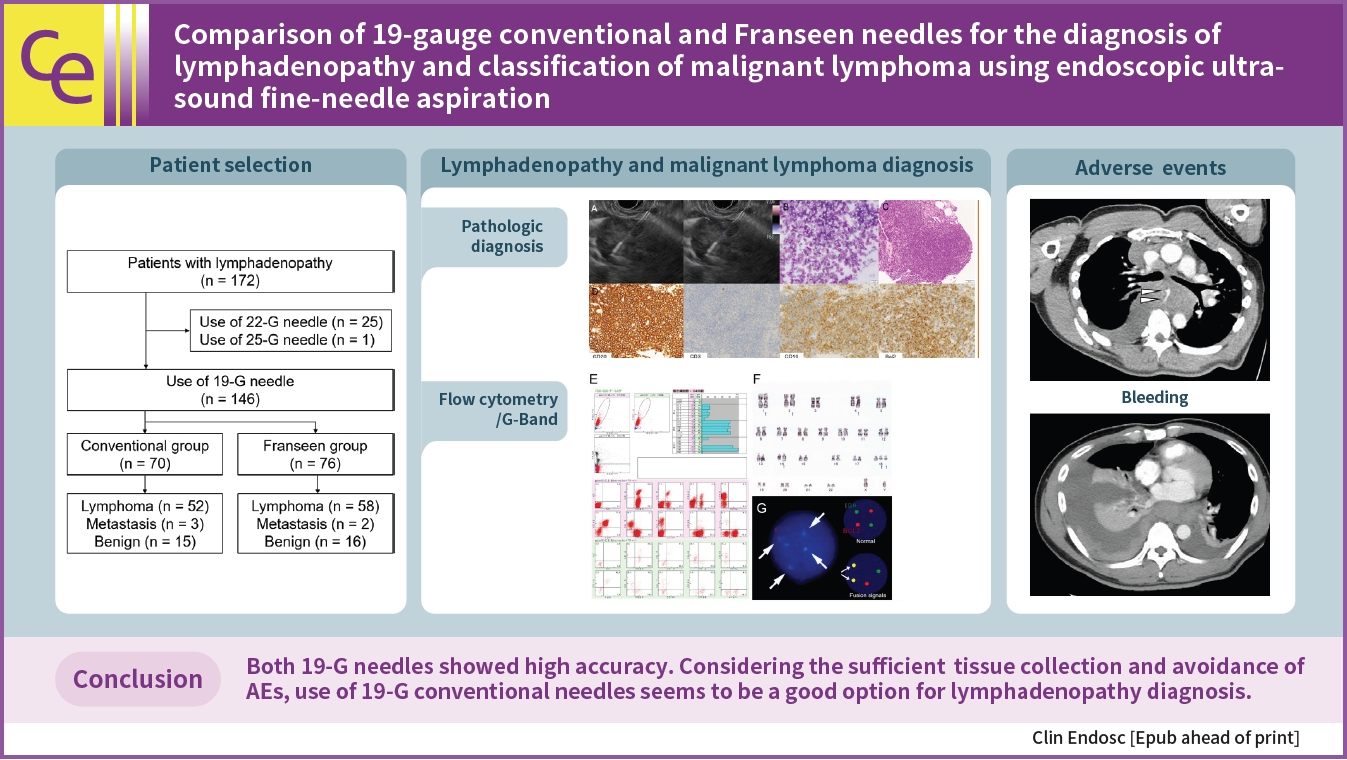
- Comparison of 19-gauge conventional and Franseen needles for the diagnosis of lymphadenopathy and classification of malignant lymphoma using endoscopic ultrasound fine-needle aspiration
-
Mitsuru Okuno, Keisuke Iwata, Tsuyoshi Mukai, Yusuke Kito, Takuji Tanaka, Naoki Watanabe, Senji Kasahara, Yuhei Iwasa, Akihiko Sugiyama, Youichi Nishigaki, Yuhei Shibata, Junichi Kitagawa, Takuji Iwashita, Eiichi Tomita, Masahito Shimizu
- Clin Endosc 2024;57(3):364-374. Published online September 8, 2023
- DOI: https://doi.org/10.5946/ce.2023.095
-
Graphical Abstract
Abstract
PDFSupplementary Material
- Background
/Aims: Endoscopic ultrasound-guided fine-needle aspiration (EUS-FNA) using a 19-gauge needle is an efficient sampling method for the diagnosis of lymphadenopathy. This study compared 19-gauge conventional and Franseen needles for the diagnosis of lymphadenopathy and classification of malignant lymphoma (ML).
Methods
Patient characteristics, number of needle passes, puncture route, sensitivity, specificity, and accuracy of cytology/histology for lymphadenopathy were analyzed in patients diagnosed with lymphadenopathy by EUS-FNA using conventional or Franseen needles.
Results
Between 2012 and 2022, 146 patients met the inclusion criteria (conventional [n=70] and Franseen [n=76]). The median number of needle passes was significantly lower in the conventional group than in the Franseen group (3 [1–6] vs. 4 [1–6], p=0.023). There were no significant differences in cytological/histological diagnoses between the two groups. For ML, the immunohistochemical evaluation rate, sensitivity of flow cytometry, and cytogenetic assessment were not significantly different in either group. Bleeding as adverse events (AEs) were observed in three patients in the Franseen group.
Conclusions
Both the 19-gauge conventional and Franseen needles showed high accuracy in lymphadenopathy and ML classification. Considering sufficient tissue collection and the avoidance of AEs, the use of 19-gauge conventional needles seems to be a good option for the diagnosis of lymphadenopathy. -
Citations
Citations to this article as recorded by- Comparison of 19-gauge FNA and 22-gauge FNB needles for the EUS-guided fine-needle aspiration of the lymphadenopathy and malignant lymphoma diagnosis: A multicenter retrospective study
Mitsuru Okuno, Shinya Uemura, Tsuyoshi Mukai, Fumiya Kataoka, Keisuke Iwata, Ryuichi Tezuka, Yuhei Iwasa, Takuya Koizumi, Yosuke Ohashi, Shota Iwata, Akinori Maruta, Keisuke Kawashima, Yusuke Kito, Naoki Watanabe, Takeshi Hara, Hisashi Tsurumi, Takuji Iwa
Endoscopic Ultrasound.2026;[Epub] CrossRef - A retrospective study on the comparative use of fine-needle biopsy and aspiration for the diagnosis and classification of malignant lymphoma in Japan
Fumitaka Niiya, Akihiro Nakamura, Yasuo Ueda, Takafumi Ogawa, Naoki Tamai, Masataka Yamawaki, Jun Noda, Tetsushi Azami, Yuichi Takano, Masatsugu Nagahama
Clinical Endoscopy.2025; 58(5): 757. CrossRef - Refining the diagnostic strategy for malignant lymphoma: advantages of endoscopic ultrasound-guided fine-needle biopsy over aspiration
Kyong Joo Lee, Se Woo Park
Clinical Endoscopy.2025; 58(5): 701. CrossRef - Choosing needles wisely: 19-G conventional vs. Franseen needles in endoscopic ultrasound-guided fine-needle aspiration for malignant lymphoma diagnosis and classification
Kajornvit Raghareutai, Worapoth Yingyongthawat, Nonthalee Pausawasdi
Clinical Endoscopy.2024; 57(4): 473. CrossRef
- Comparison of 19-gauge FNA and 22-gauge FNB needles for the EUS-guided fine-needle aspiration of the lymphadenopathy and malignant lymphoma diagnosis: A multicenter retrospective study
- 6,532 View
- 162 Download
- 3 Web of Science
- 4 Crossref
- A novel fully covered metal stent for unresectable malignant distal biliary obstruction: results of a multicenter prospective study
-
Arata Sakai, Atsuhiro Masuda, Takaaki Eguchi, Keisuke Furumatsu, Takao Iemoto, Shiei Yoshida, Yoshihiro Okabe, Kodai Yamanaka, Ikuya Miki, Saori Kakuyama, Yosuke Yagi, Daisuke Shirasaka, Shinya Kohashi, Takashi Kobayashi, Hideyuki Shiomi, Yuzo Kodama
- Clin Endosc 2024;57(3):375-383. Published online July 10, 2023
- DOI: https://doi.org/10.5946/ce.2023.035

-
Graphical Abstract
Abstract
PDFSupplementary Material
- Background
/Aims: Endoscopic self-expandable metal stent (SEMS) placement is currently the standard technique for treating unresectable malignant distal biliary obstructions (MDBO). Therefore, covered SEMS with longer stent patency and fewer migrations are required. This study aimed to assess the clinical performance of a novel, fully covered SEMS for unresectable MDBO.
Methods
This was a multicenter single-arm prospective study. The primary outcome was a non-obstruction rate at 6 months. The secondary outcomes were overall survival (OS), recurrent biliary obstruction (RBO), time to RBO (TRBO), technical and clinical success, and adverse events.
Results
A total of 73 patients were enrolled in this study. The non-obstruction rate at 6 months was 61%. The median OS and TRBO were 233 and 216 days, respectively. The technical and clinical success rates were 100% and 97%, respectively. Furthermore, the rate of occurrence of RBO and adverse events was 49% and 21%, respectively. The length of bile duct stenosis (<2.2 cm) was the only significant risk factor for stent migration.
Conclusions
The non-obstruction rate of a novel fully covered SEMS for MDBO is comparable to that reported earlier but shorter than expected. Short bile duct stenosis is a significant risk factor for stent migration. -
Citations
Citations to this article as recorded by- Percutaneous metallic stent placement for malignant extrahepatic biliary obstruction: single-center experience in 612 patients
Jihoon Kim, Dong Il Gwon, Jeongyeon Kim, Eunbyeol Ko, Jin Hyoung Kim, Gi-Young Ko, Hyun-Ki Yoon
Acta Radiologica.2026; 67(4): 352. CrossRef - Clinical Outcomes and Complications of Endoscopic Biliary Stenting for Malignant Distal Biliary Obstruction in Pancreatic Cancer: A Systematic Review
Nurken Abdiyev, Nurlan Jaxymbayev, Melis Maira, Medet Rakhmetov, Almas Ismailov, Abdykadyrov Mazhit, Yerlan Abdirashev, Berik Dzhumabekov
Journal of Clinical Medicine.2026; 15(8): 3126. CrossRef - The anti‐migration effect of partially covered self‐expandable metal stents for unresectable malignant distal biliary obstruction: A multicenter comparative study
Shinya Kohashi, Arata Sakai, Keisuke Furumatsu, Takeshi Ezaki, Takao Iemoto, Takeshi Tanaka, Masahiro Tsujimae, Takashi Kobayashi, Atsuhiro Masuda, Yuzo Kodama
DEN Open.2025;[Epub] CrossRef - Prevention of stent migration of covered self-expandable metal stents in distal malignant biliary obstruction: a review of literature
Jung Won Chun, Woo Hyun Paik, Sang Myung Woo, Jin Ho Choi, In Rae Cho, Woo Jin Lee, Ji Kon Ryu, Yong-Tae Kim, Sang Hyub Lee
Gastroenterology Report.2025;[Epub] CrossRef - From dogma to individualized care: the potential of 6-mm fully covered self-expandable metal stent in unresectable malignant distal biliary obstruction
Hyung Ku Chon
Clinical Endoscopy.2025; 58(4): 630. CrossRef - Advancements in stent strategies for malignant distal biliary obstruction: defining the clinical role of multi-hole self-expandable metal stents
Sung Yong Han
Clinical Endoscopy.2025; 58(5): 698. CrossRef - Endeavors to prevent stent malfunction: new insights into the risk factors for recurrent biliary obstruction
Sung-Jo Bang
Clinical Endoscopy.2024; 57(1): 56. CrossRef - Understanding mechanical properties of biliary metal stents for wise stent selection
Seok Jeong
Clinical Endoscopy.2023; 56(5): 592. CrossRef
- Percutaneous metallic stent placement for malignant extrahepatic biliary obstruction: single-center experience in 612 patients
- 10,521 View
- 147 Download
- 7 Web of Science
- 8 Crossref
- Endoscopic Stenting for Malignant Biliary Obstruction: Results of a Nationwide Experience
-
Jeanne Lubbe
 , Gabriel Sandblom, Urban Arnelo, Eduard Jonas, Lars Enochsson
- Clin Endosc 2021;54(5):713-721. Published online May 31, 2021
- DOI: https://doi.org/10.5946/ce.2021.016

-
Abstract
PDF
- Background
/Aims: Many unanswered questions remain about the treatment of malignant hilar obstruction. We investigated endoscopic stenting for malignant biliary strictures, as reported in a nationwide registry.
Methods
All endoscopic retrograde cholangiopancreatography (ERCP) procedures entered in the Swedish Registry of Gallstone Surgery and ERCP from January 2010 to December 2017 in which stenting was performed for malignant biliary stricture management were included in this study. Patency was estimated by determining the time to reintervention.
Results
Endoscopic stenting was performed for malignant stricture management in 4623 ERCP procedures, of which 1364 (29.5%) were performed for hilar strictures. Of the hilar strictures, 320 (23.5%) were intrahepatic strictures (Bismuth–Corlette III–IV). Adverse events were more common after hilar stenting than after distal stenting (17.2% vs. 12.0%, p<0.0001). The 6-month reintervention rate was 73.4% after hilar stenting compared with 55.9% after distal stenting (p<0.0001). The 6-month reintervention rates for Bismuth–Corlette types I, II, IIIa, IIIb, and IV were 70.4%, 75.6%, 90.0%, 87.5%, and 85.7%, respectively. In multivariate analysis, the risk for reintervention was three times higher after hilar stenting than after distal stenting (hazard ratio 3.47, 95% confidence interval 2.01–6.00, p<0.001).
Conclusions
This study with a relatively large patient cohort undergoing endoscopic stenting confirms that stenting for malignant hilar obstruction has more adverse events and lower patency than stenting for distal malignant obstruction. -
Citations
Citations to this article as recorded by- Initial treatment patterns and survival in biliary tract cancer: A retrospective cohort study in Kyoto, Japan
Yukiko Tateyama, Sachiyo Shirakawa, Makoto Namba, Takashi Noda, Tomonari Shimamoto, Koichi Fujita, Yuki Nakamura, Yoko Hamada, Hiroshi Kitagawa, Norihiro Nishioka, Yoshimitsu Takahashi, Takeo Nakayama, Taku Iwami
Cancer Treatment and Research Communications.2026; 48: 101339. CrossRef - Risks and use of ERCP during the diagnostic workup in a national cohort of biliary cancer
Anna Forslund, Erik Haraldsson, Erik Holmberg, Peter Naredi, Magnus Rizell
Surgical Endoscopy.2025; 39(2): 991. CrossRef - Complications of percutaneously placed uncovered metallic biliary stents for malignant obstruction: a systematic review
Jonathan Bock, Christopher J. Reisenauer, Michael C. Jundt, Matthew R. Augustine, Richard G. Frimpong, Edwin A. Takahashi
Frontiers in Radiology.2025;[Epub] CrossRef - Duration and Predictive Factors of Plastic Biliary Stent Patency: Results of a Large Prospective Database Analysis
Egle Dieninyte, Eugenijus Jasiunas, Aistis Lemezis, Emilija Kezeviciute, Juozas Stanaitis, Tomas Poskus
Journal of Clinical Medicine.2025; 14(24): 8788. CrossRef - Endoscopic Biliary Drainage for Hilar Obstruction: Further Evidence But Still A Long Way To Go
Yousuke Nakai
Clinical Endoscopy.2021; 54(5): 629. CrossRef
- Initial treatment patterns and survival in biliary tract cancer: A retrospective cohort study in Kyoto, Japan
- 9,267 View
- 135 Download
- 6 Web of Science
- 5 Crossref
Case Report
- Acute Liver Failure Secondary to Hepatic Infiltration of Malignant Melanoma
-
Yujin Lee
 , Jaekwang Lee, Hyunsoo Kim, Changkeun Park, Jaekwon Jung, Daejin Kim, Yun Jin Chung, Hanjun Ryu
- Clin Endosc 2022;55(2):287-291. Published online April 1, 2021
- DOI: https://doi.org/10.5946/ce.2020.272

-
Abstract
PDF
- Acute liver failure due to malignant melanoma is uncommon. We presents a case of acute liver failure secondary to hepatic infiltration of a malignant melanoma. An 86-year-old man was admitted with elevated liver enzymes and an increased lactate dehydrogenase level. His condition progressed to acute liver failure, but the etiology of liver failure was unclear. Esophagogastroduodenoscopy was performed to evaluate dyspepsia, which showed signs indicative of malignant melanoma. Based on the endoscopy findings and elevated liver enzyme levels, liver biopsy was performed to confirm the presence of malignant melanoma. Hepatic infiltration of malignant melanoma was observed histologically. However, massive and diffuse liver metastasis is very rare and difficult to identify on imaging studies. If the etiology of liver failure is unclear, diffuse metastatic melanoma infiltration should be considered as differential diagnosis. Early liver biopsy can help to clarify the diagnosis.
-
Citations
Citations to this article as recorded by- “Hot Liver” in Hepar Lobatum Carcinomatosum on [18F]FDG PET-CT
Maxime Guedj, Ondine Dufour, Emmanuelle Charafe-Jauffret, Jacques Ewald, Nathalie Charrier
Clinical Nuclear Medicine.2026; 51(6): 520. CrossRef - Liver failure due to metastatic melanoma: A case report
Viktor Domislovic, Vibor Sesa, Iva Kosuta, Stela Bulimbasic, Anna Mrzljak
World Journal of Clinical Cases.2025;[Epub] CrossRef - HEPATOPATHY SECONDARY TO INFILTRATION BY MALIGNANT MELANOMA: DIAGNOSTIC VALUE OF LIVER BIOPSY
Alejandro García Martínez, Álvaro Morales Prado, Jorge Martínez-Echevarría Gil-Delgado, Daniel Mateos Millán
Revista Española de Enfermedades Digestivas.2024;[Epub] CrossRef - Metastatic melanoma: an unexpected cause of acute liver failure
Robert S. O’Neill, Phillip Leaver, Connor Ryan, Sharron Liang, Santosh Sanagapalli, Rasha Cosman
Clinical Journal of Gastroenterology.2024; 17(6): 1125. CrossRef - Tumor lysis syndrome with hepatic failure- A rare presentation of undiagnosed metastatic melanoma
Nicholas Cochran-Caggiano, Brandon Zaffuto, Ryan Dean
JEM Reports.2023; 2(1): 100009. CrossRef - Acute liver failure secondary to malignant infiltration: A single center experience
Rocío González Grande, Ana Bravo Aranda, Inmaculada Santaella Leiva, Susana López Ortega, Miguel Jiménez Pérez
Seminars in Oncology.2023; 50(3-5): 71. CrossRef
- “Hot Liver” in Hepar Lobatum Carcinomatosum on [18F]FDG PET-CT
- 8,651 View
- 167 Download
- 5 Web of Science
- 6 Crossref
Original Articles
- Survival Benefit of Intraductal Radiofrequency Ablation for Malignant Biliary Obstruction: A Systematic Review with Meta-Analysis
-
Byung Hyo Cha, Myoung-Jin Jang, Sang Hyub Lee
- Clin Endosc 2021;54(1):100-106. Published online January 15, 2021
- DOI: https://doi.org/10.5946/ce.2020.254

-
Abstract
PDF
- Background
/Aims: Cholangiocarcinoma (CCA) is a rare but aggressive disease with a poor survival. Recent trials have shown improved survival with intraductal radiofrequency ablation (RFA) therapy. We performed a systematic review with meta-analysis to determine the survival benefit of endoscopic RFA for unresectable extrahepatic CCA with malignant biliary obstruction (MBO).
Methods
A systematic search from 1970 to 2020 was performed in MEDLINE, EMBASE, Cochrane Library, and ClinicalTrials. gov. We selected eligible studies reporting relative risks, hazard ratios (HRs), or odds ratios, adjusted by controlling for confounding factors of survival rate and stent patency duration, among patients with extrahepatic CCA with MBO treated with RFA with stent insertion or stent insertion only.
Results
A total of eight trials (three randomized and five nonrandomized) with a total of 420 patients were included in the metaanalysis. Pooled overall survival analysis favored RFA treatment with stent insertion (HR, 0.47; 95% confidence interval [CI], 0.34– 0.64; I2=47%; p=0.09); however, no significant difference was found in the duration of stent patency between the groups (HR, 0.79; 95% CI, 0.57–1.09; I2=7%; p=0.36).
Conclusions
RFA therapy with stent insertion may confer a survival benefit compared with stent insertion only in patients with CCA and MBO. -
Citations
Citations to this article as recorded by- Ablatio-bilica: safety of biliary intraductal radiofrequency ablation in patients with unresectable extrahepatic biliary tract cancer undergoing systemic anti-tumor therapy: a phase II, multi-center, randomized, and controlled study
Tabea Pfister, Samantha Chun Wai Chan, Sven Trelle, Simon Bütikofer, Ralph Winterhalder, Thibaud Koessler, Christoph Schlag, Ralph Fritsch, Jean-Louis Frossard, André Moser, Martin D. Berger, Reiner Wiest
Frontiers in Oncology.2026;[Epub] CrossRef - Percutaneous Transhepatic Endobiliary Microwave Ablation Before Stenting for Malignant Obstructive Jaundice: Evidence Synthesis and Preliminary Technical Experience
Adam Hatzidakis, Nikolas Matthaiou, Leonidas Kougias, Georgios Papadopoulos, Alexandros Mekras, Dimitrios Tsavdaris, Eleni Karlafti, Daniel Paramythiotis
Medicina.2026; 62(4): 611. CrossRef - Endoscopic Approaches to Biliary Neoplasms
Daniel Szvarca, Kunal Jajoo
Hematology/Oncology Clinics of North America.2026; 40(4): 473. CrossRef - Impact of repeated endobiliary radiofrequency ablation on survival in unresectable perihilar cholangiocarcinoma
Yoonchan Lee, Tae Jun Song, Sehee Kim, Sung Hyun Cho, Gunn Huh, Dongwook Oh, Dong-Wan Seo
Endoscopy.2026;[Epub] CrossRef - In-stent Radiofrequency Ablation for Tumor Ingrowth Causing Self-expandable Metal Stent Occlusion
Namyoung Park
Journal of Digestive Cancer Research.2025; 13(1): 90. CrossRef - EUS-Guided Pancreaticobiliary Ablation: Is It Ready for Prime Time?
Nina Quirk, Rohan Ahuja, Nirav Thosani
Immuno.2025; 5(3): 30. CrossRef - Endoscopic Ablation in Cholangiocarcinoma
Cristina Natha, Varun Vemulapalli, Nirav Thosani
Cancers.2025; 17(17): 2843. CrossRef - Advances in Endoscopic Diagnosis and Management of Cholangiocarcinoma
Usamah Chaudhary, Shawn L. Shah
Journal of Clinical Medicine.2025; 14(17): 6028. CrossRef - Endobiliary Radiofrequency Ablation for Hepato-Biliary Diseases: A Narrative Review
Tawfik Khoury, Wisam Sbeit, Andrea Lisotti, Bertrand Napoléon
Diseases.2025; 13(8): 273. CrossRef - Intraductal radiofrequency ablation plus biliary stent versus stent alone for malignant biliary obstruction: a systematic review and meta-analysis
Matheus de Oliveira Veras, Diogo Turiani Hourneaux de Moura, Thomas R. McCarty, Guilherme Henrique Peixoto de Oliveira, Rômulo Sérgio Araújo Gomes, Davi Lucena Landim, Felipe Giacobo Nunes, Tomazo Antônio Prince Franzini, Marcos Eduardo Lera dos Santos, W
Endoscopy International Open.2024; 12(01): E23. CrossRef - Reply to Chandrasekhara and Aggarwal
Matheus de Oliveira Veras, Diogo Turiani Hourneaux de Moura, Eduardo Guimarães Hourneaux de Moura
Endoscopy International Open.2024; 12(05): E640. CrossRef - Consensus statements on endoscopic radiofrequency ablation for malignant biliary strictures
Journal of Digestive Diseases.2024; 25(1): 2. CrossRef - The Impact of Radiofrequency Ablation on Survival Outcomes and Stent Patency in Patients with Unresectable Cholangiocarcinoma: A Systematic Review and Meta-Analysis of Randomized Controlled Trials
Daniele Balducci, Michele Montori, Francesco Martini, Marco Valvano, Federico De Blasio, Maria Eva Argenziano, Giuseppe Tarantino, Antonio Benedetti, Emanuele Bendia, Marco Marzioni, Luca Maroni
Cancers.2024; 16(7): 1372. CrossRef - Impact of temperature-controlled endobiliary radiofrequency ablation for inoperable hilar cholangiocarcinoma: A propensity score–matched analysis
Il Sang Shin, Jong Ho Moon, Yun Nah Lee, Jun Ho Myeong, Tae Hoon Lee, Jae Kook Yang, Young Deok Cho, Sang-Heum Park
Endoscopy International Open.2024; 12(04): E535. CrossRef - Percutaneous endobiliary radiofrequency ablation and stent placement for unresectable malignant biliary obstruction: a propensity score matching retrospective study
Wei Cui, Jing-Zhi Huang, Qi Wang, Feng Shi, Qing Gou, Xiao-Ming Chen, Jing Zhang, Jia-Ping Li, Rongde Xu
BMC Gastroenterology.2024;[Epub] CrossRef - Biliary stents for active materials and surface modification: Recent advances and future perspectives
Yuechuan Li, Kunshan Yuan, Chengchen Deng, Hui Tang, Jinxuan Wang, Xiaozhen Dai, Bing Zhang, Ziru Sun, Guiying Ren, Haijun Zhang, Guixue Wang
Bioactive Materials.2024; 42: 587. CrossRef - Chinese national clinical practice guideline on diagnosis and treatment of biliary tract cancers
Xu’an Wang, Yongrui Bai, Ningli Chai, Yexiong Li, Enqiang Linghu, Liwei Wang, Yingbin Liu
Chinese Medical Journal.2024; 137(19): 2272. CrossRef - Feasibility and safety of trans-biliary cryoablation: Preclinical evaluation of a novel flexible cryoprobe
Chao Zhang, Linzhong Zhu, Shousheng Tang, Jukun Wang, Yu Li, Xin Chen, Chunjing Bian, Dongbin Liu, Guokun Ao, Tao Luo
Cryobiology.2023; 111: 40. CrossRef - Efficacy and Safety of Radiofrequency Ablation Plus Stent Versus Stent-alone Treatments for Malignant Biliary Strictures
Hayat Khizar, Yufei Hu, Yanhua Wu, Kamran Ali, Junaid Iqbal, Muhammad Zulqarnain, Jianfeng Yang
Journal of Clinical Gastroenterology.2023; 57(4): 335. CrossRef - Development of novel biliary metal stent with coil-spring structure and its application in vivo swine biliary stricture model
In Rae Cho, Sang Hyub Lee, Jin Ho Choi, Namyoung Park, Min Woo Lee, Joo Seong Kim, Seok Jeong, Don Haeng Lee, Tae-Won Jeong, Byoung-Yun Ki, Woo Hyun Paik, Ji Kon Ryu, Yong-Tae Kim
Frontiers in Oncology.2023;[Epub] CrossRef - In-stent radiofrequency ablation with uncovered metal stent placement for tumor ingrowth/overgrowth causing self-expandable metal stent occlusion in distal malignant biliary obstruction: multicenter propensity score–matched study
Namyoung Park, Min Kyu Jung, Eui Joo Kim, Woo Hyun Paik, Jae Hee Cho
Gastrointestinal Endoscopy.2023; 97(4): 694. CrossRef - ACG Clinical Guideline: Diagnosis and Management of Biliary Strictures
B. Joseph Elmunzer, Jennifer L. Maranki, Victoria Gómez, Anna Tavakkoli, Bryan G. Sauer, Berkeley N. Limketkai, Emily A. Brennan, Elaine M. Attridge, Tara J. Brigham, Andrew Y. Wang
American Journal of Gastroenterology.2023; 118(3): 405. CrossRef - Effect of radiofrequency ablation in addition to biliary stent on overall survival and stent patency in malignant biliary obstruction: an updated systematic review and meta-analysis
Zahid Ijaz Tarar, Umer Farooq, Mustafa Gandhi, Ghulam Ghous, Saad Saleem, Faisal Kamal, Zaid Imam, Laith Jamil
European Journal of Gastroenterology & Hepatology.2023; 35(6): 646. CrossRef - Impact of endobiliary radiofrequency ablation on survival of patients with unresectable cholangiocarcinoma: a narrative review
Elena Di Girolamo, Andrea Belli, Alessandro Ottaiano, Vincenza Granata, Valentina Borzillo, Luca Tarotto, Fabiana Tatangelo, Raffaele Palaia, Corrado Civiletti, Mauro Piccirillo, Valentina D’Angelo, Francesco Fiore, Pietro Marone, Guglielmo Nasti, Frances
Frontiers in Oncology.2023;[Epub] CrossRef - Endoluminal radiofrequency ablation in patients with malignant biliary obstruction: a randomised trial
Jana Jarosova, Lea Zarivnijova, Ivana Cibulkova, Jan Mares, Peter Macinga, Alzbeta Hujova, Premysl Falt, Ondrej Urban, Jan Hajer, Julius Spicak, Tomas Hucl
Gut.2023; 72(12): 2286. CrossRef - Is endoscopic radiofrequency ablation plus stent placement superior to stent placement alone for the treatment of malignant biliary obstruction? A systematic review and meta-analysis
Chenming Liu, Jiaming Dong, Yuxing Liu, Siyuan Zhang, Ruanchang Chen, Haijun Tang
Journal of International Medical Research.2023;[Epub] CrossRef - Intraductal Therapies for Cholangiocarcinoma
Abhishek Agnihotri, David E. Loren
Techniques and Innovations in Gastrointestinal Endoscopy.2022; 24(2): 200. CrossRef - Silver Nanofunctionalized Stent after Radiofrequency Ablation Suppresses Tissue Hyperplasia and Bacterial Growth
Yubeen Park, Dong-Sung Won, Ga-Hyun Bae, Dae Sung Ryu, Jeon Min Kang, Ji Won Kim, Song Hee Kim, Chu Hui Zeng, Wooram Park, Sang Soo Lee, Jung-Hoon Park
Pharmaceutics.2022; 14(2): 412. CrossRef - Comparison of Intraductal RFA Plus Stent versus Stent-Only Treatment for Unresectable Perihilar Cholangiocarcinoma—A Systematic Review and Meta-Analysis
David M. de Jong, Jeska A. Fritzsche, Amber S. Audhoe, Suzanne S. L. Yi, Marco J. Bruno, Rogier P. Voermans, Lydi M. J. W. van Driel
Cancers.2022; 14(9): 2079. CrossRef - Evaluation and Management of Malignant Biliary Obstruction
Nadia V. Guardado, Kaysey Llorente, Benoit Blondeau
Surgical Oncology Clinics of North America.2021; 30(3): 491. CrossRef
- Ablatio-bilica: safety of biliary intraductal radiofrequency ablation in patients with unresectable extrahepatic biliary tract cancer undergoing systemic anti-tumor therapy: a phase II, multi-center, randomized, and controlled study
- 10,144 View
- 197 Download
- 28 Web of Science
- 30 Crossref
- Cholecystitis after Placement of Covered Self-Expandable Metallic Stents in Patients with Distal Malignant Biliary Obstructions
-
Masafumi Watanabe, Kosuke Okuwaki, Jun Woo, Mitsuhiro Kida, Hiroshi Imaizumi, Tomohisa Iwai, Hiroshi Yamauchi, Toru Kaneko, Rikiya Hasegawa, Takahiro Kurosu, Naoki Minato, Hiroki Haradome, Wasaburo Koizumi
- Clin Endosc 2021;54(4):589-595. Published online November 17, 2020
- DOI: https://doi.org/10.5946/ce.2020.136

-
Abstract
PDF
- Background
/Aims: Cholecystitis can occur after the placement of covered self-expandable metallic stents for distal malignant biliary obstructions. We aimed to identify risk factors for cholecystitis following covered self-expandable metallic stent placement.
Methods
We investigated risk factors related to cholecystitis following covered self-expandable metallic stent placement in 118 patients with distal malignant biliary obstructions between January 1, 2015 and April 30, 2019. Endoscopic assessments and tumor invasion to the arteries feeding the gallbladder were determined by a pancreaticobiliary endoscopist and a radiologist, respectively.
Results
The median patient age was 72 years (men, 61.0%). The flow of the contrast agent into the gallbladder and tumor involvement in the orifice of the cystic duct were observed in 35 (29.7%) and 35 (29.7%) patients, respectively. During the observation period (median, 179 days), cholecystitis occurred in 18 (15.3%) patients. Multivariate analysis revealed the flow of the contrast agent into the gallbladder (p=0.023) and tumor involvement in the orifice of the cystic duct (p=0.005) as significant independent risk factors associated with cholecystitis.
Conclusions
The flow of the contrast agent into the gallbladder and tumor involvement in the orifice of the cystic duct are potential independent risk factors for cholecystitis following the placement of covered self-expandable metallic stents. A follow-up prospective study is warranted to validate their influence. -
Citations
Citations to this article as recorded by- Postprocedural cholecystitis following covered self-expandable metal stent placement in patients with distal malignant biliary obstruction: a systematic review and meta-analysis
Chawin Lopimpisuth, Shyam Vedantam, Pojsakorn Danpanichkul, Mahmoud Mahfouz, Jordan Orr, Abid Javed, Shria Kumar, Jodie A. Barkin, Sunil Amin, Sean Bhalla
Gastrointestinal Endoscopy.2026; 103(2): 220. CrossRef - Role of Prophylactic Endoscopic Gallbladder Stent Placement for Prevention of Acute Cholecystitis in Patients Receiving Stenting for Malignant Biliary Obstruction: A Meta-Analysis
Zahid Ijaz Tarar, Mustafa Gandhi, Umer Farooq, AhtshamUllah Chaudhry, Gopala K. Konduri, Ahmad Zain, Zohaib Ahmed, Baltej Singh, Nirav Thosani
Digestive Diseases and Sciences.2026; 71(4): 1547. CrossRef - Multi-Hole Self-Expandable Metallic Stent for Malignant Distal Biliary Obstruction: A Literature Review
Koh Kitagawa, Shohei Asada, Jun-ichi Hanatani, Yuki Motokawa, Yui Osaki, Tomihiro Iwata, Akira Mitoro, Hitoshi Yoshiji
Journal of Clinical Medicine.2026; 15(4): 1410. CrossRef - Fully covered metal stents as a risk factor for acute cholecystitis in patients with biliary stricture: a multicenter retrospective study
Tawfik Khoury, Ariel A. Benson, Mor Goldsztein, Nama Mubariki, Adi Nubani, Tomer Greener, Halim Awadie, Mahmud Mahamid, Andrea Lisotti, Wisam Sbeit
European Journal of Gastroenterology & Hepatology.2026; 38(9): 1036. CrossRef - Incidence of Cholecystitis after Multihole Fully Covered Metal Stent Placement for Unresectable Malignant Distal Biliary Obstruction: A Prospective Exploratory Study
Junro Ishizaki, Kosuke Okuwaki, Masafumi Watanabe, Hiroki Haradome, Kai Adachi, Akihiro Tamaki, Taro Hanaoka, Daisuke Ogawa, Hiroshi Imaizumi, Mitsuhiro Kida, Chika Kusano
Journal of Digestive Endoscopy.2026;[Epub] CrossRef - Incidence of Cholecystitis After Endoscopic Biliary Drainage Using a Low Axial Force Covered Self‐Expandable Metallic Stent in Patients With Malignant Distal Biliary Obstruction: A Multicenter Prospective Study
Naoki Minato, Kosuke Okuwaki, Masafumi Watanabe, Jun Woo, Takaaki Matsumoto, Masayoshi Tadehara, Toru Kaneko, Junro Ishizaki, Tomohisa Iwai, Hiroshi Imaizumi, Mitsuhiro Kida, Hiroki Haradome, Chika Kusano
Journal of Gastroenterology and Hepatology.2025; 40(2): 502. CrossRef - Risk Factors for Cholecystitis After Self-expandable Metallic Stent Placement for Malignant Distal Biliary Obstruction
Hashem Albunni, Azizullah Beran, Nwal Hadaki, Mark A. Gromski, Mohammad Al-Haddad
Journal of Clinical Gastroenterology.2025;[Epub] CrossRef - Fully covered metal stents as a risk factor for acute cholecystitis and cholangitis in patients with biliary stricture: A multicenter retrospective study
T Khoury, A Benson, M Moaad Farraj, M Basheer, M Mahamid, A Nubani, T Greener, N Mubariki, H Awadie, A Lisotti, W Sbeit
Endoscopy.2025; 57(S 02): S127. CrossRef - Interventional Endoscopic Ultrasonography: Advances in Application
Haidar Khan, Sharon Slomovich, Neal C. Shah, Frank Gress
Journal of Clinical Medicine.2025; 14(10): 3286. CrossRef - Post-endoscopic retrograde cholangiopancreatography cholecystitis: A review of incidence, risk factors, prevention, and management
Suprabhat Giri, Shivaraj Afzalpurkar, Prasanna Gore, Gaurav Khatana, Saroj Kanta Sahu, Dibya Lochan Praharaj, Bipadabhanjan Mallick, Preetam Nath, Sridhar Sundaram, Manoj Kumar Sahu
World Journal of Gastrointestinal Endoscopy.2025;[Epub] CrossRef - Adverse events of self-expandable metal stent placement for malignant distal biliary obstruction: a large multicenter study
Takashi Tamura, Takuo Yamai, Norimitsu Uza, Tomoaki Yamasaki, Atsuhiro Masuda, Fumimasa Tomooka, Hirotsugu Maruyama, Minoru Shigekawa, Takeshi Ogura, Katsutoshi Kuriyama, Masanori Asada, Hisakazu Matsumoto, Mamoru Takenaka, Koichiro Mandai, Yui Osaki, Ken
Gastrointestinal Endoscopy.2024; 99(1): 61. CrossRef - Fully covered versus partially covered self-expandable metal stents for palliation of distal malignant biliary obstruction: a systematic review and meta-analysis
Giuseppe Vanella, Chiara Coluccio, Alessandro Cucchetti, Roberto Leone, Giuseppe Dell’Anna, Paolo Giuffrida, Carmela Abbatiello, Cecilia Binda, Carlo Fabbri, Paolo Giorgio Arcidiacono
Gastrointestinal Endoscopy.2024; 99(3): 314. CrossRef - Endoscopic Ultrasound–Guided vs Endoscopic Retrograde Cholangiopancreatography–Guided Biliary Drainage as Primary Approach to Malignant Distal Biliary Obstruction: A Systematic Review and Meta-Analysis of Randomized Controlled Trials
Harishankar Gopakumar, Ritu Raj Singh, Vakya Revanur, Rajanikanth Kandula, Srinivas R. Puli
American Journal of Gastroenterology.2024; 119(8): 1607. CrossRef - Cholecystitis in patients with a fully covered self-expandable metal stent with and without externally anchored plastic stents
José Miguel Jiménez-Gutiérrez, Félix Téllez-Avila
Endoscopy.2024; 56(04): 317. CrossRef - Risk factors and treatment strategies for cholecystitis after metallic stent placement for malignant biliary obstruction: a multicenter retrospective study
Akihiro Matsumi, Hironari Kato, Taiji Ogawa, Toru Ueki, Masaki Wato, Masakuni Fujii, Tatsuya Toyokawa, Ryo Harada, Yuki Ishihara, Masahiro Takatani, Hirofumi Tsugeno, Naoko Yunoki, Takeshi Tomoda, Toshiharu Mitsuhashi, Motoyuki Otsuka
Gastrointestinal Endoscopy.2024; 100(1): 76. CrossRef - Intrahepatic Rupture of Acute Cholecystitis Complicated by Septic Portal Thrombosis
Mena Louis, Nathaniel Grabill, Baraa Mohamed, Firdous Khan, Joe Williams, Nelson A Royall
Cureus.2024;[Epub] CrossRef - Malignant Obstructive Jaundice ERCP Postoperative Complications Risk Factors
威 刘
Asian Case Reports in Emergency Medicine.2024; 12(04): 153. CrossRef - Covered versus uncovered double bare self-expandable metal stent for palliation of unresectable extrahepatic malignant biliary obstruction: a randomized controlled multicenter trial
Se Woo Park, Kyong Joo Lee, Moon Jae Chung, Jung Hyun Jo, Hee Seung Lee, Jeong Youp Park, Seung Woo Park, Si Young Song, Huapyong Kang, Eui Joo Kim, Yeon Suk Kim, Jae Hee Cho, Seungmin Bang
Gastrointestinal Endoscopy.2023; 97(1): 132. CrossRef - Risk factors for early and late cholecystitis after covered metal stent placement for distal biliary obstruction
Tatsuya Ishii, Tsuyoshi Hayashi, Hajime Yamazaki, Risa Nakamura, Kosuke Iwano, Ryo Ando, Haruka Toyonaga, Toshifumi Kin, Kuniyuki Takahashi, Akio Katanuma
Journal of Hepato-Biliary-Pancreatic Sciences.2023; 30(10): 1180. CrossRef - Efficacy and complications of inoperable malignant distal biliary obstruction treatment by metallic stents: fully covered or uncovered?
Jiangning Gu, Xiaoyi Guo, Yong Sun, Bin Fan, Haoran Li, Ting Luo, Haifeng Luo, Jiao Liu, Feng Gao, Yuan Gao, Guang Tan, Xiaoming Liu, Zhuo Yang
Gastroenterology Report.2022;[Epub] CrossRef - Endoscopic Management of Pancreatobiliary Malignancies
Dong Wook Lee, Eun Young Kim
Digestive Diseases and Sciences.2022; 67(5): 1635. CrossRef
- Postprocedural cholecystitis following covered self-expandable metal stent placement in patients with distal malignant biliary obstruction: a systematic review and meta-analysis
- 10,078 View
- 201 Download
- 17 Web of Science
- 21 Crossref
Case Report
- Endoscopic Self-Expandable Metal Stent Placement for Malignant Afferent Loop Obstruction After Pancreaticoduodenectomy: A Case Series and Review
-
Arata Sakai, Hideyuki Shiomi, Takao Iemoto, Ryota Nakano, Takuya Ikegawa, Takashi Kobayashi, Atsuhiro Masuda, Yuzo Kodama
- Clin Endosc 2020;53(4):491-496. Published online March 3, 2020
- DOI: https://doi.org/10.5946/ce.2019.145
-
Abstract
PDF
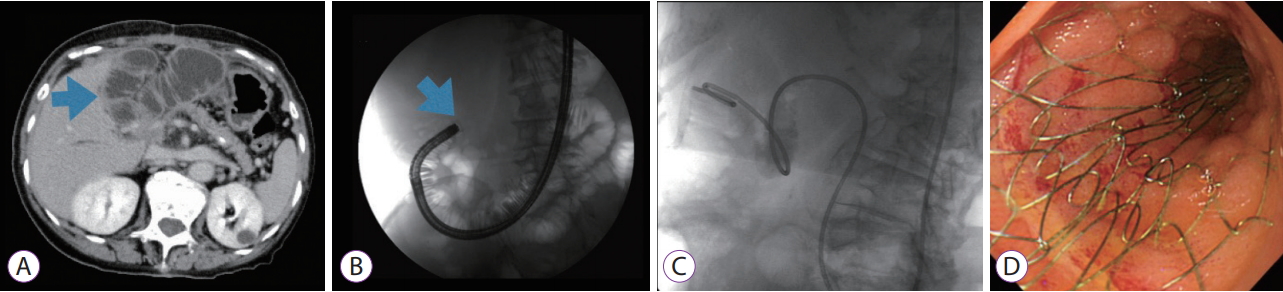
- In this study, we assessed a series of our cases in which endoscopic self-expandable metal stents (SEMSs) were used to treat malignant afferent loop obstruction (ALO) that arose after pancreaticoduodenectomy (PD). We retrospectively examined the records of 7 patients who underwent endoscopic SEMS placement for malignant ALO following PD. Clinical success was achieved in all cases. The median procedure time was 30 min (range, 15–50 min). There were no cases of stent occlusion, and no procedure-related adverse events were encountered. All patients died of their primary disease, and the median overall survival period was 155 days (range, 96–374 days). A re-intervention involving endoscopic ultrasound-guided hepaticogastrostomy combined with antegrade stenting was performed for obstructive jaundice and acute cholangitis in 1 case. In conclusion, endoscopic SEMS placement may be an effective and safe treatment for malignant ALO that arises after PD.
-
Citations
Citations to this article as recorded by- PTCD-stent complex for recurrent malignant afferent loop obstruction after pancreaticoduodenectomy
Dongxue Geng, Yi Miao, Jingjing Tao
BMC Surgery.2026;[Epub] CrossRef - Endoscopic ultrasound-guided gastrointestinal anastomoses for the treatment of afferent limb syndrome: a systematic review and meta-analysis
Giacomo Emanuele Maria Rizzo, Giuseppe Vanella, Lorenzo Fuccio, Antonio Facciorusso, Stefano Mazza, Fausto Catena, Carlo Fabbri, Andrea Anderloni, Ilaria Tarantino
Surgical Endoscopy.2026; 40(5): 3944. CrossRef - Early and late effects of endoscopic interventions in patients with malignant afferent loop syndrome: A single‐center experience and literature review
Kenjiro Yamamoto, Takao Itoi, Yukitoshi Matsunami, Atsushi Sofuni, Takayoshi Tsuchiya, Shuntaro Mukai, Hiroyuki Kojima, Hirohito Minami, Ryosuke Nakatsubo, Ryosuke Tonozuka
Journal of Hepato-Biliary-Pancreatic Sciences.2024; 31(2): 120. CrossRef - Efficacy of endoscopic ultrasound‐guided gastroenterostomy using self‐expandable metallic stent for afferent loop syndrome: A single‐center retrospective study
Yuya Hagiwara, Susumu Hijioka, Yoshikuni Nagashio, Yuta Maruki, Akihiro Ohba, Yuki Kawasaki, Kotaro Takeshita, Tetsuro Takasaki, Daiki Agarie, Hidenobu Hara, Shin Yagi, Soma Fukuda, Masaru Kuwada, Daiki Yamashige, Kohei Okamoto, Mark Chatto, Shunsuke Kond
Journal of Gastroenterology and Hepatology.2024; 39(10): 2136. CrossRef - Successful metal stent placement using short single-balloon endoscope for afferent loop syndrome after pancreaticoduodenectomy
Takuto Furukawa, Yuichi Takano, Jun Noda, Masataka Yamawaki, Tetsushi Azami, Fumitaka Niiya, Fumiya Nishimoto, Naotaka Maruoka, Masatsugu Nagahama
Progress of Digestive Endoscopy.2024; 104(1): 98. CrossRef - Antegrade metallic stent placement using a slim cholangioscope for malignant afferent loop obstruction
Haruo Miwa, Ritsuko Oishi, Kazuki Endo, Hiromi Tsuchiya, Akihiro Funaoka, Yuichi Suzuki, Shin Maeda
Endoscopy.2024; 56(S 01): E774. CrossRef - The Role of Endoscopic Management in Afferent Loop Syndrome
Clement Chun Ho Wu, Elizabeth Brindise, Rami El Abiad, Mouen A. Khashab
Gut and Liver.2023; 17(3): 351. CrossRef - Simultaneous stent placement for biliary and afferent loop obstruction due to tumor recurrence after pancreatoduodenectomy
Tatsunori Satoh, Hirotoshi Ishiwatari, Kazuma Ishikawa, Hidenori Kimura, Hiroyuki Matsubayashi, Hiroyuki Ono
Endoscopy.2022; 54(09): E524. CrossRef - Extra-anatomic percutaneous stenting of a malignant afferent loop obstruction following pancreaticoduodenectomy
Stefan Lam, Sarah Khan, Robert Hutchins, Tim Fotheringham
International Journal of Gastrointestinal Intervention.2022; 11(2): 77. CrossRef - Endoscopic Transluminal Stent Placement for Malignant Afferent Loop Obstruction
Chinatsu Yonekura, Takashi Sasaki, Takafumi Mie, Takeshi Okamoto, Tsuyoshi Takeda, Takaaki Furukawa, Yuto Yamada, Akiyoshi Kasuga, Masato Matsuyama, Masato Ozaka, Naoki Sasahira
Journal of Clinical Medicine.2022; 11(21): 6357. CrossRef - Clinical management for malignant afferent loop obstruction
Arata Sakai, Hideyuki Shiomi, Atsuhiro Masuda, Takashi Kobayashi, Yasutaka Yamada, Yuzo Kodama
World Journal of Gastrointestinal Oncology.2021; 13(7): 684. CrossRef - Clinical management for malignant afferent loop obstruction
Arata Sakai, Hideyuki Shiomi, Atsuhiro Masuda, Takashi Kobayashi, Yasutaka Yamada, Yuzo Kodama
World Journal of Gastrointestinal Oncology.2021; 13(7): 509. CrossRef - Endoscopic Ultrasound-Guided Gastroenterostomy for Afferent Loop Syndrome
Hideyuki Shiomi, Arata Sakai, Ryota Nakano, Shogo Ota, Takashi Kobayashi, Atsuhiro Masuda, Hiroko Iijima
Clinical Endoscopy.2021; 54(6): 810. CrossRef - Percutaneous- and EUS-guided gastroenterostomy for malignant afferent limb syndrome
Dayyan Adoor, Zachary L. Smith
VideoGIE.2020; 5(11): 542. CrossRef
- PTCD-stent complex for recurrent malignant afferent loop obstruction after pancreaticoduodenectomy
- 8,831 View
- 125 Download
- 11 Web of Science
- 14 Crossref
Focused Review Series: The Roles of Endoscopy in the Management of Colonic Obstruction and Perforation
- Endoscopic Management of Malignant Colonic Obstruction
-
Seung Young Seo, Sang Wook Kim
- Clin Endosc 2020;53(1):9-17. Published online January 7, 2020
- DOI: https://doi.org/10.5946/ce.2019.051
-
Abstract
PDF
- Advanced colorectal cancer can cause acute colonic obstruction, which is a life-threatening condition that requires emergency bowel decompression. Malignant colonic obstruction has traditionally been treated using emergency surgery, including primary resection or stoma formation. However, relatively high rates of complications, such as anastomosis site leakage, have been considered as major concerns for emergency surgery. Endoscopic management of malignant colonic obstruction using a self-expandable metal stent (SEMS) was introduced 20 years ago and it has been used as a first-line palliative treatment. However, endoscopic treatment of malignant colonic obstruction using SEMSs as a bridge to surgery remains controversial owing to short-term complications and longterm oncological outcomes. In this review, the current status of and recommendations for endoscopic management using SEMSs for malignant colonic obstruction will be discussed.
-
Citations
Citations to this article as recorded by- Predictors of perforation following colorectal stenting in patients with acute intestinal obstruction
K.I. Seurko, A.N. Kosenkov, E.V. Stolyarchuk, K.I. Seurko, S.A. Grashchenko, D.A. Stribunov
Pirogov Russian Journal of Surgery.2026; (3): 33. CrossRef - Palliative Colorectal Stenting for Malignant Colonic Obstruction: Usefulness as an Initial Intervention in Unresectable Advanced Colorectal Cancer
Ren Kuwabara, Makiko Matsumura, Keita Terashima, Ryosuke Nakamori, Yuto Endo, Eigo Kojima
Palliative Care Research.2026; 21(2): 99. CrossRef - Direct visualization–assisted enteral stent placement in malignant colorectal obstruction: a case report
Tianjie Han, Junshan Li
Frontiers in Medicine.2026;[Epub] CrossRef - Controversial issues of colon stenting in case of tumor obstructive intestinal obstruction: surgical and oncological aspects
S.A. Aliyev, E.S. Aliyev, T.K. Aliyev
Endoscopic Surgery.2025; 31(2): 65. CrossRef - Risk factors for postoperative anastomotic leakage in obstructive left colonic carcinoma
Zhenzhen Liu, Chaowei Zhang, Binliang Zhao, Zhicheng Zhang, Yunjie Huang, Zhaohui Lin, Jie Qin, Lijun Huang
Updates in Surgery.2025; 77(4): 1001. CrossRef - Palliative Luminal Treatment of Colorectal Cancer Using Endoscopic Calcium-Electroporation: First Case Series from United Kingdom
Ademola Adeyeye, Olaolu Olabintan, Homira Ayubi, Hao Gao, Aman Saini, Andrew Emmanuel, Bu’Hussain Hayee, Amyn Haji
Journal of Clinical Medicine.2025; 14(12): 4138. CrossRef - Comparative effectiveness of colonic stenting alone and with neoadjuvant chemotherapy for patients with left-sided obstructive colon cancer: a meta-analysis
Qin Sun, Xinyi Zhang, Jiani You, Yueshan Pang, Zining Luo, Yuhang Liu, Yuquan Chen, Yixin Sun, Zifeng Zhuang, Zhiwu Li, Anan Yu, Tianliang Yao, Ming He, Xu Liu, Yuan Zhang, Yongfu Xiong, Yixing Ren, Jiebin Xie
International Journal of Surgery.2025; 111(10): 7168. CrossRef - STRATIFICATION OF POSTOPERATIVE COMPLICATIONS IN PATIENTS WITH COMPLICATED FORMS OF COLON CANCER USING THE CLAVIEN-DINDO SCALE
M. A. Kubrak, S. M. Zavgorodniy, M. B. Danilyk
Bulletin of Problems Biology and Medicine.2025; 1(1): 184. CrossRef - The Use of Laparoscopic Technologies in the Treatment of Patients with Complicated Forms of Colon Cancer
Mykhailo Kubrak, Serhiy Zavgorodnii, Mykhailo Danilyk
Futurity Medicine.2025;[Epub] CrossRef - ОЦІНКА РЕЗУЛЬТАТІВ ЗАСТОСУВАННЯ ЛАПАРОСКОПІЧНИХ ТЕХНОЛОГІЙ У КОМПЛЕКСНОМУ ЛІКУВАННІ ПАЦІЄНТІВ З УСКЛАДНЕНИМИ ФОРМАМИ РАКУ ОБОДОВОЇ КИШКИ
М. А. КУБРАК, С. М. ЗАВГОРОДНІЙ, М. Б. ДАНИЛЮК
Шпитальна хірургія. Журнал імені Л. Я. Ковальчука.2025; (3): 92. CrossRef - Endoscopic Management of Colonic Obstruction
Ahmad F. Aboelezz, Mohamed O. Othman
Gastrointestinal Endoscopy Clinics of North America.2024; 34(1): 141. CrossRef - Management of obstructed colorectal carcinoma in an emergency setting: An update
Efstathios T Pavlidis, Ioannis N Galanis, Theodoros E Pavlidis
World Journal of Gastrointestinal Oncology.2024; 16(3): 598. CrossRef - Challenges associated with low rectal malignant obstruction stenting: a case report
Victor Cabrera-Bou, Eddy P Lincango, Alessandra E Cabrera, Gabriel Diaz-Pagan, Nathan Kostick, Noah Sobel, Luis F Serrano, Philip Kondylis
Journal of Surgical Case Reports.2024;[Epub] CrossRef - Advanced Techniques in Therapeutic and Inflammatory Bowel Disease Colonoscopy
Alexander Worix, Rajesh N. Keswani
Gastroenterology Clinics of North America.2024; 53(4): 587. CrossRef - EVALUATION OF THE RESULTS OF USING ENDOSCOPIC METHODS AS THE FIRST STAGE OF TREATMENT OF PATIENTS WITH COMPLICATED FORMS OF COLON CANCER
M. A. Kubrak, S. M. Zavgorodnii, M. B. Danilyk
Bulletin of Problems Biology and Medicine.2024; 1(3): 149. CrossRef - Can we use colon stenting in accelerated recovery programs for surgical treatment colon cancer complicated by obstructive intestinal obstruction? A literature review
Saday A. Aliyev, Emil S. Aliyev
Russian Journal of Oncology.2024; 29(2): 130. CrossRef - USING OF ENDOSCOPIC METHODS IN THE TREATMENT OF PATIENTS WITH COMPLICATED FORMS OF COLON CANCER
M. A. Kubrak , S. M. Zavgorodnii , M. B. Danilyk
Medical Science of Ukraine (MSU).2024; 20(3): 16. CrossRef - Oncologic impact of colonic stents for obstructive left-sided colon cancer
Hideyuki Suzuki, Shingo Tsujinaka, Yoshihiro Sato, Tomoya Miura, Chikashi Shibata
World Journal of Clinical Oncology.2023; 14(1): 1. CrossRef - Effectiveness and early postoperative outcomes of palliative endoluminal stenting versus Hartmann’s procedure in acute malignant bowel obstruction in high-risk patients
Mohammed Fayek Mahfouz, Tamer M. Saeid Salama, Amr H. Afifi, Hany Mansour Khalil Dabous
Annals of Coloproctology.2022; 38(2): 141. CrossRef - Oncologic safety of colonic stenting as a bridge to surgery in left-sided malignant colonic obstruction: Current evidence and prospects
Sukit Pattarajierapan, Nattapanee Sukphol, Karuna Junmitsakul, Supakij Khomvilai
World Journal of Clinical Oncology.2022; 13(12): 943. CrossRef - Tendencias en el manejo quirúrgico de urgencia del cáncer de colon obstructivo. Situación departamental de Santander, Colombia, y consideraciones actuales
Silvia Inés Guerrero Macías, Ada Bustos-Guerrero, Andres Felipe Chaparro-Zaraza
Revista Colombiana de Cancerología.2022; 26(4): 362. CrossRef - Predictors of clinical outcomes of self-expandable metal stent treatment for malignant colorectal obstruction
Bora Han, Ji-Yun Hong, Eun Myung, Hyung-Hoon Oh, Hee-Chan Yang, Sang-Wook Kim, Jun Lee, Seong-Jung Kim, Yeom-Dong Han, Geom-Seok Seo, Gun-Young Hong, Ho-Dong Kim, Hyun-Soo Kim, Young-Eun Joo
Medicine.2021; 100(27): e26616. CrossRef - Obstructing Left-Sided Colonic Cancer: Is Endoscopic Stenting a Bridge to Surgery or a Bridge to Nowhere?
Augusto Lauro, Margherita Binetti, Samuele Vaccari, Maurizio Cervellera, Valeria Tonini
Digestive Diseases and Sciences.2020; 65(10): 2789. CrossRef
- Predictors of perforation following colorectal stenting in patients with acute intestinal obstruction
- 12,515 View
- 303 Download
- 12 Web of Science
- 23 Crossref
Original Articles
- Endoscopic Ultrasonography-Guided Gallbladder Drainage as a Treatment Option for Acute Cholecystitis after Metal Stent Placement in Malignant Biliary Strictures
-
Fumisato Kozakai, Yoshihide Kanno, Kei Ito, Shinsuke Koshita, Takahisa Ogawa, Hiroaki Kusunose, Kaori Masu, Toshitaka Sakai, Toji Murabayashi, Keisuke Yonamine, Yujiro Kawakami, Yuki Fujii, Kazuaki Miyamoto, Yutaka Noda
- Clin Endosc 2019;52(3):262-268. Published online March 15, 2019
- DOI: https://doi.org/10.5946/ce.2018.183
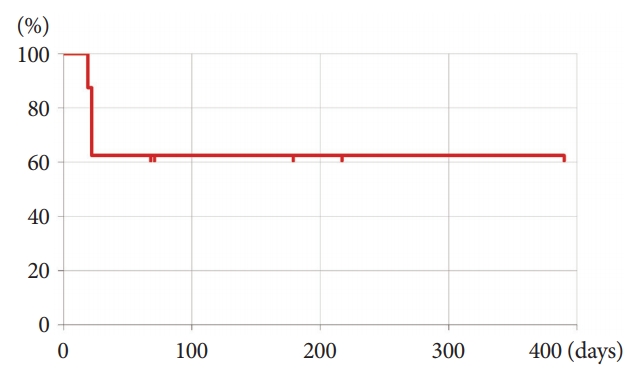
-
Abstract
PDF
- Background
/Aims: It is often difficult to manage acute cholecystitis after metal stent (MS) placement in unresectable malignant biliary strictures. The aim of this study was to evaluate the feasibility of endoscopic ultrasonography-guided gallbladder drainage (EUS-GBD) for acute cholecystitis.
Methods
The clinical outcomes of 10 patients who underwent EUS-GBD for acute cholecystitis after MS placement between January 2011 and August 2018 were retrospectively evaluated. The procedural outcomes of percutaneous transhepatic gallbladder drainage (PTGBD) with tube placement (n=11 cases) and aspiration (PTGBA) (n=27 cases) during the study period were evaluated as a reference.
Results
The technical success and clinical effectiveness rates of EUS-GBD were 90% (9/10) and 89% (8/9), respectively. Severe bile leakage that required surgical treatment occurred in one case. Acute cholecystitis recurred after stent dislocation in 38% (3/8) of the cases. Both PTGBD and PTGBA were technically successful in all cases without severe adverse events and clinically effective in 91% and 63% of the cases, respectively.
Conclusions
EUS-GBD after MS placement was a feasible option for treating acute cholecystitis. However, it was a rescue technique following the established percutaneous intervention in the current setting because of the immature technical methodology, including dedicated devices, which need further development. -
Citations
Citations to this article as recorded by- Endoscopic ultrasound-guided gallbladder drainage for acute cholecystitis: Should the endoscopic option become the status quo?
Robert Sean O'Neill, Timothy Walter, Christina Lee, Kevin Jia, Ian Turner, George Ermerak, Paul Edwards, David Abi-Hanna, Milan Bassan, Cynthuja Thilakanathan
World Journal of Gastrointestinal Pharmacology and Therapeutics.2026;[Epub] CrossRef - Endoscopic Ultrasound‐Guided Gallbladder Drainage Using a 19‐Gauge Needle and a Modified Slim Metal Stent: A Simplified Approach (With Video)
Alan Chuncharunee, Kazuo Hara, Shin Haba, Takamichi Kuwahara, Nozomi Okuno, Shimpei Matsumoto, Hiroki Koda, Keigo Oshiro, Yuma Yamazaki
Digestive Endoscopy.2026;[Epub] CrossRef - Endoscopic Ultrasound-Guided Gallbladder Drainage Using Double-Pigtail Plastic Stents for Acute Cholecystitis in Patients with Malignant Biliary Obstruction
Keiki Nagai, Yusuke Kurita, Yuji Fujita, Kensuke Kubota, Tomoki Ogata, Etsuko Yamabe, Hiroki Uechi, Yuji Koyama, Shintaro Tsujikawa, Yu Honda, Takayuki Oda, Takeshi Iizuka, Shin Yagi, Eisuke Suzuki, Seitaro Tsujino, Ken Ishii, Sho Hasegawa, Shingo Kato, M
Journal of Clinical Medicine.2026; 15(16): 6329. CrossRef - Post-endoscopic retrograde cholangiopancreatography cholecystitis: A review of incidence, risk factors, prevention, and management
Suprabhat Giri, Shivaraj Afzalpurkar, Prasanna Gore, Gaurav Khatana, Saroj Kanta Sahu, Dibya Lochan Praharaj, Bipadabhanjan Mallick, Preetam Nath, Sridhar Sundaram, Manoj Kumar Sahu
World Journal of Gastrointestinal Endoscopy.2025;[Epub] CrossRef - The Palliation of Unresectable Pancreatic Cancer: Evolution from Surgery to Minimally Invasive Modalities
Muaaz Masood, Shayan Irani, Mehran Fotoohi, Lauren Wancata, Rajesh Krishnamoorthi, Richard A. Kozarek
Journal of Clinical Medicine.2025; 14(14): 4997. CrossRef - The i-EUS consensus on EUS-guided gallbladder drainage: A 3-step modified Delphi approach
Antonio Facciorusso, Cecilia Binda, Stefano Francesco Crinò, Andrea Lisotti, Marco Spadaccini, Arnaldo Amato, Lucio Carrozza, Fausto Catena, Lorenzo Cobianchi, Chiara Coluccio, Edoardo Forti, Lorenzo Fuccio, Dario Ligresti, Marcello Fabio Maida, Aurelio M
Endoscopic Ultrasound.2025; 14(3): 106. CrossRef - The Effect of Lumen-Apposing Metal Stent (LAMS) in Acute Cholecystitis Unfit for Surgery: Good Tidings
Valentina Zadro, Giulia Bertoncini, Giuliano Francesco Bonura, Pablo Cortegoso Valdivia, Noemi Gualandi, Paola Soriani, Tommaso Gabbani, Mauro Manno
Diagnostics.2025; 15(22): 2835. CrossRef - Risk factors and treatment strategies for cholecystitis after metallic stent placement for malignant biliary obstruction: a multicenter retrospective study
Akihiro Matsumi, Hironari Kato, Taiji Ogawa, Toru Ueki, Masaki Wato, Masakuni Fujii, Tatsuya Toyokawa, Ryo Harada, Yuki Ishihara, Masahiro Takatani, Hirofumi Tsugeno, Naoko Yunoki, Takeshi Tomoda, Toshiharu Mitsuhashi, Motoyuki Otsuka
Gastrointestinal Endoscopy.2024; 100(1): 76. CrossRef - The updated Asia-Pacific consensus statement on the role of endoscopic management in malignant hilar biliary obstruction
Phonthep Angsuwatcharakon, Santi Kulpatcharapong, Alan Chuncharunee, Christopher Khor, Benedict Devereaux, Jong Ho Moon, Thawee Ratanachu-ek, Hsiu Po Wang, Nonthalee Pausawasdi, Amit Maydeo, Takao Itoi, Ryan Ponnudurai, Mohan Ramchandani, Yousuke Nakai, D
Endoscopy International Open.2024; 12(09): E1065. CrossRef - Prophylactic endoscopic transpapillary gallbladder stenting to prevent acute cholecystitis induced after metallic stent placement for malignant biliary strictures: a retrospective study in Japan
Fumisato Kozakai, Yoshihide Kanno, Shinsuke Koshita, Takahisa Ogawa, Hiroaki Kusunose, Toshitaka Sakai, Keisuke Yonamine, Kazuaki Miyamoto, Haruka Okano, Yuto Matsuoka, Kento Hosokawa, Hidehito Sumiya, Kei Ito
Clinical Endoscopy.2024; 57(5): 647. CrossRef - Endoscopic Transpapillary Gallbladder Drainage for Recurrent Cholecystitis after Covered Self-expandable Metal Stent Placement for Unresectable Malignant Biliary Obstruction
Akinori Maruta, Takuji Iwashita, Kaori Banno, Takuya Koizumi, Soichi Iritani, Kensaku Yoshida, Shogo Shimizu, Masahito Shimizu
Internal Medicine.2023; 62(2): 237. CrossRef - Treatment Strategy for Acute Cholecystitis Induced by a Metallic Stent Placed in Malignant Biliary Strictures: Role of Percutaneous Transhepatic Gallbladder Aspiration
Fumisato Kozakai, Yoshihide Kanno, Shinsuke Koshita, Takahisa Ogawa, Hiroaki Kusunose, Toshitaka Sakai, Keisuke Yonamine, Kazuaki Miyamoto, Hideyuki Anan, Haruka Okano, Kei Ito
Internal Medicine.2023; 62(5): 673. CrossRef - Prospective feasibility study on the efficacy and safety of a novel spiral dilator for endoscopic ultrasound‐guided drainage
Takahisa Ogawa, Yoshihide Kanno, Shinsuke Koshita, Hiroaki Kusunose, Toshitaka Sakai, Keisuke Yonamine, Kazuaki Miyamoto, Fumisato Kozakai, Haruka Okano, Hideyuki Anan, Kento Hosokawa, Kei Ito
DEN Open.2023;[Epub] CrossRef - Endoscopic ultrasound (EUS)-guided cholecystostomy versus percutaneous cholecystostomy (PTC) in the management of acute cholecystitis in patients unfit for surgery: a systematic review and meta-analysis
Matheus Candido Hemerly, Diogo Turiani Hourneaux de Moura, Epifanio Silvino do Monte Junior, Igor Mendonça Proença, Igor Braga Ribeiro, Erika Yuki Yvamoto, Pedro Henrique Boraschi Vieira Ribas, Sergio A. Sánchez-Luna, Wanderley Marques Bernardo, Eduardo G
Surgical Endoscopy.2023; 37(4): 2421. CrossRef - Trial sequential analysis of EUS-guided gallbladder drainage versus percutaneous cholecystostomy in patients with acute cholecystitis
Alessandro Cucchetti, Cecilia Binda, Elton Dajti, Monica Sbrancia, Giorgio Ercolani, Carlo Fabbri
Gastrointestinal Endoscopy.2022; 95(3): 399. CrossRef - Percutaneous Cholecystostomy: A Bridge to Less Morbidity
Anil Kumar Singh
The Arab Journal of Interventional Radiology.2022; 6(1): 3. CrossRef - Determinants of outcomes of transmural EUS-guided gallbladder drainage: systematic review with proportion meta-analysis and meta-regression
Carlo Fabbri, Cecilia Binda, Monica Sbrancia, Elton Dajti, Chiara Coluccio, Giorgio Ercolani, Andrea Anderloni, Alessandro Cucchetti
Surgical Endoscopy.2022; 36(11): 7974. CrossRef - Endoscopic ultrasound-guided cholecystogastrostomy as an alternative biliary drainage route in malignant obstructions
Marco A. D’Assuncao, Fernando P. Marson, Saverio T. N. Armellini, Fernando L. Mota, Fernando J. S. de Oliveira, Eduardo M. A. Pereira Junior
Endoscopy.2021; 53(07): E277. CrossRef - Efficacy and safety of conversion of percutaneous cholecystostomy to endoscopic transpapillary gallbladder stenting in high-risk surgical patients
Hyung Ku Chon, Chan Park, Dong Eun Park, Tae Hyeon Kim
Hepatobiliary & Pancreatic Diseases International.2021; 20(5): 478. CrossRef - Endoscopic Transpapillary Gallbladder Drainage for Acute Cholecystitis After Biliary Self-Expandable Metal Stent Placement
Kazunari Nakahara, Ryo Morita, Yosuke Michikawa, Keigo Suetani, Nozomi Morita, Akashi Fujita, Junya Sato, Yosuke Igarashi, Hiroki Ikeda, Kotaro Matsunaga, Tsunamasa Watanabe, Shinjiro Kobayashi, Takehito Otsubo, Fumio Itoh
Surgical Laparoscopy, Endoscopy & Percutaneous Techniques.2020; 30(5): 416. CrossRef - Endoscopic Management of Acute Cholecystitis Following Metal Stent Placement for Malignant Biliary Strictures: A View from the Inside Looking in
Sean Bhalla, Ryan Law
Clinical Endoscopy.2019; 52(3): 209. CrossRef
- Endoscopic ultrasound-guided gallbladder drainage for acute cholecystitis: Should the endoscopic option become the status quo?
- 10,791 View
- 173 Download
- 21 Web of Science
- 21 Crossref
- Health-Care Utilization and Complications of Endoscopic Esophageal Dilation in a National Population
-
Abhinav Goyal, Kshitij Chatterjee, Sujani Yadlapati, Shailender Singh
- Clin Endosc 2017;50(4):366-371. Published online March 17, 2017
- DOI: https://doi.org/10.5946/ce.2016.155
-
Abstract
PDF
- Background
/Aims: Esophageal stricture is usually managed with outpatient endoscopic dilation. However, patients with food impaction or failure to thrive undergo inpatient dilation. Esophageal perforation is the most feared complication, and its risk in inpatient setting is unknown.
Methods
We used National Inpatient Sample (NIS) database for 2007–2013. International Classification of Diseases, 9th revision, Clinical Modification (ICD-9-CM) codes were used to identify patients with esophageal strictures. Logistic regression was used to assess association between hospital/patient characteristics and utilization of esophageal dilation.
Results
There were 591,187 hospitalizations involving esophageal stricture; 4.2% were malignant. Endoscopic dilation was performed in 28.7% cases. Dilation was more frequently utilized (odds ratio [OR], 1.36; p<0.001), had higher in-hospital mortality (3.1% vs. 1.4%, p<0.001), and resulted in longer hospital stays (5 days vs. 4 days, p=0.01), among cases of malignant strictures. Esophageal perforation was more common in the malignant group (0.9% vs. 0.5%, p=0.007). Patients with malignant compared to benign strictures undergoing dilation were more likely to require percutaneous endoscopic gastrostomy or jejunostomy (PEG/J) tube (14.1% vs. 4.5%, p<0.001). Palliative care services were utilized more frequently in malignant stricture cases not treated with dilation compared to those that were dilated.
Conclusions
Inpatient endoscopic dilation was utilized in 29% cases of esophageal stricture. Esophageal perforation, although infrequent, is more common in malignant strictures. -
Citations
Citations to this article as recorded by- Esophageal Perforation During Dilation in a Patient With Hypopharyngeal Metastatic Squamous Cell Carcinoma
David Ai, Mauna I Rao, Ashley C Wetzig
Cureus.2026;[Epub] CrossRef - Safety of a Novel Upper Esophageal Sphincter Balloon Dilator
Grace M. Wandell, Janeth Garcia Swartwood, Ashar Singh Brar, Gregory N. Postma, Peter C. Belafsky
The Laryngoscope.2025; 135(1): 66. CrossRef - Diffuse Esophageal Spasm: An Alternative Treatment Approach
McKenzie K Allen , Wayne Frei
Cureus.2024;[Epub] CrossRef - Adverse events associated with EGD and EGD-related techniques
Nayantara Coelho-Prabhu, Nauzer Forbes, Nirav C. Thosani, Andrew C. Storm, Swati Pawa, Divyanshoo R. Kohli, Larissa L. Fujii-Lau, Sherif Elhanafi, Audrey H. Calderwood, James L. Buxbaum, Richard S. Kwon, Stuart K. Amateau, Mohammad A. Al-Haddad, Bashar J.
Gastrointestinal Endoscopy.2022; 96(3): 389. CrossRef - Diagnosis and management of iatrogenic endoscopic perforations: European Society of Gastrointestinal Endoscopy (ESGE) Position Statement – Update 2020
Gregorios A. Paspatis, Marianna Arvanitakis, Jean-Marc Dumonceau, Marc Barthet, Brian Saunders, Stine Ydegaard Turino, Angad Dhillon, Maria Fragaki, Jean-Michel Gonzalez, Alessandro Repici, Roy L.J. van Wanrooij, Jeanin E. van Hooft
Endoscopy.2020; 52(09): 792. CrossRef - Acute coronary syndromes in the peri‐operative period after kidney transplantation in United States
Abhinav Goyal, Kevin Bryan Lo, Kshitij Chatterjee, Roy O. Mathew, Peter A. McCullough, Sripal Bangalore, Janani Rangaswami
Clinical Transplantation.2020;[Epub] CrossRef - Five-year single-centre experience of carcinoma of the oesophagus from Blantyre, Malawi
John David Chetwood, Peter J Finch, Anstead Kankwatira, Jane Mallewa, Melita A Gordon, Leo Masamba
BMJ Open Gastroenterology.2018; 5(1): e000232. CrossRef - Safe and Proper Management of Esophageal Stricture Using Endoscopic Esophageal Dilation
Jae Jin Hwang
Clinical Endoscopy.2017; 50(4): 309. CrossRef
- Esophageal Perforation During Dilation in a Patient With Hypopharyngeal Metastatic Squamous Cell Carcinoma
- 16,400 View
- 135 Download
- 7 Web of Science
- 8 Crossref
Focused Review Series: Past, present and future of gastrointestinal stents
- Current Status of Biliary Metal Stents
-
Hyeong Seok Nam, Dae Hwan Kang
- Clin Endosc 2016;49(2):124-130. Published online February 25, 2016
- DOI: https://doi.org/10.5946/ce.2016.023
-
Abstract
PDF
- Many advances have been achieved in biliary stenting over the past 30 years. Endoscopic stent placement has become the primary management therapy to relieve obstruction in patients with benign or malignant biliary tract diseases. Compared with plastic stents, a self-expandable metallic stent (SEMS) has been used for management in patients with malignant strictures because of a larger lumen and longer stent patency. Recently, SEMS has been used for various benign biliary strictures and leaks. In this article, we briefly review the characteristics of SEMS as well as complications of stent placement. We review the current guidelines for managing malignant and benign biliary obstructions. Recent developments in biliary stenting are also discussed.
-
Citations
Citations to this article as recorded by- Comparison of fully covered self-expandable metal stents with and without antimigration fins for the management of distal malignant biliary obstruction
Jacob Bauss, Jad P. AbiMansour, Daniel M. Simadibrata, Ross Dierkhising, John A. Martin, Bret T. Petersen, Ryan J. Law, Andrew C. Storm, Eric J. Vargas, Aliana Bofill-Garcia, Barham K. Abu Dayyeh, Vinay Chandrasekhara
Gastrointestinal Endoscopy.2026; 103(2): 253. CrossRef - Beyond a Conduit: The Evolution of Functional Biliary Stents From Active Intervention to Enabling Platforms
Muhan Li, Xu Liu, Xin Ye, Zhixia Dong, Xinjian Wan
iNew Medicine.2026;[Epub] CrossRef - The paradigm evolution of biliary stents: from passive drainage to intelligent diagnostic-therapeutic platforms
Tonghui Wei, Min Guo, Jiangpu Yi, Zhenyu Yang
Acta Biomaterialia.2026;[Epub] CrossRef - Endoscopic Management of Recurrent Biliary Sepsis Associated with Prolonged Biliary Stent Exposure into the Duodenal Bulb and Concurrent Duodenal Obstruction in Advanced Pancreatic Cancer
Wonjai Hur, Gyuyeong Kim, Bohyun Jang, Haegwang Shin, Kyoohyun Park, Yoosuk Suh, Donghui Kim, Hongsik Lee, Jaeil Chung
Chonnam Medical Journal.2026; 62(3): 136. CrossRef - Biliary drainage in pancreatic cancer with duodenal invasion: which route is the best?
Tanyaporn Chantarojanasiri, Thawee Ratanachu-Ek
Clinical Endoscopy.2025; 58(1): 82. CrossRef - Avoiding additional adverse events: exercising caution with use of transpapillary covered metal biliary stents
Stuart K. Amateau
Gastrointestinal Endoscopy.2025; 101(6): 1118. CrossRef - Application of Self‐Expandable Metal Stent in Dogs and Cats for the Management of Extrahepatic Biliary Obstruction: 13 Cases (2021–2024)
Suh Hyun Chai, Kyuseok Choi, Sungin Lee, Yongsun Kim
Veterinary Medicine and Science.2025;[Epub] CrossRef - Selective control of stent biodegradability through a sheath-core microfiber structure
Ju Hyang Park, Ga Hee Kim, Seoyeon Lee, Jin Yoo, Soon Ho Jang, Ju-Hye Yang, Taehwan Lim, Jun Sik Son
MRS Communications.2025; 16(1): 118. CrossRef - Surgical Palliation for Advanced Pancreas Cancer
Caitlin S. Jacobs, Dominic J. Vitello, Akhil Chawla
Surgical Clinics of North America.2024; 104(5): 1121. CrossRef - Biliary stents for active materials and surface modification: Recent advances and future perspectives
Yuechuan Li, Kunshan Yuan, Chengchen Deng, Hui Tang, Jinxuan Wang, Xiaozhen Dai, Bing Zhang, Ziru Sun, Guiying Ren, Haijun Zhang, Guixue Wang
Bioactive Materials.2024; 42: 587. CrossRef - Endoscopic management of benign and malignant hilar stricture
Marcella Pimpinelli, Michael Makar, Michel Kahaleh
Digestive Endoscopy.2023; 35(4): 443. CrossRef - Interventional Radiology Management of Vascular Complications From Gastrointestinal Interventions
Harish A. Narayanan, Sailendra G. Naidu, Sadeer Alzubaidi, Indravadan Patel, Sasha Staack, Rahmi Oklu
Contemporary Diagnostic Radiology.2023; 46(4): 1. CrossRef - Percutaneous transhepatic cholangial drainage/percutaneous transhepatic biliary stent implantation for treatment of extrahepatic cholangiocarcinoma with obstructive jaundice
Yue Chen, Chao Zhang, Tao Luo
World Chinese Journal of Digestology.2023; 31(5): 165. CrossRef - Safety and efficacy of self-expandable metallic stent combined with 125I brachytherapy for the treatment of malignant obstructive jaundice
Ye Sheng, Xiaobo Fu, Guobao Wang, Maoyuan Mu, Weiwei Jiang, Zixiong Chen, Han Qi, Fei Gao
Cancer Imaging.2023;[Epub] CrossRef - Effect of Percutaneous Endobiliary Radiofrequency Ablation in Malignant Bile Stenosis
Hamza ÖZER, Bige SAYIN, İlkay AKMANGİT
Düzce Tıp Fakültesi Dergisi.2023; 25(1): 78. CrossRef - Research progress on biliary stents
Qi Zhang, Haipo Cui, Yan Zhang, Hexuan Jiang
Progress in Medical Devices.2023;[Epub] CrossRef - Predictors of stent dysfunction in patients with bilateral metal stents for malignant hilar obstruction
Hoonsub So, Chi Hyuk Oh, Tae Jun Song, Sung Woo Ko, Jun Seong Hwang, Dongwook Oh, Do Hyun Park, Sang Soo Lee, Dong-Wan Seo, Seok Ho Dong, Sung Koo Lee, Myung-Hwan Kim, Gianfranco D. Alpini
PLOS ONE.2021; 16(3): e0249096. CrossRef - Biliary Strictures: A Surgeon's Perspective for Interventional Radiologists
Nitin Katariya, Amit K. Mathur
Seminars in Interventional Radiology.2021; 38(03): 273. CrossRef - Biosafety of a novel covered self-expandable metal stent coated with poly(2-methoxyethyl acrylate) in vivo
Tetsuya Ishizawa, Naohiko Makino, Yasuharu Kakizaki, Akiko Matsuda, Yoshihide Toyokawa, Shun Ooyama, Masaru Tanaka, Yoshiyuki Ueno, Wenguo Cui
PLOS ONE.2021; 16(9): e0257828. CrossRef - Fully covered metal biliary stents: A review of the literature
Robert Lam, Thiruvengadam Muniraj
World Journal of Gastroenterology.2021; 27(38): 6357. CrossRef - EUS-guided antegrade stenting using a braided metal stent with a 6-Fr novel slim delivery system for malignant biliary stricture following Roux-en-Y reconstruction (with video)
Hirofumi Harima, Seiji Kaino, Yuko Fujimoto, Shogo Amano, Isao Sakaida
Endoscopic Ultrasound.2020; 9(2): 141. CrossRef - Clinical impact of irreversible electroporation ablation for unresectable hilar cholangiocarcinoma
Chih-Yang Hsiao, Po-Chih Yang, Xiaoyong Li, Kai-Wen Huang
Scientific Reports.2020;[Epub] CrossRef - Percutaneous stent placement for malignant hilar biliary obstruction: side-by-side versus stent-in-stent technique
Wei-Zhong Zhou, Sheng Liu, Zheng-Qiang Yang, Yu-Tao Xian, Hong-dou Xu, Jun-zheng Wu, Hai-Bin Shi
BMC Gastroenterology.2020;[Epub] CrossRef - Long-Term Safety of Endoscopic Biliary Stents for Cholangitis Complicating Choledocholithiasis: A Multi-Center Study
Wisam Sbeit, Tawfik Khoury, Anas Kadah, Dan M. Livovsky, Adi Nubani, Amir Mari, Eran Goldin, Mahmud Mahamid
Journal of Clinical Medicine.2020; 9(9): 2953. CrossRef - Metal Biliary Stents in Benign Disease
Abdul Haseeb, Stuart K. Amateau
Clinical Gastroenterology and Hepatology.2019; 17(6): 1029. CrossRef - Endoscopic management of anastomotic stricture after living-donor liver transplantation
Dong Wook Lee, Jimin Han
The Korean Journal of Internal Medicine.2019; 34(2): 261. CrossRef - Primary Clinical Application of Y-Shaped Jogged Stent Implantation in Patients with Malignant Hilar Biliary Obstruction
Zhongwei Zhao, Jingjing Song, Xiaoxi Fan, Shiji Fang, Minjiang Chen, Weiqian Chen, Fazong Wu, Liyun Zheng, Jianfei Tu, Jiansong Ji
Journal of Gastrointestinal Surgery.2019; 23(4): 745. CrossRef - Bio-Based Covered Stents: The Potential of Biologically Derived Membranes
Shigeo Ichihashi, Alicia Fernández-Colino, Frederic Wolf, Diana M. Rojas-González, Kimihiko Kichikawa, Stefan Jockenhoevel, Thomas Schmitz-Rode, Petra Mela
Tissue Engineering Part B: Reviews.2019; 25(2): 135. CrossRef - ACR Appropriateness Criteria® Radiologic Management of Biliary Obstruction
Alexandra H. Fairchild, Eric J. Hohenwalter, Matthew G. Gipson, Waddah B. Al-Refaie, Aaron R. Braun, Brooks D. Cash, Charles Y. Kim, Jason W. Pinchot, Matthew J. Scheidt, Kristofer Schramm, David M. Sella, Clifford R. Weiss, Jonathan M. Lorenz
Journal of the American College of Radiology.2019; 16(5): S196. CrossRef - Dual-Energy CT of the Pancreas
Domenico Mastrodicasa, Andrea Delli Pizzi, Bhavik Natvar Patel
Seminars in Ultrasound, CT and MRI.2019; 40(6): 509. CrossRef - Single Intact Pill Causing Biliary Stent Obstruction
Aaron Yeoh, Marvin Ryou
ACG Case Reports Journal.2019; 6(8): e00196. CrossRef - Irradiation stents vs. conventional metal stents for unresectable malignant biliary obstruction: A multicenter trial
Hai-Dong Zhu, Jin-He Guo, Ming Huang, Jian-Song Ji, Hao Xu, Jian Lu, Hai-Liang Li, Wen-Hui Wang, Yu-Liang Li, Cai-Fang Ni, Hai-Bin Shi, En-Hua Xiao, Wei-Fu Lv, Jun-Hui Sun, Ke Xu, Guo-Hong Han, Lin-An Du, Wei-Xin Ren, Mao-Quan Li, Ai-Wu Mao, Hua Xiang, Ka
Journal of Hepatology.2018; 68(5): 970. CrossRef - Side-by-side placement of bilateral endoscopic metal stents for the treatment of postoperative biliary stricture
Seiji Kaino, Manabu Sen-yo, Shuhei Shinoda, Michitaka Kawano, Hirofumi Harima, Shigeyuki Suenaga, Isao Sakaida
Clinical Journal of Gastroenterology.2017; 10(1): 68. CrossRef - Asia-Pacific consensus guidelines for endoscopic management of benign biliary strictures
Bing Hu, Bo Sun, Qiang Cai, James Yun Wong Lau, Shuren Ma, Takao Itoi, Jong Ho Moon, Ichiro Yasuda, Xiaofeng Zhang, Hsiu-Po Wang, Shomei Ryozawa, Rungsun Rerknimitr, Wen Li, Hiromu Kutsumi, Sundeep Lakhtakia, Hideyuki Shiomi, Ming Ji, Xun Li, Dongmei Qian
Gastrointestinal Endoscopy.2017; 86(1): 44. CrossRef - Current challenges in optimizing systemic therapy for patients with pancreatic cancer: expert perspectives from the Australasian Gastrointestinal Trials Group (AGITG) with invited international faculty
Eva Segelov, Florian Lordick, David Goldstein, Lorraine A. Chantrill, Daniel Croagh, Ben Lawrence, Dirk Arnold, Ian Chau, Radka Obermannova, Timothy Jay Price
Expert Review of Anticancer Therapy.2017; 17(10): 951. CrossRef - Locoregional therapies in cholangiocarcinoma
Peter L Labib, Brian R Davidson, Ricky A Sharma, Stephen P Pereira
Hepatic Oncology.2017; 4(4): 99. CrossRef
- Comparison of fully covered self-expandable metal stents with and without antimigration fins for the management of distal malignant biliary obstruction
- 20,782 View
- 351 Download
- 37 Web of Science
- 36 Crossref
Focused Review Series: Updates on Gastrointestinal and Pancreaticobiliary Stents
- Upper Gastrointestinal Stent Insertion in Malignant and Benign Disorders
- Hyoun Woo Kang, Sang Gyun Kim
- Clin Endosc 2015;48(3):187-193. Published online May 29, 2015
- DOI: https://doi.org/10.5946/ce.2015.48.3.187
-
Abstract
PDF
Upper gastrointestinal (GI) stents are increasingly being used to manage upper GI obstructions. Initially developed for palliative treatment of esophageal cancer, upper GI stents now play an emerging role in benign strictures of the upper GI tract. Because recurrent obstruction and stent-related complications are common, new modifications of stents have been implemented. Self-expandable metal stents (SEMS) have replaced older plastic stents. In addition, newly designed SEMS have been developed to prevent complications. This review provides an overview of the various types, indications, methods, complications, and clinical outcomes of upper GI stents in a number of malignant and benign disorders dividing the esophagus and gastroduodenum.
-
Citations
Citations to this article as recorded by- From Migration to Emergency: A Systematic Review of Acute Presentations Following Late Esophageal Stent Migration
Adam Mylonakis, Konstantina Felekoura, Michail-Panagiotis Pontikas, Spyros I. Siakavellas, Chrysovalantis Vergadis, Dimosthenis Chrysikos, Andreas Koutsoumpas, Dimitrios Schizas
Journal of Clinical Medicine.2026; 15(13): 5092. CrossRef - Safety and efficacy of fully-covered self-expandable metal stent placement for refractory stomal stenosis
Ahamed A. Khalyfa, Navkiran K. Randhawa, Rahil Desai, Mahnoor Inam, Varshita Goduguchinta, Kamran Ayub
Endoscopy International Open.2025;[Epub] CrossRef - Endoscopic stenting for malignant gastric outlet obstruction: focusing on comparison of endoscopic stenting and surgical gastrojejunostomy
Sun Gyo Lim, Chan Gyoo Kim
Clinical Endoscopy.2024; 57(5): 571. CrossRef - The Role of Self-Expandable Metallic Stents in the Treatment of Malignant Strictures in all Segments of the Gastrointestinal Tract
A. K. Çağatay, Süleyman Sayar, Ebru Tarıkçı Kılıç, Resul Kahraman, Oğuzhan Öztürk, Kamil Özdil
Indian Journal of Palliative Care.2023; 29: 64. CrossRef - CIRSE Standards of Practice on Oesophageal and Gastroduodenal Stenting
Athanasios Diamantopoulos, Shuvro Roy Choudhury, Farah Gillian Irani, Hugo Rio Tinto, Tarun Sabharwal
CardioVascular and Interventional Radiology.2023; 46(5): 562. CrossRef - Esophageal Stenting: How I Do It
Rui Silva
GE - Portuguese Journal of Gastroenterology.2023; 30(Suppl. 1): 35. CrossRef - Untethered shape-changing devices in the gastrointestinal tract
Wangqu Liu, Soo Jin Choi, Derosh George, Ling Li, Zijian Zhong, Ruili Zhang, Si Young Choi, Florin M. Selaru, David H. Gracias
Expert Opinion on Drug Delivery.2023; 20(12): 1801. CrossRef - Endoscopic Procedures for Upper Gastrointestinal Tract Lesions and a Brief Review of Literature
Selim Doğan, Ekrem Çakar, Bünyamin Gürbulak, Şükrü Çolak, Hasan Bektaş, Cihad Tatar
Istanbul Medical Journal.2022; 23(2): 154. CrossRef - Acquired Benign Tracheoesophageal Fistula
Hasnain S. Bawaadam, Matthew Russell, Yaron B. Gesthalter
Journal of Bronchology & Interventional Pulmonology.2022; 29(3): e38. CrossRef - Palliation of Malignant Dysphagia: Dilation, Stents, Cryoablation or Photodynamic Therapy—A Surgical Perspective
Uzma Rahman, Olugbenga T. Okusanya
Foregut: The Journal of the American Foregut Society.2022; 2(2): 180. CrossRef - Comparison of no stent fixation, endoscopic suturing, and a novel over-the-scope clip for stent fixation in preventing migration of fully covered self-expanding metal stents: a retrospective comparative study (with video)
Kenneth H. Park, Daniel Lew, Jamil Samaan, Sarvanand Patel, Quin Liu, Srinivas Gaddam, Kapil Gupta, Laith H. Jamil, Simon K. Lo
Gastrointestinal Endoscopy.2022; 96(5): 771. CrossRef - Endoscopic Management of Esophageal Cancer
Akira Dobashi, Darrick K. Li, Georgios Mavrogenis, Kavel H. Visrodia, Fateh Bazerbachi
Thoracic Surgery Clinics.2022; 32(4): 479. CrossRef - Complications of endoscopic esophageal stent implantation
A I Ivanov, V A Popov, M V Burmistrov
Kazan medical journal.2021; 102(1): 74. CrossRef - Endoscopic ultrasound-guided gastroenterostomy using large-diameter (20 mm) lumen apposing metal stent (LLAMS)
Zain A. Sobani, Swathi Paleti, Tarun Rustagi
Endoscopy International Open.2021; 09(06): E895. CrossRef - Endoscopic stenting of esophageal perforations
A.I. Ivanov, V.A. Popov, M.V. Burmistrov
Endoskopicheskaya khirurgiya.2021; 27(3): 48. CrossRef - Stent Flange-Induced Esophageal Stricture Treated with an Oral Steroid
Junyoung Seo, Ju Sang Park
The Korean Journal of Medicine.2021; 96(4): 352. CrossRef - Stent Applications for Palliative Treatment in Advanced Stage Esophageal Cancers
Mustafa Şentürk, Murat Çakır, Mehmet Aykut Yıldırım, Ömer Kişi, James H. Tabibian
Gastroenterology Research and Practice.2021; 2021: 1. CrossRef - Endoscopic Treatment of a Twisted Small Bowel Obstruction after Laparoscopic Proximal Gastrectomy with Double Tract Reconstruction
Ki Bum Park, Seong Woo Jeon
The Korean Journal of Gastroenterology.2020; 75(5): 296. CrossRef - Endoscopic management of malignant gastric outlet obstruction
Anish Patel, Amrita Sethi
Techniques and Innovations in Gastrointestinal Endoscopy.2020; 22(4): 220. CrossRef - Massive gastric distension due to signet-ring cell gastric adenocarcinoma
Ali Zakaria, Fizan Khan, Shehbaz Ahmad, Issam Turk, Jay Levinson
Journal of Family Medicine and Primary Care.2020; 9(5): 2558. CrossRef - Clinical outcomes following self-expanding metal stent placement for esophageal salvage
Diana H. Liang, Eric Hwang, Leonora M. Meisenbach, Min P. Kim, Edward Y. Chan, Puja Gaur Khaitan
The Journal of Thoracic and Cardiovascular Surgery.2017; 154(3): 1145. CrossRef - Endoscopic ultrasound-guided extraluminal drainage: Novel concepts, challenges and future directions
László Madácsy, Harry Kaltsidis
International Journal of Gastrointestinal Intervention.2017; 6(2): 122. CrossRef - Percutaneous transgastric stenting of proximal jejunal obstruction secondary to direct invasion of a pancreatic carcinoma
Timothy Joseph S, Orillaza, Jinoo Kim, Je Hwan Won
International Journal of Gastrointestinal Intervention.2016; 5(1): 80. CrossRef - Endoscopic Treatment of Stent-Related Esophagobronchial Fistula
Giuseppe Grande, Claudio Zulli, Helga Bertani, Vincenzo Giorgio Mirante, Angelo Caruso, Rita Conigliaro
ACG Case Reports Journal.2016; 3(1): e185. CrossRef - Esophageal Bypass Using a Y-Shaped Gastric Tube for Advanced Esophageal Cancer: Transabdominal Placement of the Decompression Tube
Yoshifumi Baba, Takahiko Akiyama, Keisuke Kosumi, Kazuto Harada, Hironobu Shigaki, Masaaki Iwatsuki, Yasuo Sakamoto, Naoya Yoshida, Masayuki Watanabe, Hideo Baba
Journal of the American College of Surgeons.2015; 221(5): e87. CrossRef
- From Migration to Emergency: A Systematic Review of Acute Presentations Following Late Esophageal Stent Migration
- 15,953 View
- 213 Download
- 26 Web of Science
- 25 Crossref
Focused Review Series: Advanced Endoscopic Treatment For Pancreaticobiliary Diseases
- Preoperative Drainage for Malignant Biliary Strictures: Is It Time for Self-Expanding Metallic Stents?
- Jason Roque, Shiaw-Hooi Ho, Khean-Lee Goh
- Clin Endosc 2015;48(1):8-14. Published online January 31, 2015
- DOI: https://doi.org/10.5946/ce.2015.48.1.8
-
Abstract
PDF
Palliation of jaundice improves the general health of the patient and, therefore, surgical outcomes. Because of the complexity and location of strictures, especially proximally, drainage has been accompanied by increased morbidity due to sepsis. Another concern is the provocation of an inflammatory and fibrotic reaction around the area of stent placement. Preoperative biliary drainage with self-expanding metallic stent (SEMS) insertion can be achieved via a percutaneous method or through endoscopic retrograde cholangiopancreatography. A recently published multicenter randomized Dutch study has shown increased morbidity with preoperative biliary drainage. A Cochrane meta-analysis has also shown a significantly increased complication rate with preoperative drainage. However, few of these studies have used a SEMS, which allows better biliary drainage. No randomized controlled trials have compared preoperative deployment of SEMS versus conventional plastic stents. The outcomes of biliary drainage also depend on the location of the obstruction, namely the difficulty with proximal compared to distal strictures. Pathophysiologically, palliation of jaundice will benefit all patients awaiting surgery. However, preoperative drainage often results in increased morbidity because of procedure-related sepsis. The use of SEMS may change the outcome of preoperative biliary drainage dramatically.
-
Citations
Citations to this article as recorded by- Outcomes of double-layer continuous suture hepaticojejunostomy in pancreatoduodenectomy and total pancreatectomy
Niccolò Napoli, Emanuele F. Kauffmann, Rosilde Caputo, Michael Ginesini, Fabio Asta, Cesare Gianfaldoni, Gabriella Amorese, Fabio Vistoli, Ugo Boggi
HPB.2022; 24(10): 1738. CrossRef - Current Endoscopic Management of Malignant Biliary Stricture
Chi-Chih Wang, Tzu-Wei Yang, Wen-Wei Sung, Ming-Chang Tsai
Medicina.2020; 56(3): 114. CrossRef - Effectiveness and risk of biliary drainage prior to pancreatoduodenectomy: review of current status
Alban Zarzavadjian Le Bian, David Fuks, Raffaele Dalla Valle, Manuela Cesaretti, Vincenzo Violi, Renato Costi
Surgery Today.2018; 48(4): 371. CrossRef - Progress in Study on Pancreatic Fistula after Pancreaticoduodenectomy
宝志 刘
Advances in Clinical Medicine.2018; 08(02): 199. CrossRef - Outcomes of preoperative biliary drainage from a single tertiary center: Is there still a role for plastic stents?
Michael Xiang Ma, Marcus Woon Soon Chin, Melissa Jennings, Chiang Siah, Simon Edmunds
Journal of Digestive Diseases.2017; 18(3): 179. CrossRef - Endoscopic management of malignant biliary stenosis. Update and highlights for standard clinical practice
MªJosé Domper Arnal, Miguel Ángel Simón Marco
Revista Española de Enfermedades Digestivas.2016;[Epub] CrossRef - Assessment of the effect of interval from presentation to surgery on outcome in patients with peri-ampullary malignancy
Bassem Amr, Golnaz Shahtahmassebi, Christopher D. Briggs, Matthew J. Bowles, Somaiah Aroori, David A. Stell
HPB.2016; 18(4): 354. CrossRef - Metal versus plastic stents for drainage of malignant biliary obstruction before primary surgical resection
Tae Jun Song, Jae Hoon Lee, Sang Soo Lee, Ji Woong Jang, Jung Wook Kim, Tae Jin Ok, Dong Wook Oh, Do Hyun Park, Dong Wan Seo, Sung Koo Lee, Myung-Hwan Kim, Song Cheol Kim, Chul Nam Kim, Sung Cheol Yun
Gastrointestinal Endoscopy.2016; 84(5): 814. CrossRef - Current status of preoperative drainage for distal biliary obstruction
Harutoshi Sugiyama
World Journal of Hepatology.2015; 7(18): 2171. CrossRef
- Outcomes of double-layer continuous suture hepaticojejunostomy in pancreatoduodenectomy and total pancreatectomy
- 11,617 View
- 113 Download
- 10 Web of Science
- 9 Crossref
Case Report
- A Case of Malignant Granular Cell Tumor in the Sigmoid Colon
- Sang Myung Choi, Seung Goun Hong, Shin Myung Kang, Byung Gi Chae, Sung Jin Kim, Pyung Kang Park, Hyun Sung Park
- Clin Endosc 2014;47(2):197-200. Published online March 31, 2014
- DOI: https://doi.org/10.5946/ce.2014.47.2.197
-
Abstract
PDF
Granular cell tumor (GCT) is an uncommon, usually benign neoplasm; however, a malignant potential has been described. Malignant GCT is an extremely rare neoplasm showing rapid growth and invasion into adjacent muscles, lymph nodes, or vessels, or even distant metastasis. We recently experienced a case of a histologically benign or atypical but clinically malignant GCT, with invasion of the lymph nodes and vessels in the sigmoid colon, diagnosed by segmental colon resection with lymph node dissection. We also performed a review of relevant medical literature.
-
Citations
Citations to this article as recorded by- RETRACTED ARTICLE: Oral granular cell tumor: a collaborative clinicopathological study of 61 cases
Helbert Henrique Rocha Aragão, Luana Beatriz Ribeiro Lima, Israel Leal Cavalcante, Sebastião Silvério da Silva Neto, Eveline Turatti, Roberta Barroso Cavalcante, Gerardo Gilligan, Rene Panico, Elismauro Francisco de Mendonça, Ricardo Luiz Cavalcanti de Al
Oral and Maxillofacial Surgery.2024; 28(3): 1383. CrossRef - Incidental granular cell tumor at the ileocecal junction mimicking a lymph node metastasis in a patient with history of neuroendocrine tumor of the right colon
Jayalakshmi N Alagar
International Journal of Clinical and Experimental Pathology.2024; 17(12): 487. CrossRef - Granular cell tumors of the urethra
Konstantinos Evmorfopoulos, Vassilios Tzortzis, Panagiotis J. Vlachostergios
Cancer Treatment and Research Communications.2023; 35: 100695. CrossRef - Experience of surgical treatment in a granular cell tumor in the qscending colon: a case report
In-Kyeong Kim, Young-Tae Ju, Han-Gil Kim, Jin-Kwon Lee, Dong-Chul Kim, Jae-Myung Kim, Jin Kyu Cho, Ji-Ho Park, Ju-Yeon Kim, Chi-Young Jeong, Soon-Chan Hong, Seung-Jin Kwag
Annals of Coloproctology.2023; 39(3): 275. CrossRef - Antiangiogenics in Malignant Granular Cell Tumors: Review of the Literature
Carlos Torrado, Melisa Camaño, Nadia Hindi, Justo Ortega, Alberto R. Sevillano, Gema Civantos, David S. Moura, Alessandra Dimino, Javier Martín-Broto
Cancers.2023; 15(21): 5187. CrossRef - Case report: Giant atypical granular cell tumor of the median nerve
Jun-Peng Liu, Ling-Xie Song, Zi-Yu Xu, Yue Wu, Xing-Chen Yao, Meng Li, Xin-Ru Du
Frontiers in Neurology.2023;[Epub] CrossRef - A Case of Synchronous Malignant and Benign Granular Cell Tumor of the Vulva
Katherina Baranova, Emily A. Goebel, Jacob McGee, Joanna C. Walsh
International Journal of Gynecological Pathology.2021; 40(5): 460. CrossRef - Malignant granular cell tumor of the median nerve: a case report with a literature review of 157 cases
Shinji Tsukamoto, Maiko Takeda, Kanya Honoki, Shohei Omokawa, Yasuhito Tanaka
Skeletal Radiology.2019; 48(2): 307. CrossRef - Granular Cell Tumor: Report of 13 Cases in a Veterans Administration Hospital
Alexander D Jobrack, Suman Goel, Alvin M Cotlar
Military Medicine.2018; 183(9-10): e589. CrossRef - Simultaneous endoscopic full-thickness resection of two synchronous colonic granular cell tumours
Philipp Schreiner, Piero Valli, Ewerton Marques Maggio, Peter Bauerfeind
BMJ Case Reports.2018; 2018: bcr-2017-222223. CrossRef - Colonic granular cell tumor: Report of 11�cases and management with review of the literature
Yahua Chen, Yangyang Chen, Xiaoqiong Chen, Liang Chen, Wei Liang
Oncology Letters.2018;[Epub] CrossRef - Malignant granular cell tumor of the chest wall
Kazumasa OYA, Shijima TAGUCHI, Takahiro HOSOI, Yoko MARUYAMA, Yoshio NAKAYAMA
Skin Cancer.2017; 32(1): 61. CrossRef - Solitary, multiple, benign, atypical, or malignant: the “Granular Cell Tumor” puzzle
Isidro Machado, Julia Cruz, Javier Lavernia, Antonio Llombart-Bosch
Virchows Archiv.2016; 468(5): 527. CrossRef - Endoscopic resection of rectal granular-cell tumor using elastic band ligation
Sergio Sevilla Ribota, Javier Pérez-Bedmar Delgado, Juan José Domínguez Cañete, Ana María Dotor de Lama, Mariano Gómez-Rubio
Revista Española de Enfermedades Digestivas.2016;[Epub] CrossRef - Granular cell tumor of the esophagus in an adolescent
Ji Sun Lee, Kyung Ok Ko, Jae Woo Lim, Eun Jeong Cheon, Young Jin Kim, Jang Sin Son, Jung Min Yoon
Korean Journal of Pediatrics.2016; 59(Suppl 1): S88. CrossRef - Granular cell tumor of the gastrointestinal tract: histologic and immunohistochemical analysis of 98 cases
Soyeon An, Jaejung Jang, Kwangseon Min, Min-Sun Kim, Hosub Park, Young Soo Park, Jihun Kim, Jeong Hoon Lee, Ho June Song, Kyung-Jo Kim, Eunsil Yu, Seung-Mo Hong
Human Pathology.2015; 46(6): 813. CrossRef - Typical Aspects of the Granular Cell Tumor of the Oral Cavity
Paula Prieto-Oliveira, Sérgio Vitorino Cardoso, Florence Zumbaio Mistro, Sérgio Kignel, Suzana Cantanhede Orsini Machado de Sousa, Marco Túllio Brazão-Silva
International Journal of Otolaryngology and Head & Neck Surgery.2014; 03(06): 318. CrossRef
- RETRACTED ARTICLE: Oral granular cell tumor: a collaborative clinicopathological study of 61 cases
- 13,150 View
- 88 Download
- 15 Web of Science
- 17 Crossref
Focused Review Series: Endoscopic and Molecular Imaging of Premalignant GI Lesions, Part II
- Recent Advances in Molecular Imaging of Premalignant Gastrointestinal Lesions and Future Application for Early Detection of Barrett Esophagus
- Kwang Hyun Ko, Na Young Han, Chang Il Kwon, Hoo Keun Lee, Jong Min Park, Eun Hee Kim, Ki Baik Hahm
- Clin Endosc 2014;47(1):7-14. Published online January 24, 2014
- DOI: https://doi.org/10.5946/ce.2014.47.1.7
-
Abstract
PDF
Recent advances in optical molecular imaging allow identification of morphologic and biochemical changes in tissues associated with gastrointestinal (GI) premalignant lesions earlier and in real-time. This focused review series introduces high-resolution imaging modalities that are being evaluated preclinically and clinically for the detection of early GI cancers, especially Barrett esophagus and esophageal adenocarcinoma. Although narrow band imaging, autofluorescence imaging, and chromoendoscopy are currently applied for this purpose in the clinic, further adoptions of probe-based confocal laser endomicroscopy, high-resolution microendoscopy, optical coherence tomography, and metabolomic imaging, as well as imaging mass spectrometry, will lead to detection at the earliest and will guide predictions of the clinical course in the near future in a manner that is beyond current advancements in optical imaging. In this review article, the readers will be introduced to sufficient information regarding this matter with which to enjoy this new era of high technology and to confront science in the field of molecular medical imaging.
-
Citations
Citations to this article as recorded by- Fluorescence imaging-guided surgery: current status and future directions
Zia Ullah, Shubham Roy, Saz Muhammad, Chen Yu, Haiyan Huang, Dongxiang Chen, Haodong Long, Xiulan Yang, Xuelian Du, Bing Guo
Biomaterials Science.2024; 12(15): 3765. CrossRef - Pivotal Role of Peptides in Gastric Carcinoma: Diagnosis and Therapy
Sajjad Ahmadpour, Fatemeh Khodadust, Ahmad Hormati, Karim Eivaziatashbeik
International Journal of Peptide Research and Therapeutics.2021; 27(1): 503. CrossRef - High-resolution proteomics and metabolomics in thyroid cancer: Deciphering novel biomarkers
Diana Navas-Carrillo, José Manuel Rodriguez, Silvia Montoro-García, Esteban Orenes-Piñero
Critical Reviews in Clinical Laboratory Sciences.2017; 54(7-8): 446. CrossRef - hERG1 behaves as biomarker of progression to adenocarcinoma in Barrett's esophagus and can be exploited for a novel endoscopic surveillance
Elena Lastraioli, Tiziano Lottini, Jessica Iorio, Giancarlo Freschi, Marilena Fazi, Claudia Duranti, Laura Carraresi, Luca Messerini, Antonio Taddei, Maria Novella Ringressi, Marianna Salemme, Vincenzo Villanacci, Carla Vindigni, Anna Tomezzoli, Roberta L
Oncotarget.2016; 7(37): 59535. CrossRef - Imaging Mass Spectrometry in Papillary Thyroid Carcinoma for the Identification and Validation of Biomarker Proteins
Kyueng-Whan Min, Joo-Young Bang, Kwang Pyo Kim, Wan-Seop Kim, Sang Hwa Lee, Selina Rahman Shanta, Jeong Hwa Lee, Ji Hye Hong, So Dug Lim, Young-Bum Yoo, Chan-Hyun Na
Journal of Korean Medical Science.2014; 29(7): 934. CrossRef - Molecular Imaging for Theranostics in Gastroenterology: One Stone to Kill Two Birds
Kwang Hyun Ko, Chang-Il Kown, Jong Min Park, Hoo Geun Lee, Na Young Han, Ki Baik Hahm
Clinical Endoscopy.2014; 47(5): 383. CrossRef
- Fluorescence imaging-guided surgery: current status and future directions
- 10,247 View
- 69 Download
- 8 Web of Science
- 6 Crossref
Focused Review Series: Endoscopic and Molecular Imaging of Premalignant GI Lesions, Part I
- Application of Matrix-Assisted Laser Desorption/Ionization Time-of-Flight Imaging Mass Spectrometry (MALDI-TOF IMS) for Premalignant Gastrointestinal Lesions
- Kwang Hyun Ko, Chang Il Kwon, So Hye Park, Na Young Han, Hoo Keun Lee, Eun Hee Kim, Ki Baik Hahm
- Clin Endosc 2013;46(6):611-619. Published online November 19, 2013
- DOI: https://doi.org/10.5946/ce.2013.46.6.611
-
Abstract
PDF
Imaging mass spectrometry (IMS) is currently receiving large attention from the mass spectrometric community, although its use is not yet well known in the clinic. As matrix-assisted laser desorption/ionization time-of-flight (MALDI)-IMS can show the biomolecular changes in cells as well as tissues, it can be an ideal tool for biomedical diagnostics as well as the molecular diagnosis of clinical specimens, especially aimed at the prompt detection of premalignant lesions much earlier before overt mass formation, or for obtaining histologic clues from endoscopic biopsy. Besides its use for pathologic diagnosis, MALDI-IMS is also a powerful tool for the detection and localization of drugs, proteins, and lipids in tissue. Measurement of parameters that define and control the implications, challenges, and opportunities associated with the application of IMS to biomedical tissue studies might be feasible through a deep understanding of mass spectrometry. In this focused review series, new insights into the molecular processes relevant to IMS as well as other field applications are introduced.
-
Citations
Citations to this article as recorded by- Oncoproteomics: Trials and tribulations
Li Zhou, Qifu Li, Jiandong Wang, Canhua Huang, Edouard C. Nice
PROTEOMICS – Clinical Applications.2016; 10(4): 516. CrossRef - Identifying Diffuse Axonal Injury by Matrix-Assisted Laser Desorption/Ionization Time-of-Flight
Guanheng Ren, Donghua Zou, Ping Huang, Zhengdong Li, Yu Shao, Kaifei Deng, Yijiu Chen, Ningguo Liu
American Journal of Forensic Medicine & Pathology.2016; 37(4): 279. CrossRef - Surface-Assisted Laser Desorption/Ionization of Trinitrotoluene on Porous Silicon under Ambient Conditions
Yury Kuzishchin, Igor Martynov, Dmitriy Dovzhenko, Gennadii Kotkovskii, Alexander Chistyakov
The Journal of Physical Chemistry C.2015; 119(11): 6382. CrossRef - Imaging Mass Spectrometry in Papillary Thyroid Carcinoma for the Identification and Validation of Biomarker Proteins
Kyueng-Whan Min, Joo-Young Bang, Kwang Pyo Kim, Wan-Seop Kim, Sang Hwa Lee, Selina Rahman Shanta, Jeong Hwa Lee, Ji Hye Hong, So Dug Lim, Young-Bum Yoo, Chan-Hyun Na
Journal of Korean Medical Science.2014; 29(7): 934. CrossRef - Recent Advances in Molecular Imaging of Premalignant Gastrointestinal Lesions and Future Application for Early Detection of Barrett Esophagus
Kwang Hyun Ko, Na Young Han, Chang Il Kwon, Hoo Keun Lee, Jong Min Park, Eun Hee Kim, Ki Baik Hahm
Clinical Endoscopy.2014; 47(1): 7. CrossRef - Molecular Imaging for Theranostics in Gastroenterology: One Stone to Kill Two Birds
Kwang Hyun Ko, Chang-Il Kown, Jong Min Park, Hoo Geun Lee, Na Young Han, Ki Baik Hahm
Clinical Endoscopy.2014; 47(5): 383. CrossRef - Predictive proteomic biomarkers for inflammatory bowel disease-associated cancer: Where are we now in the era of the next generation proteomics?
Jong-Min Park
World Journal of Gastroenterology.2014; 20(37): 13466. CrossRef
- Oncoproteomics: Trials and tribulations
- 13,295 View
- 77 Download
- 7 Crossref
Review
- Technical Tips and Issues of Biliary Stenting, Focusing on Malignant Hilar Obstruction
- Tae Hoon Lee
- Clin Endosc 2013;46(3):260-266. Published online May 31, 2013
- DOI: https://doi.org/10.5946/ce.2013.46.3.260
-
Abstract
PDF
Although there is no survival advantage, inoperable hilar cholangiocarcinoma managed by palliative drainage may benefit from symptomatic improvement. In general, biliary drainage is divided into endoscopic or percutaneous approaches and surgical drainage. Plastic or metal stent is the most preferred device for palliative drainage in endoscopic approach. Considering cost-effectiveness, use of metallic stent is preferred than plastic stents in patients with more than 3 months of life expectancy with inoperable malignant biliary obstruction. In patients with unresectable malignant hilar obstruction, the endoscopic approach with biliary stent placement by experts has been considered as the treatment of choice. However, the endoscopic management of hilar obstruction is often more challenging and complex than distal malignant biliary obstructions. There is still a lack of clear consensus on the use of plastic versus metal stents and unilateral versus bilateral drainage since the decision should be made under many grounds such as the volume of liver drainage more than 50%, life expectancy, and expertise of the facility.
-
Citations
Citations to this article as recorded by- Recent advances in non-vascular stents for occlusive luminal disease treatment
Mian Chen, Jianfeng Yan, Yonghui Ding
Journal of Materials Chemistry B.2026; 14(4): 1167. CrossRef - Preventing distal stent deflection using a sheath-assisted technique for malignant hilar biliary obstruction
Kenichi Haneda, Akihisa Kato, Yusaku Tomita, Yusuke Kito, Tadashi Toyohara, Yasuki Hori, Michihiro Yoshida
Endoscopy.2026; 58(S 01): E177. CrossRef - Feasibility and histological analysis of multi-hole versus fully covered self-expandable metallic stents in a porcine model of hilar biliary obstruction
Eui Joo Kim, Huapyong Kang, Jae Keun Park, Sung Woo Ko, Suk Pyo Shin, Joon Mee Kim, Makoto Kobayashi, Mamoru Takenaka, Sung Ill Jang, Seok Jeong
Scientific Reports.2026;[Epub] CrossRef - Outcomes associated with bilateral plastic versus metal stents for palliation in malignant hilar biliary obstruction: an updated meta-analysis from the United States
Raveena S. Boodram, Shyam Vedantam, Sunil Amin, Sean Bhalla, Jodie A. Barkin, Mahmoud Mahfouz, Shria Kumar
Clinical Endoscopy.2026; 59(2): 223. CrossRef - Metallic versus plastic stents for the management of biliary obstruction
Aleena Amir Malik, Manal Sharif, Waqas Kareem, Muhammad Qaseem, Yashfa Asad, Saad Rahman, Ismail Tajudeen Hamza, Husna Khan, Abdul Qayam Khan, Fatima Sajjad, Ammn Nasir, Anas Muhammad, Hadia Nisa, Hamna Ayaz, M.Inzamam Ul Haq, Naima Kazi, Samra Aamir, Spo
Medicine.2026; 105(41): e50994. CrossRef - Clinical outcomes and repeat ERCP rates following plastic and metal stent placement in distal biliary strictures: a retrospective cohort study
Yahya Atayan
BMC Gastroenterology.2026;[Epub] CrossRef - Trends of Endoscopic Palliation for Advanced Malignant Hilar Biliary Obstruction
Tae Hoon Lee
The Korean Journal of Medicine.2024; 99(1): 4. CrossRef - Development of novel biliary metal stent with coil-spring structure and its application in vivo swine biliary stricture model
In Rae Cho, Sang Hyub Lee, Jin Ho Choi, Namyoung Park, Min Woo Lee, Joo Seong Kim, Seok Jeong, Don Haeng Lee, Tae-Won Jeong, Byoung-Yun Ki, Woo Hyun Paik, Ji Kon Ryu, Yong-Tae Kim
Frontiers in Oncology.2023;[Epub] CrossRef - Role of radiofrequency ablation in advanced malignant hilar biliary obstruction
Mamoru Takenaka, Tae Hoon Lee
Clinical Endoscopy.2023; 56(2): 155. CrossRef - Endoscopic Bilateral Stent-in-Stent Versus Stent-by-Stent Deployment in Advanced Malignant Hilar Obstruction: A Meta-Analysis and Systematic Review
Sung Ryul Shim, Tae Hoon Lee, Jae Kook Yang, Jae Heon Kim, Yun Nah Lee, Sang-Woo Cha, Jong Ho Moon, Young Deok Cho, Sang-Heum Park
Digestive Diseases and Sciences.2022; 67(2): 716. CrossRef - Role of ERCP in Malignant Hilar Biliary Obstruction
Tae Hoon Lee, Jong Ho Moon, Sherman Stuart
Gastrointestinal Endoscopy Clinics of North America.2022; 32(3): 427. CrossRef - A preliminary single-center investigation of percutaneous biliary stenting in malignant hilar biliary obstruction: what impacts the clinical success and the long-term outcomes?
Xiaonan Mao, Feng Wen, Hongyuan Liang, Wei Sun, Zaiming Lu
Supportive Care in Cancer.2021; 29(11): 6781. CrossRef - Proper management of inoperable malignant hilar biliary obstruction: Endoscopic retrograde cholangiopancreatography, endoscopic ultrasound, or percutaneous approach?
Tae Hoon Lee
International Journal of Gastrointestinal Intervention.2021; 10(3): 120. CrossRef - A Recent Update on Endoscopic Drainage of Advanced Malignant Hilar Obstruction
Tae Hoon Lee, Jong Ho Moon, Sang-Heum Park
The Korean Journal of Gastroenterology.2021; 78(2): 94. CrossRef - Editors' Choice of Noteworthy Clinical Endoscopy Publications in the First Decade
Gwang Ha Kim, Kwang An Kwon, Do Hyun Park, Jimin Han
Clinical Endoscopy.2021; 54(5): 633. CrossRef - Biliary stenting for hilar malignant biliary obstruction
Tae Hoon Lee, Jong Ho Moon, Sang‐Heum Park
Digestive Endoscopy.2020; 32(2): 275. CrossRef - The risk of acute cholangitis after endoscopic stenting for malignant hilar strictures: A large comprehensive study
Ming‐Xing Xia, Shu‐Ping Wang, Jun Wu, Dao‐Jian Gao, Xin Ye, Tian‐Tian Wang, Yi Zhao, Bing Hu
Journal of Gastroenterology and Hepatology.2020; 35(7): 1150. CrossRef - Minimally invasive surgery for obstructive jaundice caused by malignant tumors
E. N. Kolesnikov, S. S. Mezentsev, A. V. Snezhko, M. N. Chernyak, F. N. Grechkin, T. M. Kecheryukova, O. Yu. Kaimakchi
South Russian Journal of Cancer.2020; 1(4): 22. CrossRef - A 17 years retrospective study on multiple metal stents for complex malignant hilar biliary strictures: Survival, stents patency and outcomes of re-interventions for occluded metal stents
Ivo Boškoski, Andrea Tringali, Pietro Familiari, Vincenzo Bove, Rosario Landi, Fabia Attili, Vincenzo Perri, Graziano Onder, Massimiliano Mutignani, Guido Costamagna
Digestive and Liver Disease.2019; 51(9): 1287. CrossRef - Prospective comparison of endoscopic bilateral stent-in-stent versus stent-by-stent deployment for inoperable advanced malignant hilar biliary stricture
Tae Hoon Lee, Jong Ho Moon, Jun-Ho Choi, Sang Hyub Lee, Yun Nah Lee, Woo Hyun Paik, Dong Kee Jang, Byeong Wook Cho, Jae Kook Yang, Young Hwangbo, Sang-Heum Park
Gastrointestinal Endoscopy.2019; 90(2): 222. CrossRef - Percutaneous placement of H-configured triple biliary and enteral stents through a single access: A solution for complex bilio-enteric obstruction
Sunghun Park, Auh Whan Park
International Journal of Gastrointestinal Intervention.2018; 7(1): 36. CrossRef - Bilateral versus unilateral placement of metal stents for inoperable high-grade malignant hilar biliary strictures: a multicenter, prospective, randomized study (with video)
Tae Hoon Lee, Tae Hyeon Kim, Jong Ho Moon, Sang Hyub Lee, Hyun Jong Choi, Young Hwangbo, Jong Jin Hyun, Jun-Ho Choi, Seok Jeong, Jong Hyeok Kim, Do Hyun Park, Joung-Ho Han, Sang-Heum Park
Gastrointestinal Endoscopy.2017; 86(5): 817. CrossRef - Technical tips and troubleshooting of endoscopic biliary drainage for unresectable malignant hilar biliary obstruction
Hiroshi Kawakami, Takao Itoi, Masaki Kuwatani, Kazumichi Kawakubo, Yoshimasa Kubota, Naoya Sakamoto
Journal of Hepato-Biliary-Pancreatic Sciences.2015;[Epub] CrossRef - Bilateral Metallic Stenting in Malignant Hilar Obstruction
Tae Hoon Lee, Jong Ho Moon, Sang-Heum Park
Clinical Endoscopy.2014; 47(5): 440. CrossRef - Hepato-biliary-enteric stent drainage as palliative treatment for proximal malignant obstructive jaundice
Hao Pan, Zhang Liang, Tian-sheng Yin, Yan Xie, De-wei Li
Medical Oncology.2014;[Epub] CrossRef - Endoscopic prevention of post-endoscopic retrograde cholangiopancreatography pancreatitis
Tae Hoon Lee
World Journal of Gastroenterology.2014; 20(44): 16582. CrossRef - Preoperative biliary drainage in hilar cholangiocarcinoma: When and how?
Woo Hyun Paik
World Journal of Gastrointestinal Endoscopy.2014; 6(3): 68. CrossRef - Highlights of the 48th Seminar of Korean Society of Gastrointestinal Endoscopy
Kwang An Kwon, Il Ju Choi, Eun Young Kim, Seok Ho Dong, Ki Baik Hahm
Clinical Endoscopy.2013; 46(3): 203. CrossRef
- Recent advances in non-vascular stents for occlusive luminal disease treatment
- 12,574 View
- 147 Download
- 28 Crossref
Original Article
- A Comparative Study on the Efficacy of Covered Metal Stent and Plastic Stent in Unresectable Malignant Biliary Obstruction
- Jae Myoung Choi, Jin Hong Kim, Soon Sun Kim, Jun Hwan Yu, Jae Chul Hwang, Byung Moo Yoo, Sang Heum Park, Ho Gak Kim, Dong Ki Lee, Kang Hyun Ko, Kyo Sang Yoo, Do Hyun Park
- Clin Endosc 2012;45(1):78-83. Published online March 31, 2012
- DOI: https://doi.org/10.5946/ce.2012.45.1.78
-
Abstract
PDF
Background/Aims The placement of self expandable metal stent (SEMS) is one of the palliative therapeutic options for patients with unresectable malignant biliary obstruction. The aim of this study was to compare the effectiveness of a covered SEMS versus the conventional plastic stent.
Methods We retrospectively evaluated 44 patients with unresectable malignant biliary obstruction who were treated with a covered SEMS (21 patients) or a plastic stent (10 Fr, 23 patients). We analyzed the technical success rate, functional success rate, early complications, late complications, stent patency and survival rate.
Results There was one case in the covered SEMS group that had failed technically, but was corrected successfully using lasso. Functional success rates were 90.5% in the covered SEMS group and 91.3% in the plastic stent group. There was no difference in early complications between the two groups. Median patency of the stent was significantly prolonged in patients who had a covered SEMS (233.6 days) compared with those who had a plastic stent (94.6 days) (
p =0.006). During the follow-up period, stent occlusion occurred in 11 patients of the covered SEMS group. Mean survival showed no significant difference between the two groups (covered SEMS group, 236.9 days; plastic stent group, 222.3 days;p =0.182).Conclusions The patency of the covered SEMS was longer than that of the plastic stent and the lasso of the covered SEMS was available for repositioning of the stent.
-
Citations
Citations to this article as recorded by- Beyond a Conduit: The Evolution of Functional Biliary Stents From Active Intervention to Enabling Platforms
Muhan Li, Xu Liu, Xin Ye, Zhixia Dong, Xinjian Wan
iNew Medicine.2026;[Epub] CrossRef - Improving resistance to biliary stent occlusion by surface hydrophilization and amidation through plasma treatment to the inner surface of polyethylene tubes
Chanyong Seo, Sang-Soon Kim, Heonyong Park, Youngsik Seo, Myounghyeon Kyoung, Sujeong Jang, Hong Ja Kim, Yun Je Song, Yong Ki Cho, Sunyoung Sohn, Hyewon Han, Namwuk Baek, Donggeun Jung
Biointerphases.2026;[Epub] CrossRef - Outcomes of Self-expandable Metal Stents in Patients With Unresectable Gallbladder Cancer Undergoing Percutaneous Biliary Drainage
Pavithra Subramanian, Mukul Morya, Pankaj Gupta, Ruby Siddiqui, Anupam Singh, Vaneet Jearth, Jimil Shah, Santosh Irrinki, Jayanta Samanta, Harshal Mandavdhare, Vishal Sharma, Harjeet Singh, Saroj K. Sinha, Thakur D. Yadav, Vikas Gupta, Lileswar Kaman, Gau
Journal of Clinical and Experimental Hepatology.2024; 14(3): 101348. CrossRef - Effectiveness, safety, and factors associated with the clinical success of endoscopic biliary drainage for patients with hepatocellular carcinoma: a retrospective multicenter study
Akihiro Matsumi, Hironari Kato, Toru Ueki, Etsuji Ishida, Masahiro Takatani, Masakuni Fujii, Masaki Wato, Tatsuya Toyokawa, Ryo Harada, Hirofumi Tsugeno, Minoru Matsubara, Hiroshi Matsushita, Hiroyuki Okada
BMC Gastroenterology.2021;[Epub] CrossRef - Comparative evaluation of the results of the application of gallery orption in patients with mechanical jaundice malignant etiology
Nazira Uktamovna Aripova, Seilkhon Kuronboevich Matmuratov, Jasurbek Kamilzhanovich Babadzhanov
ACADEMICIA: An International Multidisciplinary Research Journal.2021; 11(8): 583. CrossRef - Malignant obstructive jaundice: approaches to minimally invasive biliary decompression
B. L. Duberman, D. V. Mizgirev, A. M. Epshtein, V. N. Pozdeev, A. V. Tarabukin
Annaly khirurgicheskoy gepatologii = Annals of HPB Surgery.2019; 24(2): 36. CrossRef - Prognostic value of inflammation-based markers in patients with recurrent malignant obstructive jaundice treated by reimplantation of biliary metal stents
Hao Jin, Qing Pang, Huichun Liu, Zongkuang Li, Yong Wang, Yimin Lu, Lei Zhou, Hongtao Pan, Wei Huang
Medicine.2017; 96(3): e5895. CrossRef - Comparison of patency and cost-effectiveness of self-expandable metal and plastic stents used for malignant biliary strictures: a Polish single-center study
Agnieszka Budzyńska, Ewa Nowakowska-Duława, Tomasz Marek, Marek Hartleb
European Journal of Gastroenterology & Hepatology.2016; 28(10): 1223. CrossRef - Endoscopic treatment options for cholangiocarcinoma
Linda Ann Hou, Jacques Van Dam
Hepatic Oncology.2014; 1(2): 229. CrossRef - Current status and issues regarding biliary stenting in unresectable biliary obstruction
Takao Itoi, Atsushi Sofuni, Fumihide Itokawa, Ryosuke Tonozuka, Kentaro Ishii
Digestive Endoscopy.2013; 25(S2): 63. CrossRef - The effects of endobiliary radiofrequency ablation in two patients with pancreatic cancer: Gross and microscopic findings
Ryan Law, Madhava Pai, Todd H. Baron, Nagy Habib
Gastrointestinal Intervention.2013; 2(2): 124. CrossRef
- Beyond a Conduit: The Evolution of Functional Biliary Stents From Active Intervention to Enabling Platforms
- 11,748 View
- 95 Download
- 11 Crossref
Review
- Endoscopic Stent Placement in the Palliation of Malignant Biliary Obstruction
- Jin Hong Kim
- Clin Endosc 2011;44(2):76-86. Published online December 31, 2011
- DOI: https://doi.org/10.5946/ce.2011.44.2.76
-
Abstract
PDF
Biliary drainage with biliary stent placement is the treatment of choice for palliation in patients with malignant biliary obstruction caused by unresectable neoplasms. In such patients, the endoscopic approach can be initially used with percutaneous radiological intervention. In patients with unresectable malignant distal bile duct obstructions, endoscopic biliary drainage with biliary stent placement has now become the main and least invasive palliative modality, which has been proven to be more effective in >80% of cases with lower morbidity than surgery, and perhaps may provide a survival benefit. In patients with unresectable malignant hilar obstruction, the endoscopic approach for biliary drainage with biliary stent placement has also been considered as the treatment of choice. There is still a lack of clear consensus on the use of covered versus uncovered metal stents in malignant distal bile duct obstructions and plastic versus metal stents and unilateral versus bilateral drainage in malignant hilar obstructions.
-
Citations
Citations to this article as recorded by- In vitro degradation, biocompatibility and anti-tumor activity of nano-scaled carboplatin-montmorillonite composite coating on magnesium alloy biliary stent in a novel simulated bile solution
Kai-Ning Yang, Hao Chen, Wen-Xin Sun, Lan-Yue Cui, Yu-Hong Zou, Rong-Chang Zeng
Smart Materials in Manufacturing.2026; 4: 100120. CrossRef - Feasibility of a Fully Covered Self-Expandable Metal Stent with a Central Waist and a Long Removal String for Management of Malignant Distal Biliary Obstruction: A Multicenter Prospective Pilot Study
Min Jae Yang, Dong Wook Lee, Dong Kee Jang, Kwang Bum Cho, Seok Jeong, Sung Ill Jang
Journal of Clinical Medicine.2026; 15(14): 5612. CrossRef - Metallic versus plastic stents for the management of biliary obstruction
Aleena Amir Malik, Manal Sharif, Waqas Kareem, Muhammad Qaseem, Yashfa Asad, Saad Rahman, Ismail Tajudeen Hamza, Husna Khan, Abdul Qayam Khan, Fatima Sajjad, Ammn Nasir, Anas Muhammad, Hadia Nisa, Hamna Ayaz, M.Inzamam Ul Haq, Naima Kazi, Samra Aamir, Spo
Medicine.2026; 105(41): e50994. CrossRef - Side‐by‐side placement of fully covered metal stents versus conventional 7F plastic stents in malignant hilar biliary obstruction: Prospective randomized controlled trial
Woo Hyun Paik, Min Kyu Jung, Dong Uk Kim, Tae Jun Song, Min Jae Yang, Young Hoon Choi, Joo Seong Kim, Min Woo Lee, Jin Ho Choi, Sang Hyub Lee
Digestive Endoscopy.2024; 36(4): 473. CrossRef - Endoscopic Ultrasound-Guided Antegrade Stent Placement in Patients with Failed ERCP as a Modality of Preoperative and Palliative Biliary Drainage
Sridhar Sundaram, Kiran Mane, Prachi Patil, Raosaheb Rathod, Aadish Kumar Jain, Unique Tyagi, Shaesta Mehta
Digestive Diseases and Sciences.2023; 68(4): 1551. CrossRef - Contemporary advances in the endoscopic management of cholangiocarcinoma: a review of accomplished milestones and prospective opportunities
Ahmad Al Nakshabandi, Jeffrey H Lee
Expert Review of Gastroenterology & Hepatology.2023; 17(2): 175. CrossRef - Development of novel biliary metal stent with coil-spring structure and its application in vivo swine biliary stricture model
In Rae Cho, Sang Hyub Lee, Jin Ho Choi, Namyoung Park, Min Woo Lee, Joo Seong Kim, Seok Jeong, Don Haeng Lee, Tae-Won Jeong, Byoung-Yun Ki, Woo Hyun Paik, Ji Kon Ryu, Yong-Tae Kim
Frontiers in Oncology.2023;[Epub] CrossRef - Role of radiofrequency ablation in advanced malignant hilar biliary obstruction
Mamoru Takenaka, Tae Hoon Lee
Clinical Endoscopy.2023; 56(2): 155. CrossRef - Percutaneous transhepatic duodenal drainage is good option for afferent loop syndrome for obstructive colorectal cancer patient with history of Billroth's operation II: A case report of a rare postoperative complication
Tung‐Yuan Chen, Chin‐Wen Hsu, Yee‐Phoung Chang, Min‐Tsung Wang, Yueh‐Jung Wu, Ching‐Hsien Wang, Kuan‐Yu Wang, Tian‐Huei Chu, Yung‐Kuo Lee
Clinical Case Reports.2023;[Epub] CrossRef - Theranostic gastrointestinal residence systems
Binbin Ying, Hao Huang, Yuyan Su, Julia G. Howarth, Zhen Gu, Kewang Nan
Device.2023; 1(2): 100053. CrossRef - Evaluation of Clinical Indications of Three Treatments for Choledocholithiasis with Acute Cholangitis
Ling Chen, Zujian Wu, Chi Guo, Guoping Wang, Kui Tu, Jichang Jiang
International Journal of General Medicine.2023; Volume 16: 4669. CrossRef - Construction of ultrasmooth PTFE membrane for preventing bacterial adhesion and cholestasis
Zhang Yu, Sun Yu, Liu Laijun, Liu Wenjing, Li Chaojing, Jiang Hong, Wang Fujun, Wang Lu
Colloids and Surfaces B: Biointerfaces.2022; 213: 112332. CrossRef - Role of ERCP in Malignant Hilar Biliary Obstruction
Tae Hoon Lee, Jong Ho Moon, Sherman Stuart
Gastrointestinal Endoscopy Clinics of North America.2022; 32(3): 427. CrossRef - Percutaneous stent-in-stent placement with large cell-type stents for malignant hilar biliary obstruction
Gun Ha Kim, Dong Il Gwon, Gi-Young Ko, Jin Hyoung Kim, Jong Woo Kim, Hee Ho Chu, Hyun-Ki Yoon, Kyu-Bo Sung
Acta Radiologica.2021; 62(12): 1625. CrossRef - Locoregional Treatments in Cholangiocarcinoma and Combined Hepatocellular Cholangiocarcinoma
Matteo Renzulli, Daryl Ramai, Jameel Singh, Samridhi Sinha, Nicolò Brandi, Anna Maria Ierardi, Elisa Albertini, Rodolfo Sacco, Antonio Facciorusso, Rita Golfieri
Cancers.2021; 13(13): 3336. CrossRef - Proper management of inoperable malignant hilar biliary obstruction: Endoscopic retrograde cholangiopancreatography, endoscopic ultrasound, or percutaneous approach?
Tae Hoon Lee
International Journal of Gastrointestinal Intervention.2021; 10(3): 120. CrossRef - A Recent Update on Endoscopic Drainage of Advanced Malignant Hilar Obstruction
Tae Hoon Lee, Jong Ho Moon, Sang-Heum Park
The Korean Journal of Gastroenterology.2021; 78(2): 94. CrossRef - Biliary stenting for hilar malignant biliary obstruction
Tae Hoon Lee, Jong Ho Moon, Sang‐Heum Park
Digestive Endoscopy.2020; 32(2): 275. CrossRef - Endoscopic revision efficacy after clinically successful bilateral metal stenting for advanced malignant hilar obstruction
Tae Hoon Lee, Sung Ill Jang, Jong Ho Moon, Yun Nah Lee, Jae Kook Yang, Jin‐Seok Park, Seok Jeong, Don Haeng Lee, Nam Hun Heo, Sang‐Heum Park, Dong Ki Lee
Journal of Gastroenterology and Hepatology.2020; 35(12): 2248. CrossRef - Multidisciplinary Approach to Malignant Biliary Obstruction
Derek Taeyoung Kim, Uzma Rahman, Robert W. Tenney, Oleandro A. Cercio Roa, Pawan Rastogi, Jacob Cynamon, Yosef Golowa
Digestive Disease Interventions.2020;[Epub] CrossRef - Feasibility and efficacy evaluation of metallic biliary stents eluting gemcitabine and cisplatin for extrahepatic cholangiocarcinoma
Jing-Bo Xiao, Jun-Yong Weng, Yang-Yang Hu, Gui-Long Deng, Xin-Jian Wan
World Journal of Gastroenterology.2020; 26(31): 4589. CrossRef - Endoscopic palliation of biliary obstruction
A. Aziz Aadam, Kevin Liu
Journal of Surgical Oncology.2019; 120(1): 57. CrossRef - Biliary endoscopy in the management of primary sclerosing cholangitis and its complications
Brian M. Fung, James H. Tabibian
Liver Research.2019; 3(2): 106. CrossRef - Double plastic stenting for inoperable malignant biliary stricture among cirrhotic patients as a possible cost-effective treatment: a pilot study
Mohamed I. Radwan, Mohamed H. Emara, Mariam S. Zaghloul, Abdallah M.S. Zaghloul
European Journal of Gastroenterology & Hepatology.2019; 31(8): 1057. CrossRef - Prospective Multicenter Study of the Challenges Inherent in Using Large Cell-Type Stents for Bilateral Stent-in-Stent Placement in Patients with Inoperable Malignant Hilar Biliary Obstruction
Min Jae Yang, Jin Hong Kim, Jae Chul Hwang, Byung Moo Yoo, Sang Hyub Lee, Ji Kon Ryu, Yong-Tae Kim, Sang Myung Woo, Woo Jin Lee, Seok Jeong, Don Haeng Lee
Gut and Liver.2018; 12(6): 722. CrossRef - Multiple metallic stents placement for malignant hilar biliary obstruction: Perspective of a radiologist
Yozo Sato, Yoshitaka Inaba, Kazuo Hara, Hidekazu Yamaura, Mina Kato, Shinichi Murata, Yui Onoda
International Journal of Gastrointestinal Intervention.2016; 5(1): 52. CrossRef - Current Status of Biliary Metal Stents
Hyeong Seok Nam, Dae Hwan Kang
Clinical Endoscopy.2016; 49(2): 124. CrossRef - Radiofrequency ablation for pancreatobiliary disease
Alexander M. Sarkisian, Iman Andalib, Nikhil A. Kumta, Reem Z. Sharaiha
Current Opinion in Gastroenterology.2016; 32(5): 353. CrossRef - Endoscopic radiofrequency ablation may be preferable in the management of malignant biliary obstruction: A systematic review and meta‐analysis
Xiao Zheng, Zhi Yuan Bo, Wei Wan, Ye Chen Wu, Tian Tian Wang, Jun Wu, Dao Jian Gao, Bing Hu
Journal of Digestive Diseases.2016; 17(11): 716. CrossRef - Update on Pancreatobiliary Stents: Stent Placement in Advanced Hilar Tumors
Sung Ill Jang, Dong Ki Lee
Clinical Endoscopy.2015; 48(3): 201. CrossRef - Partially covered versus uncovered self-expandable nitinol stents with anti-migration properties for the palliation of malignant distal biliary obstruction: A randomized controlled trial
Min Jae Yang, Jin Hong Kim, Byung Moo Yoo, Jae Chul Hwang, Jun Hwan Yoo, Ki Seong Lee, Joon Koo Kang, Soon Sun Kim, Sun Gyo Lim, Sung Jae Shin, Jae Youn Cheong, Kee Myung Lee, Kwang Jae Lee, Sung Won Cho
Scandinavian Journal of Gastroenterology.2015; 50(12): 1490. CrossRef - Impact of Radiofrequency Ablation on Malignant Biliary Strictures: Results of a Collaborative Registry
Reem Z. Sharaiha, Amrita Sethi, Kristen R. Weaver, Tamas A. Gonda, Raj J. Shah, Norio Fukami, Prashant Kedia, Nikhil A. Kumta, Carlos M. Rondon Clavo, Michael D. Saunders, Jorge Cerecedo-Rodriguez, Paola Figueroa Barojas, Jessica L. Widmer, Monica Gaidhan
Digestive Diseases and Sciences.2015; 60(7): 2164. CrossRef - Recent Advances in Gastrointestinal Stent Development
Jin-Seok Park, Seok Jeong, Don Haeng Lee
Clinical Endoscopy.2015; 48(3): 209. CrossRef - A district general hospital experience of palliative biliary stenting
S E Thomas, M J Lee, N Sivaramakrishnan, K Lambert
BMJ Supportive & Palliative Care.2015; 5(3): 297. CrossRef - Paclitaxel-eluting nanofiber-covered self-expanding nonvascular stent for palliative chemotherapy of gastrointestinal cancer and its related stenosis
Se-Yoon Kim, Mina Kim, Min-kyoung Kim, Haneul Lee, Dong Ki Lee, Don-Haeng Lee, Su-Geun Yang
Biomedical Microdevices.2014; 16(6): 897. CrossRef - Feasibility of one‐step endoscopic metal stenting for distal malignant biliary obstruction
Shuya Shimizu, Itaru Naitoh, Takahiro Nakazawa, Kazuki Hayashi, Katsuyuki Miyabe, Hiromu Kondo, Michihiro Yoshida, Hiroaki Yamashita, Hirotaka Ohara, Takashi Joh
Journal of Hepato-Biliary-Pancreatic Sciences.2014; 21(3): 219. CrossRef - Bilateral Metallic Stenting in Malignant Hilar Obstruction
Tae Hoon Lee, Jong Ho Moon, Sang-Heum Park
Clinical Endoscopy.2014; 47(5): 440. CrossRef - Polymeric photosensitizer-embedded self-expanding metal stent for repeatable endoscopic photodynamic therapy of cholangiocarcinoma
Byoung-chan Bae, Su-Geun Yang, Seok Jeong, Don Haeng Lee, Kun Na, Joon Mee Kim, Guido Costamagna, Richard A. Kozarek, Hiroyuki Isayama, Jacques Deviere, Dong Wan Seo, D. Nageshwar Reddy
Biomaterials.2014; 35(30): 8487. CrossRef - Endobiliary radiofrequency ablation for malignant biliary obstruction
Halil Alis, Cetin Sengoz, Murat Gonenc, Mustafa Uygar Kalayci, Ali Kocatas
Hepatobiliary & Pancreatic Diseases International.2013; 12(4): 423. CrossRef - Technical Tips and Issues of Biliary Stenting, Focusing on Malignant Hilar Obstruction
Tae Hoon Lee
Clinical Endoscopy.2013; 46(3): 260. CrossRef - Otaru consensus on biliary stenting for unresectable distal malignant biliary obstruction
Atsushi Irisawa, Akio Katanuma, Takao Itoi
Digestive Endoscopy.2013; 25(S2): 52. CrossRef - Functional Self-Expandable Metal Stents in Biliary Obstruction
Chang-Il Kwon, Kwang Hyun Ko, Ki Baik Hahm, Dae Hwan Kang
Clinical Endoscopy.2013; 46(5): 515. CrossRef
- In vitro degradation, biocompatibility and anti-tumor activity of nano-scaled carboplatin-montmorillonite composite coating on magnesium alloy biliary stent in a novel simulated bile solution
- 15,679 View
- 151 Download
- 42 Crossref
Case Report
- A Case of Whole Body Metastatic Malignant Melanoma
- Kook Hyun Kim, M.D.
- Korean J Gastrointest Endosc 2011;42(6):388-391. Published online June 6, 2011
-
Abstract
PDF
- Malignant melanomas have the potential to metastasize to any site in the body. They commonly invade the gastrointestinal tract. The small bowel is most commonly involved, followed by the stomach, large bowel, and esophagus. The vast majority of gastrointestinal melanomas are metastatic from a cutaneous lesion. An abdominal CT scan revealed multiple and variable sized low density lesions throughout the whole liver. Endoscopy revealed multiple black pigmentations at the distal esophagus, stomach, duodenum and rectum. The brain CT showed multiple hemorrhagic metastases in the brain. This 72-year-old man had malignant melanoma in his right thumb one year ago. It had metastasized to the liver, lung, gastrointestinal tract and brain. Here we report this case of whole body metastatic malignant melanoma and review the literature.
- 3,215 View
- 17 Download
- Colonic Stent Insertion Through a Colostomy in a Patient with Recurred Malignant Obstruction
- Nam Chul Jin, M.D., Dae Hyun Kim, M.D., Young A Song, M.D., Ho Seong Ryu, M.D., Sung Bum Cho, M.D., Wan Sik Lee, M.D., Hyun Soo Kim, M.D. and Young Eun Joo, M.D.
- Korean J Gastrointest Endosc 2010;41(6):378-381. Published online December 30, 2010
-
Abstract
PDF
- Colorectal self-expanding metal stents have been used for palliation or preoperative decompression as a bridge-to-surgery in patients with malignant obstruction due to primary or recurred colorectal cancer. The usual attempt to implant of the stent is through the anus under endoscopic guidance, but that is difficult or impossible in patient who have undergone laparoscopic abdominoperineal resection (APR) and who have a colostomy. Especially, to advance and position the stent in the target lesion through the colostomy is very difficult because of the tortuosity and anatomical alteration of the proximal bowel caused by surgery. We herein report on a case of recurred malignant colonic obstruction with stent placement through a preformed colostomy. To date, this approach through a colostomy for the deployment of a stent has not been described in the Korean literature. (Korean J Gastrointest Endosc 2010;41:378-381)
- 2,997 View
- 17 Download
- Characteristics of Laterally Spreading Colorectal Tumors according to Morphologic Classifications
- Su Bum Park, M.D., Geun Am Song, M.D., Bong Eun Lee, M.D., Dong Yup Ryu, M.D., Dong Uk Kim, M.D., Tae Oh Kim, M.D. and Gwang Ha Kim, M.D.
- Korean J Gastrointest Endosc 2010;40(5):303-308. Published online May 30, 2010
-
Abstract
PDF
- Background
/Aims: Laterally spreading tumors (LSTs) are similar in color to the adjacent mucosa, so they are difficult to recognize. This study aimed to investigate the features of LSTs by morphologic classification and find effective diagnoses and treatments.
Methods
This retrospective study was done between March 2006 and August 2008. We reviewed patients' medical records, endoscopic findings, and histological findings.
Results
A total of 151 patients met criteria for LSTs. Eighty-seven lesions (57.6%) were of the granular type. The most frequent location was ascending colon (37.1%), followed by rectum and sigmoid colon (36.4%). The cecum is a common site in the granular type, but the transverse colon is common in the nongranular type. The overall malignancy rate was 21.2%, and the malignant rate increased in proportion to size. Malignant rates were higher for the mixed nodular type (25.9%) and pseudo-depressed type (41.2%) than for the homogeneous granular type (3.0%) or flat elevated type (10.0%).
Conclusions
LSTs showed different clinicopathologic characteristics according to their morphologic classification. The homogenous type has a lower malignant potential. Piecemeal resection for those with a large diameter is possible, while the pseudo-depressed and mixed nodular types have a higher malignant potential and should receive en-bloc resection as soon as possible. (Korean J Gastrointest Endosc 2010;40:303-308)
- 2,872 View
- 11 Download
- A Case of Malignant Duodenocolic Fistula Treated with Covered Metallic Stents
- Jeong Ah Kim, M.D., Chang Whan Kim, M.D., Chang Hoon Lim, M.D., Seok Ju Lee, M.D., Dong Hoon Ko, M.D., Tae Ho Kim, M.D., Sok Won Han, M.D. and Hiun Suk Chae, M.D.
- Korean J Gastrointest Endosc 2010;40(2):116-120. Published online February 27, 2010
-
Abstract
PDF
- Malignant duodenocolic fistula is a rare complication of colon cancer, and this usually develops as the right-side colon cancer that invades the duodenal bulb. The fistula often results in watery diarrhea, weight loss and feculent vomiting. A barium enema or duodenography have been the most useful diagnostic procedures, and the fistula is directly confirmed by an endoscopic examination. Curative resection is not possible in many cases due to metastasis or local invasion, so a palliative operation can be performed to relieve symptoms, but it cannot completely prevent the vomiting or diarrhea. Seven Korean cases of malignant duodenocolic fistula have been previously reported on, and an operation was performed in six cases. We report here on a case of duodenocolic fistula with intestinal obstruction that arouse from a right-side colon cancer, and this was successfully managed by placing covered metallic stents at the duodenum and hepatic flexure. (Korean J Gastrointest Endosc 2010;40:116-120)
- 3,353 View
- 13 Download
- A Case of Pseudomalignant Erosion in an Inflammatory Polyp at the Esophagogastric Junction
- Chang Hoon Lim, M.D., Chang-Whan Kim, M.D., Hong Jun Yang, M.D., Min Kyoung Park, M.D., Hyung Jun Kim, M.D., Tae Ho Kim, M.D., Jeana Kim, M.D.* and Sok Won Han, M.D.
- Korean J Gastrointest Endosc 2010;40(1):22-26. Published online January 30, 2010
-
Abstract
PDF
- Some cases of polypoid lesions arisen from the gastric mucosa just below a lower esophageal erosion. This lesion can have various sizes and shapes. It is known as a hyperplastic lesion associated with esophagitis or an inflammatory lesion. Sometimes only a polyp is found without an erosion. This polypoid lesion is often called as sentinel polyp and is usually considered to be a benign lesion. Here we report a case of a pseudomalignant erosion in which an inflammatory polyp at the esophagogastric junction was successfully removed by endoscopic submucosal dissection even though the polyp was initially mistaken for a squamous cell carcinoma. (Korean J Gastrointest Endosc 2010;40:22-26)
- 2,883 View
- 9 Download
- The Clinical Efficacy of Uisng a Soehendra Stent Retriever for Endoscopic Biliary Drainage in Malignant Biliary Obstruction
- Pyo Jun Kim, M.D., Dae Hwan Kang, M.D., Hyung Wook Kim, M.D., Cheol Woong Choi, M.D., Ki Tae Yoon, M.D., Yong Wook Kim, M.D. and Mong Cho, M.D.
- Korean J Gastrointest Endosc 2009;39(5):271-275. Published online November 30, 2009
-
Abstract
PDF
- Background
/Aims: Endoscopic biliary drainage is widely used for the palliative treatment of malignant biliary obstruction. For the advanced stricture, the general treatments such as a dilating or balloon catheter can not fully expand a duct. The authors used a Soehendra Stent Retriever for these cases, and we evaluated the value of using this instrument for treating these patients.
Methods
From July 2006 to Jun 2008, we studied 12 patients with mailignant biliary obstruction (Klatskin's tumor=10, Gall bladder cancer=2) and who were failed at having a stent inserted with such general treatment such as using a dilating or balloon catheter (M:F=7:5, age=69.1 years old). For the bilateral biliary drainage of the duct, the "stent in stent" method was used and 12 patients were treated with a Soehendra Stent Retriever with clockwise rotation, as well as going forward to expand the target area of the intrahepatic bile duct obstruction and insert a metal stent.
Results
Ten patients among the 12 who were treated by a Soehendra Stent Retriever achieved successful insertion of a stent (technical success, 83.3%), and all 12 patients showed improvement of their jaundice.
Conclusions
To insert bilateral stents for the advanced malignant biliary obstruction, expanding the strictured area with a Soehendra Stent Retriever can improve the success of inserting a stent. (Korean J Gastrointest Endosc 2009; 39:271-275)
- 2,938 View
- 6 Download
- The Usefulness of Applying an Additional Clip When Using a Double-layered Pyloric Stent to Treat Gastric Outlet Obstruction
- Woo Jin Jung, M.D., Dae Hwan Kang, M.D., Cheol Woong Choi, M.D., Hyung Wook Kim, M.D., Gwang Ha Kim, M.D., Jeong Heo, M.D., Geun Am Song, M.D., Mong Cho, M.D., Kyung Sik Jung, M.D., Yong Wuk Kim, M.D., Dong Uk Kim, M.D., Pyo Jun Kim, M.D. and Il Du Kim, M
- Korean J Gastrointest Endosc 2009;38(4):193-198. Published online April 30, 2009
-
Abstract
PDF
- Background
/Aims: It has been reported the placement of a double-layered pyloric combination stent can overcome the disadvantage of the increased ingrowth observed for an uncovered stent and the increased migration for a covered stent. But this did not satisfactorily prevent stent migration and it caused stent migration more frequently than with using the uncovered stent. This study evaluated the usefulness of applying a clip in an effort to reduce stent migration. Methods: Fifteen patients with malignant gastric outlet obstruction were treated with endoscopic placement of a double-layered combination pyloric stent. Three endoscopic clips were then applied to fix the proximal end of the enteral stent to the gastric or duodenal mucosa. The clinical efficacy and especially the rate of migration were analyzed. Results: The technical and clinical success rate was 100% (15/15) and 93.3% (14/15), respectively. No stent migration was observed in any of the patients. Three patients (20%) experienced complications such as stent collapse. The median stent patency period was 83.4 days. Conclusions: Endoscopic clipping for enteral stent placement is effective for preventing stent migration in patients with malignant gastric outlet obstruction. (Korean J Gastrointest Endosc 2009;38:193-198)
- 2,790 View
- 8 Download
- Concurrent Malignant Carcinoid Tumor and Benign Carcinoid Tumor of the Rectum
- Bong Hwan Kim, M.D., Seung Hee Yoo, M.D., Wee Sik Sohn, M.D., Sang Woon Park, M.D., Ki Baik Hahm, M.D., Il Dong Kim, M.D.*, Kye Won Kwon, M.D.† and Kum Ho Yi, M.D.‡
- Korean J Gastrointest Endosc 2009;38(3):156-160. Published online March 30, 2009
-
Abstract
PDF
- Neuroendocrine cells are distributed throughout the body and they are found in the gastrointestinal tract, pancreas, lung, thyroid, adrenal gland and many other organs, and especially the gastrointestinal tract. As a consequence, neuroendocrine tumors of the colon and rectum are common neoplasm. Several cases of the benign carcinoid tumor and a few cases of the malignant carcinoid tumor of the colon and rectum have been reported. Yet there have been no reports on concurrent malignant carcinoid tumor and benign carcinoid tumor at the same site of the colon. A 60-year-old man presented with an asymptomatic rectal mass. After the mass was evaluated and operated on, it was confirmed to be a concurrent malignant carcinoid tumor and benign carcinoid tumor of the rectum, and metastasis to the liver was also found. (Korean J Gastrointest Endosc 2009;38: 156-160)
- 3,262 View
- 10 Download
- A Case of Primary Malignant Melanoma of the Esophagus
- Sang Hee Kim, M.D., Jae Kwang Kim, M.D., Jin Il Kim, M.D., Yong Jai Park, M.D., Seong Yong Woo, M.D., Seung Chul Yu, M.D., Hyeon Seong Kim, M.D. and Chang Young Yoo, M.D.*
- Korean J Gastrointest Endosc 2009;38(3):133-136. Published online March 30, 2009
-
Abstract
PDF
- Primary malignant melanoma of the esophagus is a rare, but aggressive tumor with a fatal prognosis. Hematogenous and lymphatic metastasis are common. The tumor has multiple black and pigmented lesions. Resection of the tumor with an anastomotic procedure is the treatment of choice. Despite this operation, the prognosis is quite poor with the mean life expectancy being less than 1 year. We describe here a case of a 54-year-old man with esophageal malignant melanoma, and we also include a review of the relevant literature. (Korean J Gastrointest Endosc 2009;38:133-136)
- 3,039 View
- 16 Download
- A Case of Malignant Duodenocolic Fistula
- Sei Won Kim, M.D., Hiun Suk Chae, M.D., Jeong Yo Min, M.D., Hye Suk Son, M.D., Jin Su Kim, M.D., Hyung Keun Kim, M.D., Young Seok Cho, M.D. and Chang Hyuk Ahn, M.D.*
- Korean J Gastrointest Endosc 2009;38(1):38-42. Published online January 30, 2009
-
Abstract
PDF
- Malignant duodenocolic fistula is a rare complication of colon cancer, and this usually develops as the right-side colon cancer or colonic hepatic flexure cancer infiltrates into the second portion of the duodenum. Six Korean cases of this malignancy have been previously reported on. The patients usually complain of watery diarrhea, feculant vomiting and weight loss that can be attributed to the altered normal flora. Barium enema has been the diagnostic procedure of choice to demonstrate the fistulous tract, but with the technical development of gastroendoscopy, the primary procedure is also changing. Curative resection is not possible in many cases. Palliative ileotransverse colostomy with gastrodjejunostomy is performed to relieve symptoms, but it cannot completely prevent the vomiting or diarrhea. We herein present a case of malignant duodenocolic fistula in a patient who had been suffering from indigestion, loose stool and feculant vomiting for one year. This case was diagnosed by endoscopy and the patient underwent a palliative operation. (Korean J Gastrointest Endosc 2009;38:38-42)
- 2,636 View
- 10 Download
- A Case of Primary Melanoma of the Anus that Spread to the Submucosa of the Rectum
- Sung Whan Cho, M.D., Won Il Park, M.D., Hyung Yook Kim, M.D., Kwang Jin Kim, M.D. and Ung Suk Yang, M.D.
- Korean J Gastrointest Endosc 2008;37(4):299-302. Published online October 30, 2008
-
Abstract
PDF
- Primary malignant melanoma of the anorectum is rare, representing about 1% of all colorectal carcinoma and less than 1% of all melanomas. The most common symptom of malignant melanoma of the anorectum is anal bleeding and this is often misdiagnosed as hemorrhoids. A 72-year-old female patient was admitted due to intermittent anal bleeding for 6 months. Colonoscopic examination showed a large exophytic mass with an irregularly ulcerated and greenish-brown pigmentation on the anus and the examination also simultaneously showed a submucosal tumor-like lesion in the rectum that was located 5 cm from the anal verge. Light microscopy of the tumor revealed malignant melanocytes and the tumor cells reacted positively for immunohistochemical staining with S-100 protein and HMB-45. Distant metastasis to the brain was detected on brain MRI. (Korean J Gastrointest Endosc 2008;37:299-302)
- 2,815 View
- 19 Download
- The Effect of Self-Expanding Metallic Stent Insertion for the Treatment ofMalignant Colorectal Obstruction
- Kee Myung Lee, M.D., Tae Il Kim, M.D.*, Bong Min Ko, M.D.†, Sung Jae Shin, M.D., Won Ho Kim, M.D.*, Jin Hong Kim, M.D., Moon Sung Lee, M.D.†, Hyun Soo Kim, M.D.‡, Young Soo Park, M.D.§, Ka
- Korean J Gastrointest Endosc 2008;36(5):274-281. Published online May 30, 2008
-
Abstract
PDF
- Background
/Aims: The aim of this study was to evaluate the clinical and cost effectiveness of the use of stent insertion for malignant colorectal obstruction as compared with performing emergency surgery. Methods: We retrospectively reviewed the medical records of 201 patients. Malignant colorectal obstructions caused by a resectable tumor were treated with preoperative stenting followed by surgery (group A, n=55) or emergency surgery (group B, n=59). Malignant obstructions caused by an unresectable cancer were treated with palliative stenting (group C, n=58) or palliative emergency surgery (group D, n=29). Results: The one-staged radical resection rate was significantly higher in group A patients than in group B patients (87.3% vs. 52.5%, p<0.05). Post-operative complications were more frequent in group A patients than in group B patients (9.1% vs. 32.2%, p<0.05). The admission period was significantly shorter for group A patients than for group B patients (25.0 days vs. 33.7 days, p<0.05). The medical cost was not different for group A and group B patients. Life-long stoma formation was necessary for 15.5% of group C patients and 69% of group D patients, respectively. The admission period was significantly shorter for group C patients than group D patients (10.5 days vs. 22.7 days, p<0.05). The medical cost was not different for group C and D patients. Conclusions: Stent insertion was an effective treatment modality for malignant colorectal obstruction. (Korean J Gastrointest Endosc 2008;36:274- 281)
- 3,183 View
- 12 Download
- Uncovered Self-expandable Metal Stents (SEMS) for Gastric Outlet Obstruction Caused by Stomach Cancer
- Hyoung Yoel Park, M.D., Dae Hwan Kang, M.D., Jae Sup Eum, M.D., Tae In Ha, M.D., Chan Ho Park, M.D., Kyung Yeob Kim, M.D., Cheol Woong Choi, M.D., Do Hoon Kim, M.D., Ji Young Kim, M.D., Hye Jeong Lee, M.D., Gwang Ha Kim, M.D. and Geun Am Song, M.D.
- Korean J Gastrointest Endosc 2008;36(2):57-63. Published online February 27, 2008
-
Abstract
PDF
- Background
/Aims: The use of self-expandable metal stents (SEMS) is a safe and efficacious method for palliating malignant gastric outlet obstruction. However, few reports have assessed clinical outcome after the insertion of SEMS for malignant gastric outlet obstruction caused by stomach cancer. The aim of this study was to assess the usefulness of uncovered SEMS in patients with malignant gastric outlet obstruction caused by stomach cancer. Methods: We evaluated 62 patients with gastric outlet obstruction caused by stomach cancer treated by the implantation of uncovered SEMS. A total of 62 patients (43 males, 19 females) were treated between August 2000 and March 2007. A scoring system was used to grade the ability to eat. Results: Stent implantation was successful in 61 (98.4%) patients. Relief of obstructive symptoms was achieved in 49 (80.3%) patients. The mean survival duration was 143 days. The mean stent patency time was 103.5 days. An improvement in the ability to eat using the scoring system was statistically significant (p<0.05). Conclusions: Endoscopic placement of uncovered SEMS is a safe and effective treatment for the palliation of patients with inoperable malignant gastric outlet obstruction caused by stomach cancer. (Korean J Gastrointest Endosc 2008;36:57-63)
- 2,920 View
- 8 Download
- Usefulness of Double Esophageal Stent for Malignant Esophageal Stricture
- Jin Hyun Park, M.D., Cheul Woong Choi, M.D., Kyung Yup Kim, M.D., Hyung Ryul Park, M.D., Ji Young Kim, M.D., Do Hoon Kim, M.D., Hye Jeong Lee, M.D., Il Du Kim, M.D., Jong Ho Hwang, M.D., Gwang Ha Kim, M.D., Geun Am Song, M.D. and Dae Hwan Kang, M.D.
- Korean J Gastrointest Endosc 2007;35(4):211-215. Published online October 30, 2007
-
Abstract
PDF
- Background
/Aims: Endoscopic self expandable metallic stent (SEMS) has become the palliative treatment of choice for inoperable malignant esophageal stricture. However, covered and uncovered stents carry limitations such as stent migration and tumor ingrowth, respectively. A double esophageal stent has been developed to overcome these problems. The aim of this study was to evaluate the usefulness of double esophageal stent (outer uncovered stent and inner covered stent) for palliation of malignant esophageal stricture. Methods: Between February 2001 and November 2006, 32 patients with malignant esophageal stricture were treated with double esophageal stents. The patients were retrospectively assessed for the technical outcome, the clinical outcome and the complications of the process. Results: Stent implantation was successful in all 32 patients (100%). The dysphasia score significantly improved from a mean of 3.22 to 1.63 (p<0.001) for all 32 patients. Eight patients had recurrent dysphagia due to stent overgrowth (6/32, 18%), stent migration (1/32, 3%) and tumor ingrowth (1/32, 3%). Symptomatic gastroesophageal reflux occurred in six patients (18%). Aspiration pneumonia occurred in two patients (6%). Conclusions: Double esophageal stent is effective for symptomatic relief of malignant esophageal stricture. It seems to reduce tumor ingrowth and stent migration, but it has limitations such as tumor overgrowth and GERD. (Korean J Gastrointest Endosc 2007;35:211-215)
- 2,976 View
- 13 Download
- Efficacy of Niti-S ComVi Stents for Palliation of Malignant Gastrointestinal Obstruction
- Seong Eun Kim, M.D., Jeong Seop Moon, M.D., Jin Kwang Lee, M.D., Jin Gook Huh, M.D., Jong Sung Lee, M.D., Tae Yeob Jeong, M.D., Soo Hyung Ryu, M.D., Jung Whan Lee, M.D. and You Sun Kim, M.D.
- Korean J Gastrointest Endosc 2007;34(4):185-192. Published online April 30, 2007
-
Abstract
PDF
- Background
/Aims: Niti-S ComVi stents are flexible and retain the shape-memory of the original configuration. ComVi stents are effective in preventing tumor ingrowth because polytetrafluoroethylene is inserted between two stent wires. The aim of this study was to examine the efficacy of Niti-S ComVi stents for the palliation of a malignant gastrointestinal obstruction. Methods: Between April 2004 and April 2006, 17 patients (20 cases) underwent Niti-S ComVi stenting, using a through-the- scope method. The technical and clinical success, complication, and outcome were analyzed. Results: Stent insertion was technically successful in 18 cases (90%). Malposition to the afferent loop occurred in 2 cases. Symptomatic improvement was achieved in 14 cases (70%). The mean gastric outlet obstruction score was 0.2 before stenting and 1.6 after stenting. The complications encountered were stent migration (2 cases) and obstruction (5 cases), which were treated by re-stenting and balloon dilatation. Twelve patients died with a median survival of 67 days. Five patients were still alive with a median follow up of 151 days. The overall median stent patency time was 60 days. The mean waist diameter of the stents was expanded to 57% of full expansion immediately after deployment, and 77% after 36 hours. Conclusions: Niti-S ComVi stenting is an effective palliative technique for inoperable or postoperative recurrent tumors, and significantly improves the quality of life. (Korean J Gastrointest Endosc 2007; 34:185192)
- 2,908 View
- 14 Download
- A Case of Choledochocele with Parapapillary Diverticulum Presenting as Pancreatitis
- Hyeon Geun Cho, M.D., Seong Il Hong, M.D., Jin Yi Choi, M.D., Myoung Hwan Kim, M.D., Ki Joon Han, M.D., In Suh Park, M.D. and Mi Sung Kim, M.D.*
- Korean J Gastrointest Endosc 2007;34(2):119-124. Published online March 2, 2007
-
Abstract
PDF
- Choledochocele, classified as choledochal cyst: type III, is a rare cystic or diverticular dilatation of the terminal biliary tree that causes abdominal pain, recurrent pancreatitis, and obstructive jaundice. It is the rarest of the choledochal cysts and has lower malignant potential than any other type of choledochal cyst. Although its anatomic structure does not fit the criteria for pancreatobiliary maljunction, pancreaticobiliary reflux may occur in patients with choledochocele. Herein, we report the case of a 63-year-old woman with recurrent episodes of acute pancreatitis that were caused by a choledochocele with two parapapillary diverticula. She was successfully treated by endoscopic needle-knife sphincterotomy without severe complications and remained asymptomatic at the 6-month follow-up.
- 2,675 View
- 6 Download
- A Case of Esophageal T-cell Lymphoma Presenting as Multiple Discrete Ulcers on a Background of Normal Mucosa
- Sang Bong Lee, M.D.*, Sung Jae Park, M.D., Sam Ryong Jee, M.D., Eun Taik Park, M.D.,Youn Jae Lee, M.D., Sang Hyuk Lee, M.D., Sang Young Seol, M.D., Seok Woo Kang, M.D.,Ji Hun Park, M.D. and Kyung Im Pae, M.D.
- Korean J Gastrointest Endosc 2007;34(1):28-32. Published online January 30, 2007
-
Abstract
PDF
- Gastrointestinal involvement by a lymphoma occurs in 20% of patients with a lymphoma and frequently involves the stomach, small bowel or colon, but rarely involves the esophagus. Esophageal lymphomas are usually secondary to an adjacent lymph node invasion or the contiguous spread from a gastric lymphoma. Primary involvement of the esophagus by a lymphoma is quite rare. Primary versus secondary esophageal involvement by a lymphoma is difficult to determine. The radiological features of esophageal lymphomas may manifest nodules of various sizes, enlarged folds, polypoid mass, ulceration, stenosis, varicoid appearance, and aneurysmal dilatation. The presentation of multiple discrete ulcers in the esophagus on the background of the normal mucosa is most unusual. We describe a case of an esophageal T-cell lymphoma with multiple discrete ulcers on the background of the normal mucosa. The patient was treated with chemotherapy. After chemotherapy, the endoscopic findings of the esophagus showed a normal esophageal mucosa. We report this case with a review of the relevant literature.
- 2,649 View
- 8 Download
- A Case of Primary Malignant Melanoma of the Esophagus Treated by Esophagectomy
- Jin Sun Park, M.D., Sang Jo Choi, M.D., Choong Keun Cha, M.D., Sung Jae Shin, M.D., Ki Myung Lee, M.D., Ki-Baik Hahm, M.D., Ph.D., Jin Hong Kim, M.D., ungsoo Lee, M.D.* and Jae Ho Han, M.D.†
- Korean J Gastrointest Endosc 2006;33(4):220-225. Published online October 30, 2006
-
Abstract
PDF
- A primary malignant melanoma of the esophagus is a very rare disease representing approximately 0.1∼.02% of all esophageal neoplasms and 0.5% of all mucosal melanomas. Despite a surgical resection, a primary malignant melanoma of the esophagus has a poor prognosis, mainly due to the fast development of hematogenous and lymphatic metastases. However, a resection of the tumor appears to be the treatment of choice. Local excision does not prolong the survival of patients. After a radical excision, the mean survival time is 7∼12 months and the estimated 5 year survival is 4.2%. However, after a local excision, the average survival time is 9 months and there is no report of a patient who survived more than 1year. We encountered a 55-year-old woman with a primary malignant melanoma of the esophagus, who underwent a radical esophageal resection with a lymph node dissection. We report this case with a review of the relevant literature. (Korean J Gastrointest Endosc 2006;33:220225)
- 2,582 View
- 9 Download
- Primary Duodenal Malignant Tumors Missed at Initial Upper Endoscopy
- Dong Hyun Sinn, M.D., Jun Haeng Lee, M.D., Tae Wook Kang, M.D., Jeong Kim, M.D., Yong Sung Choi, M.D., Moon Kyung Park, M.D., Kyung-Mok Sohn, M.D., Poong-Lyul Rhee, M.D., Jae J. Kim, M.D., Seung Woon Paik, M.D. and Jong Chul Rhee, M.D.
- Korean J Gastrointest Endosc 2005;31(4):211-215. Published online October 30, 2005
-
Abstract
PDF
- Background
/Aims: Upper endoscopy is an effective method for diagnosing duodenal cancer, however endoscopy sometimes overlook the lesion. Methods: We did a retrospective review of sixty-eight patients with non-ampullary primary malignant duodenal tumors treated at Samsung Medical Center between 1994 to 2003. Thirteen of 68 patients (20%), whom were not diagnosed by initial endoscopy were analyzed. Results: Twelve were male and mean age were 52.7⁑11.4 years. Histopathologic analysis revealed adenocarcinoma in 10 patients, stromal tumor 2, and lymphoma 1. Weight loss, abdominal pain, bleeding, and vomiting were the presenting symptoms. Initial endoscopy missed the lesion in 9 patients. In 5 patients, location of the lesions were third and fourth portion of the duodenum, difficult to be locations seen by usual endoscopic examination. Four were in the duodenal second portion, and undiagnosed without specific reason. The lesions were seen at initial endoscopy in 4 patients, however biopsy was done in only one patient because the lesion was considered as benign, initially. The median interval to diagnosis from initial upper endoscopy were 35 days (7∼109 days). Conclusions: Some duodenal lesions were missed at initial endoscopic examination. Our study suggests that it is crucial to examine beyond the duodenal bulb and biopsy should be considered when the lesion is not typically looking as benign. (Korean J Gastrointest Endosc 2005;31:211215)
- 2,406 View
- 6 Download
 First
 Prev





